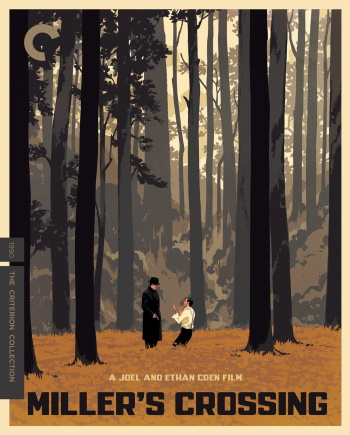
Miller's Crossing
BUY AT:


See more details, packaging, or compare
Synopsis
A Roaring Twenties gangster saga that only the Coen brothers could concoct, Miller’s Crossing marries the hard-boiled sensibility of classic noir fiction with the filmmakers’ trademark savory dialogue, colorful characters, and finely calibrated set pieces. Gabriel Byrne brings a wry gravitas to the role of Tom Reagan, the quick-thinking right-hand man to a powerful crime boss (Albert Finney), whose unflappable cool is tested when he begins offering his services to a rival outfit—setting off a cascade of betrayals, reprisals, and increasingly berserk violence. The Hopperesque visuals of cinematographer Barry Sonnenfeld, majestically elegiac score by Carter Burwell, and vivid supporting performances from John Turturro and Marcia Gay Harden come together in an intricately constructed slice of pulp perfection that crackles with sardonic wit while plumbing existential questions about free will and our own terrifying capacity for evil.
Picture 7/10
Joel and Ethan Coen’s 1990 noir Miller’s Crossing receives a new Blu-ray edition from The Criterion Collection, presented in its original aspect ratio of 1.85:1 on a dual-layer disc with a 1080p/24hz high-definition encode.
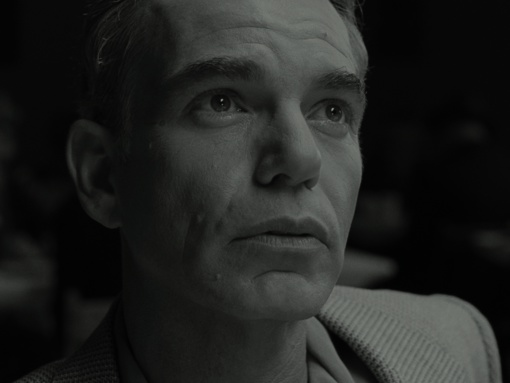
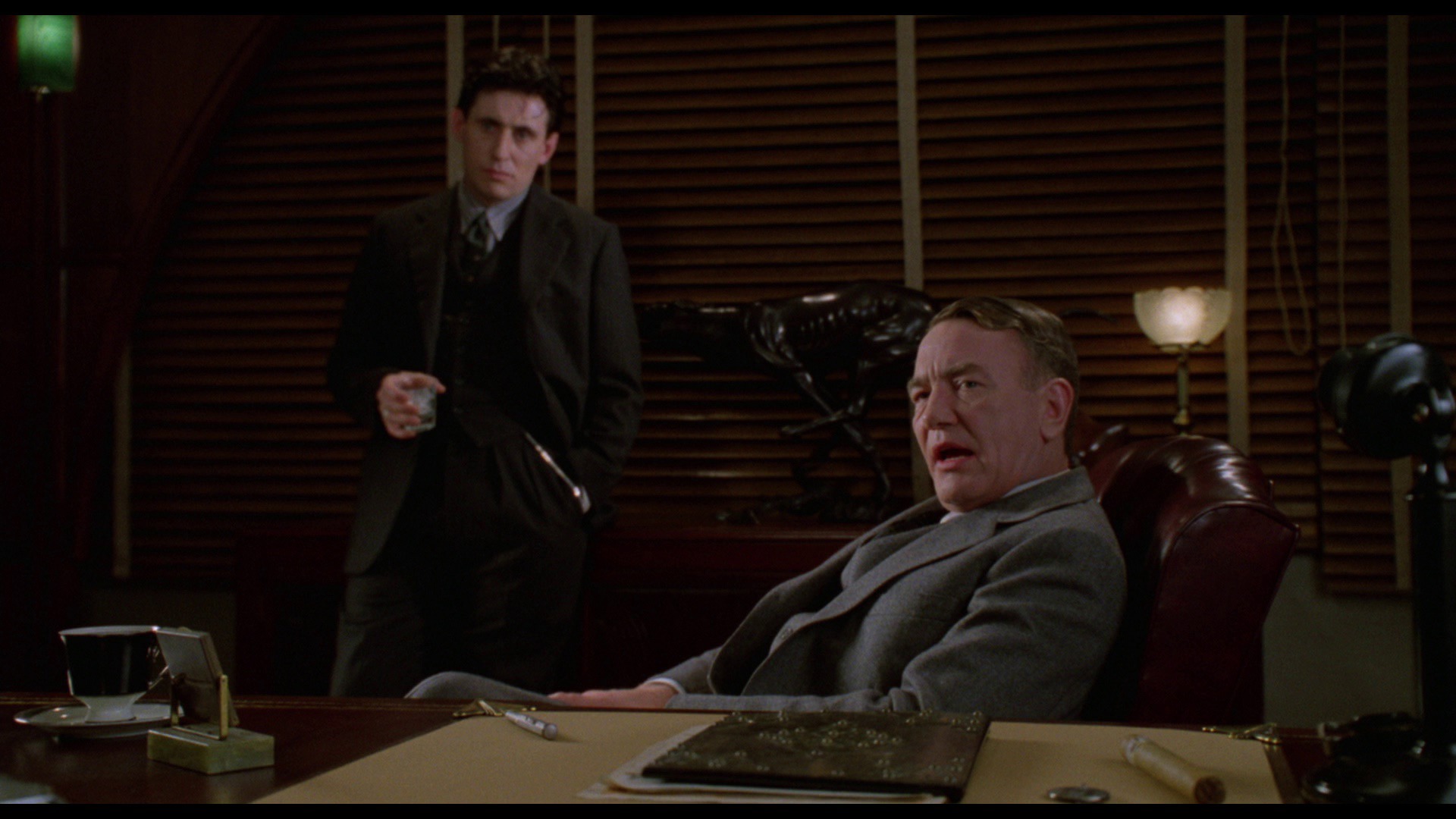
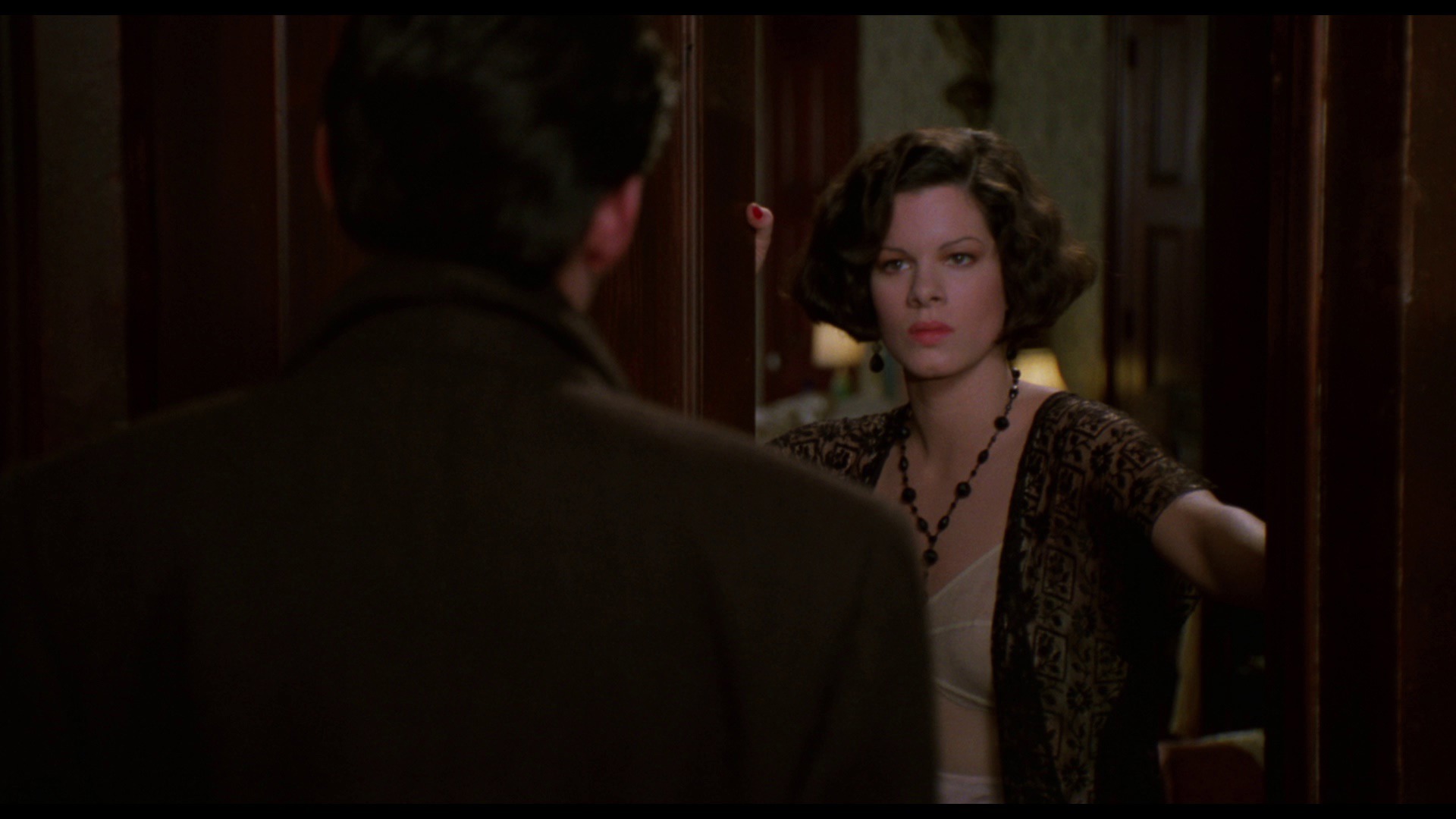
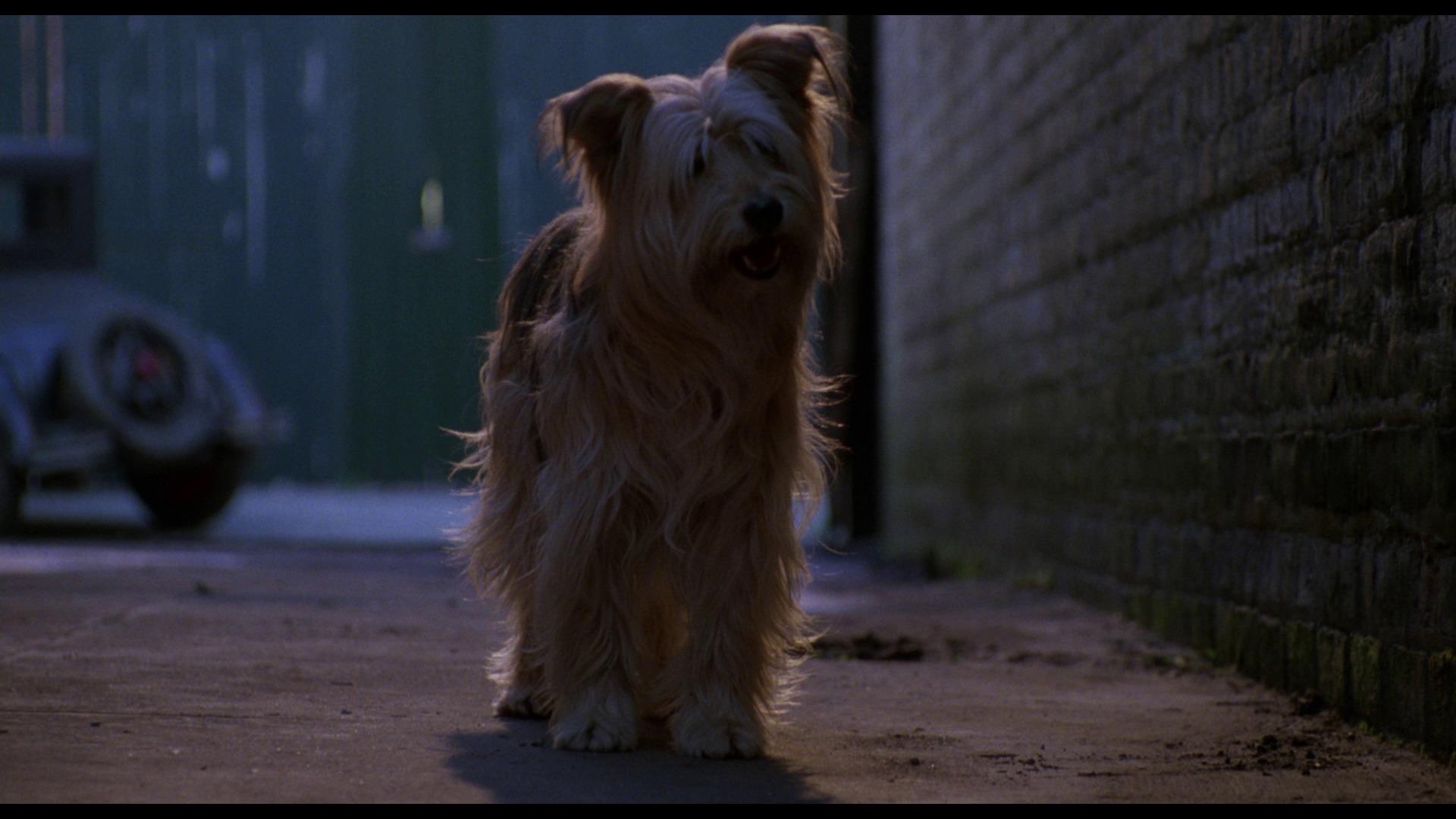
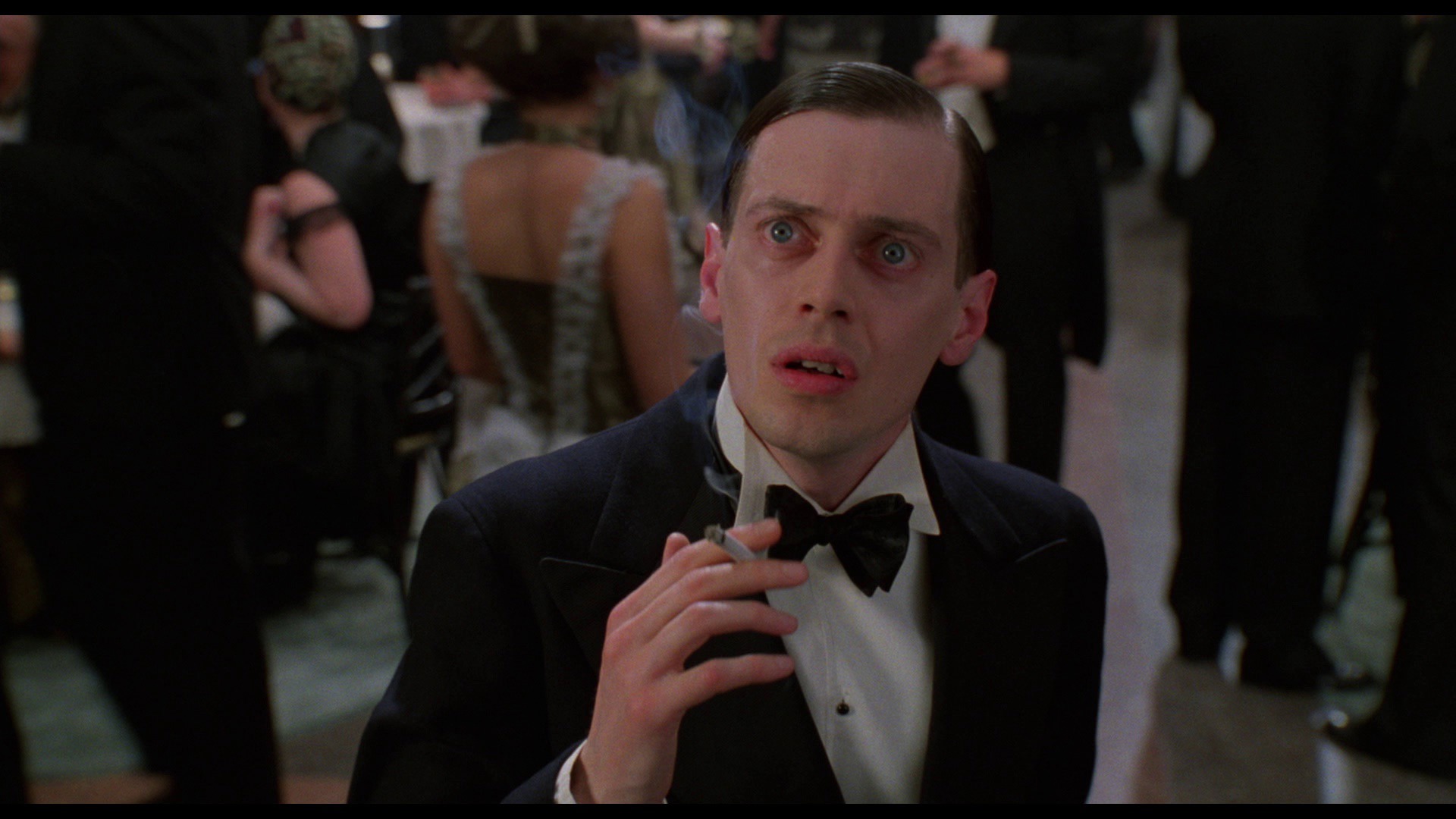
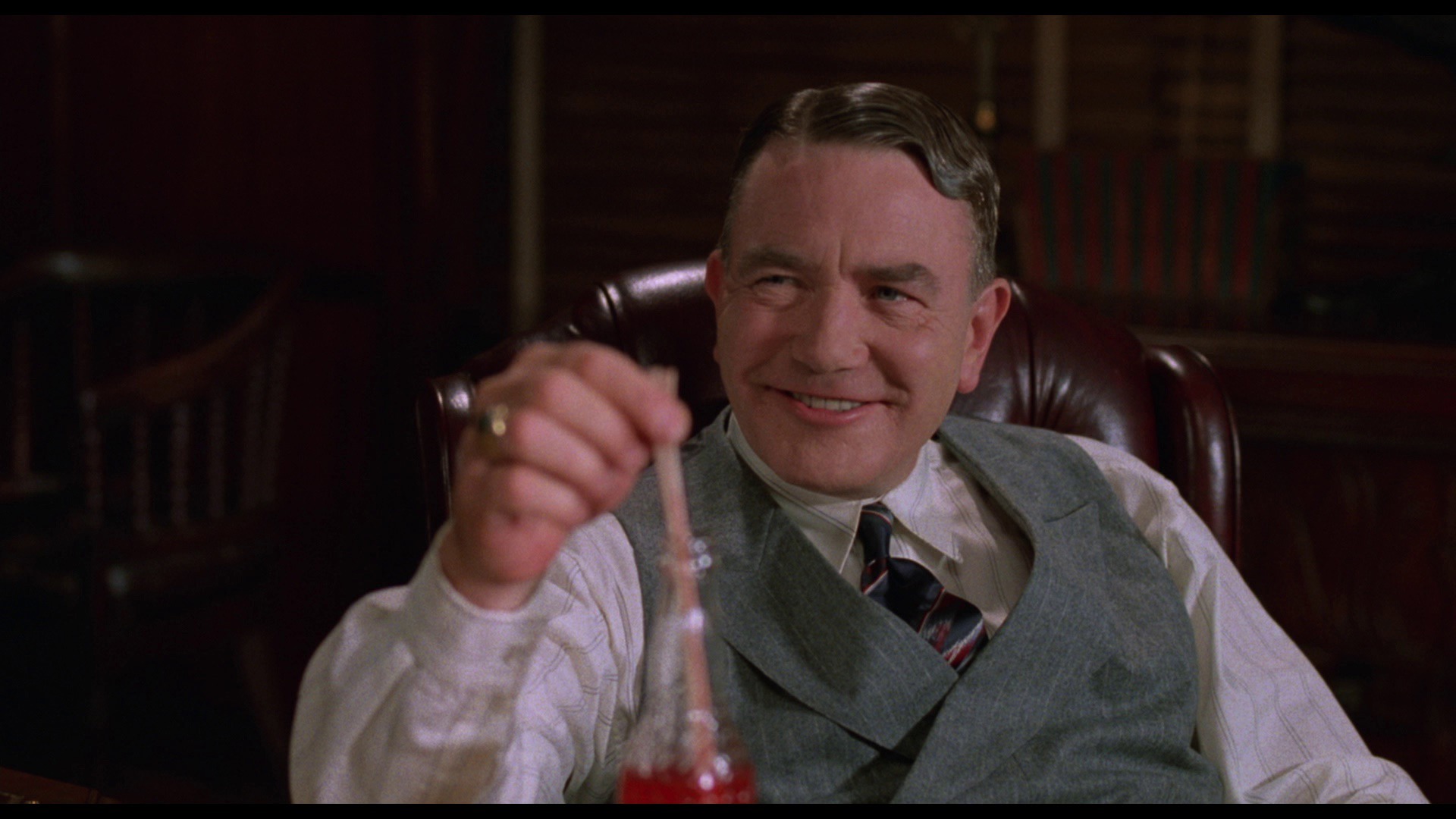
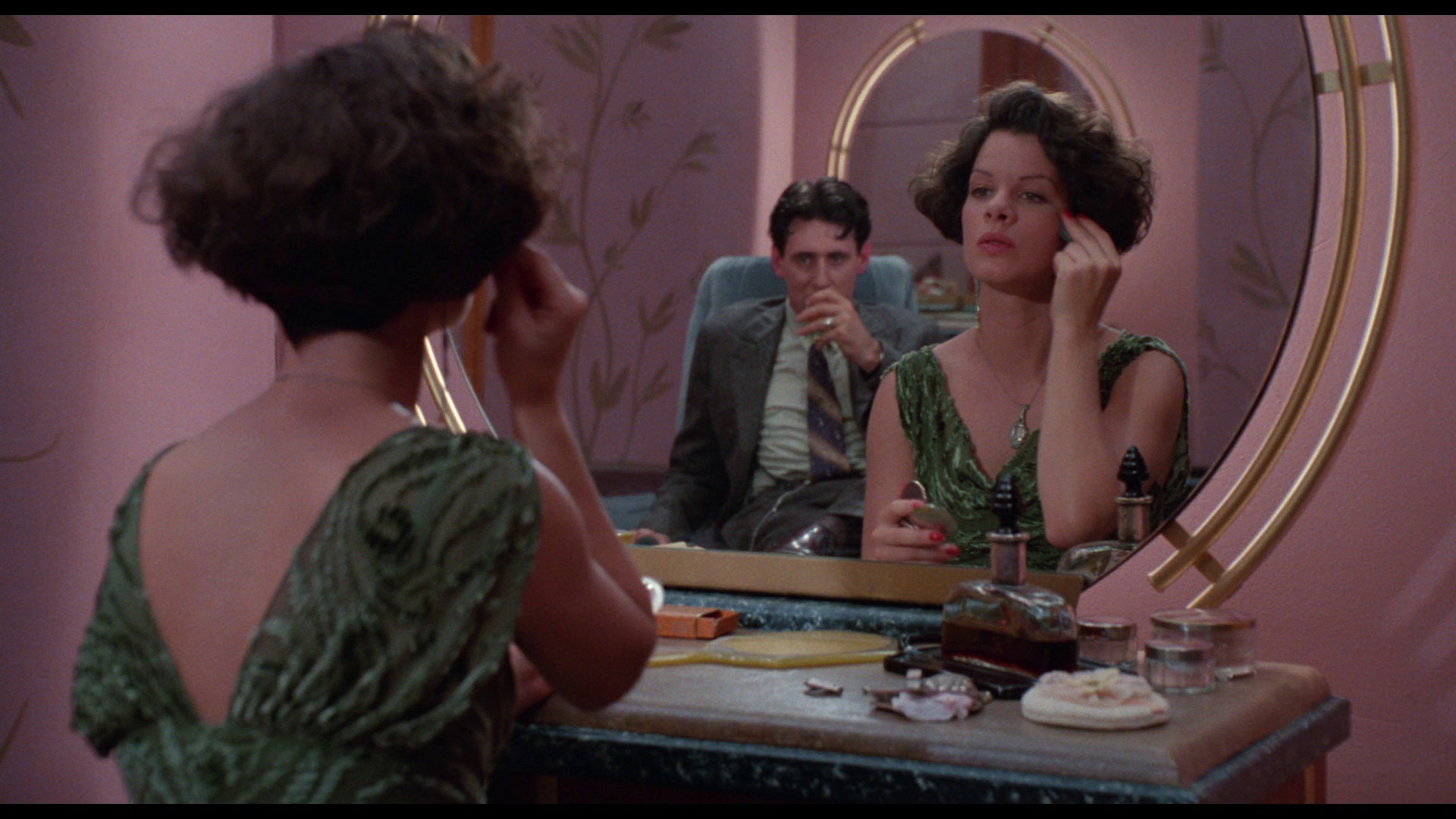
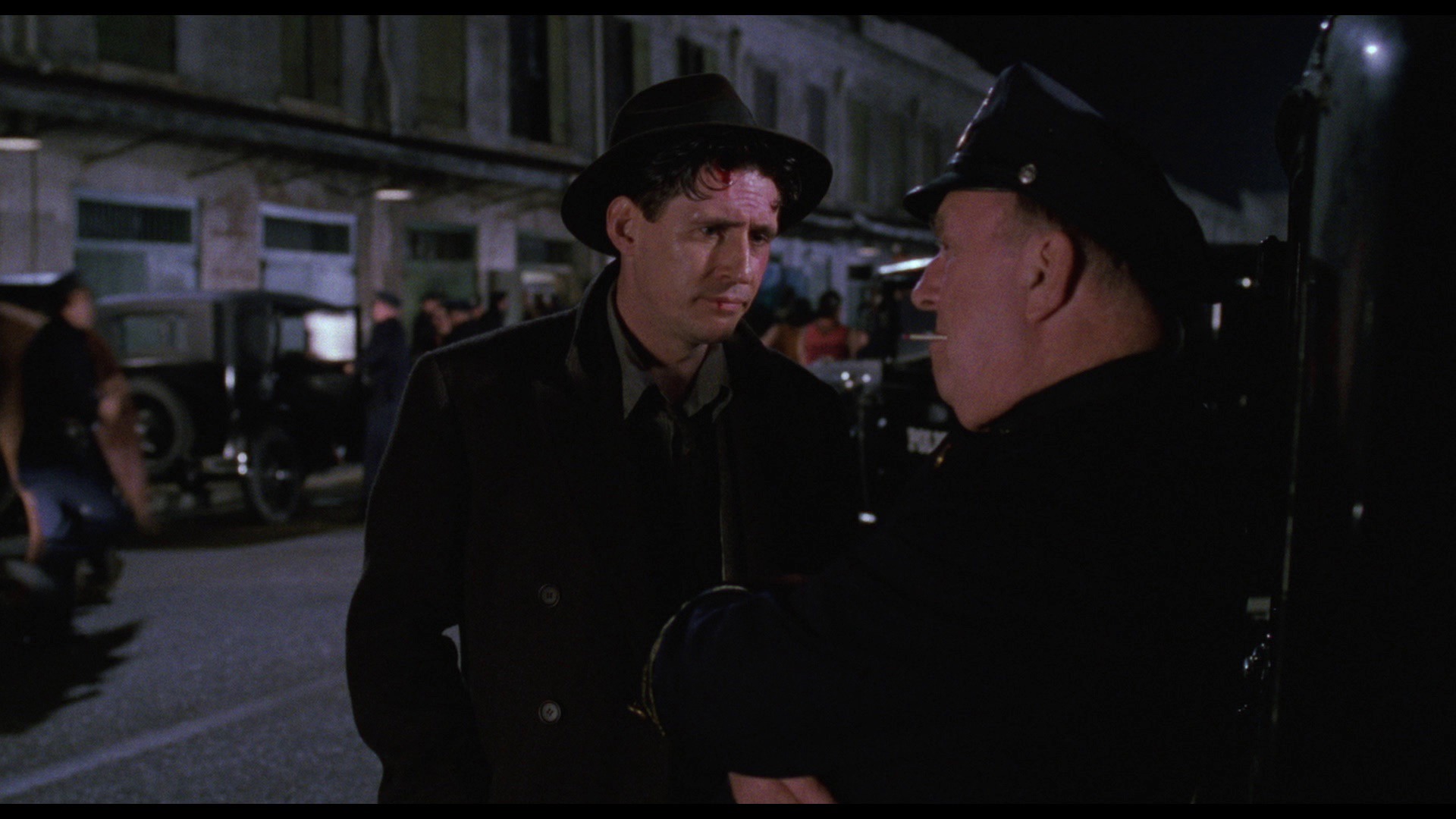
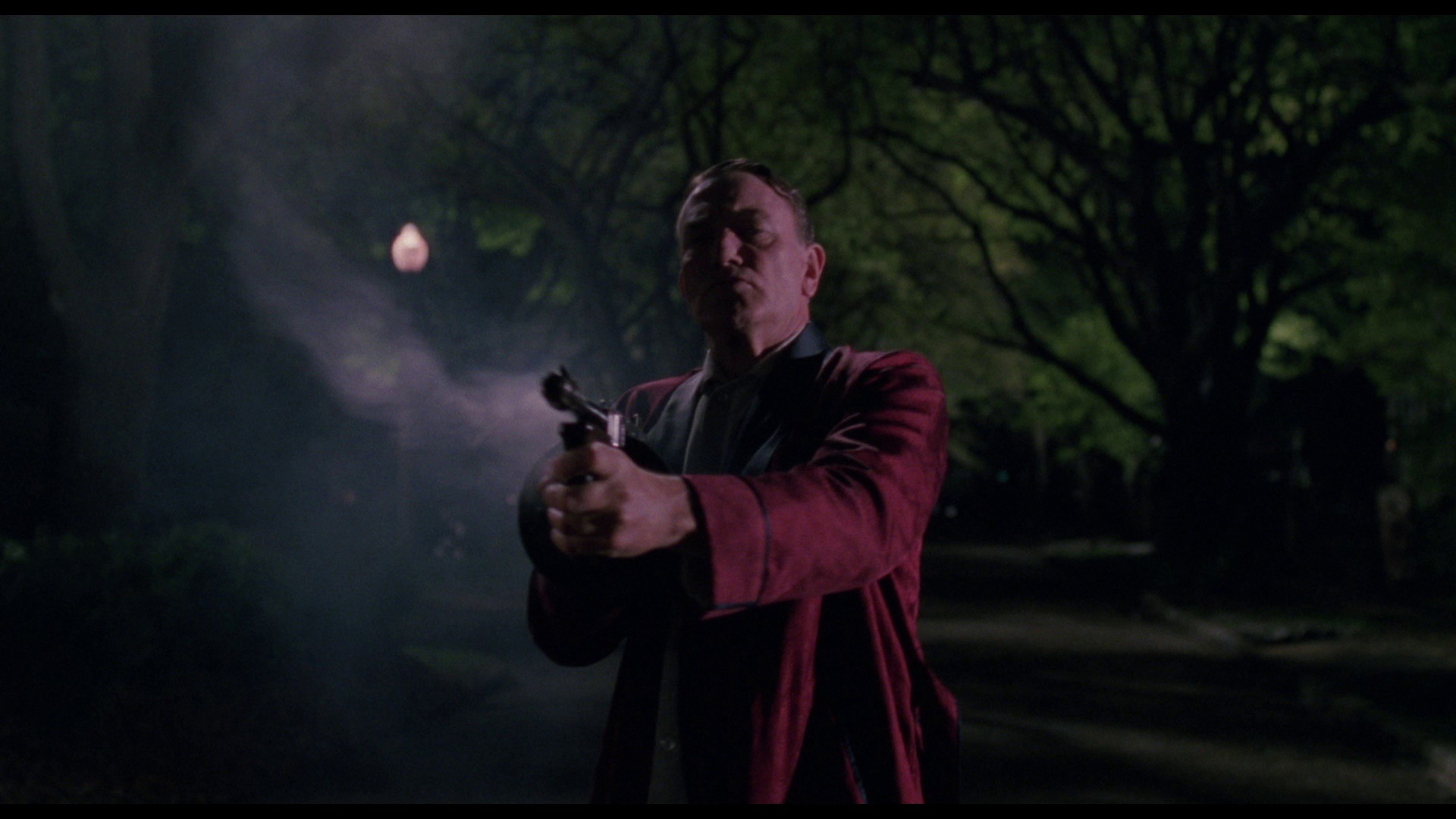
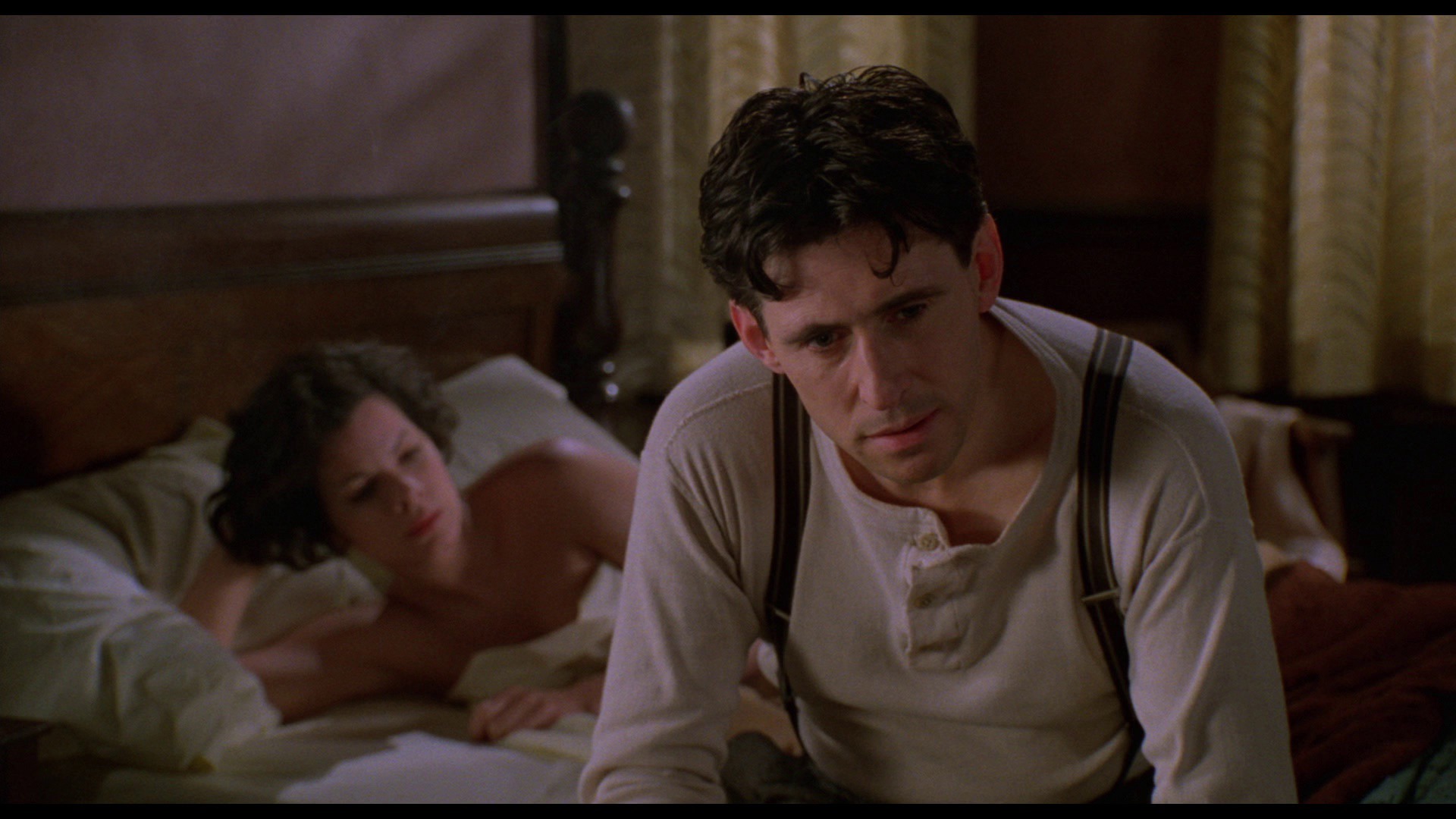
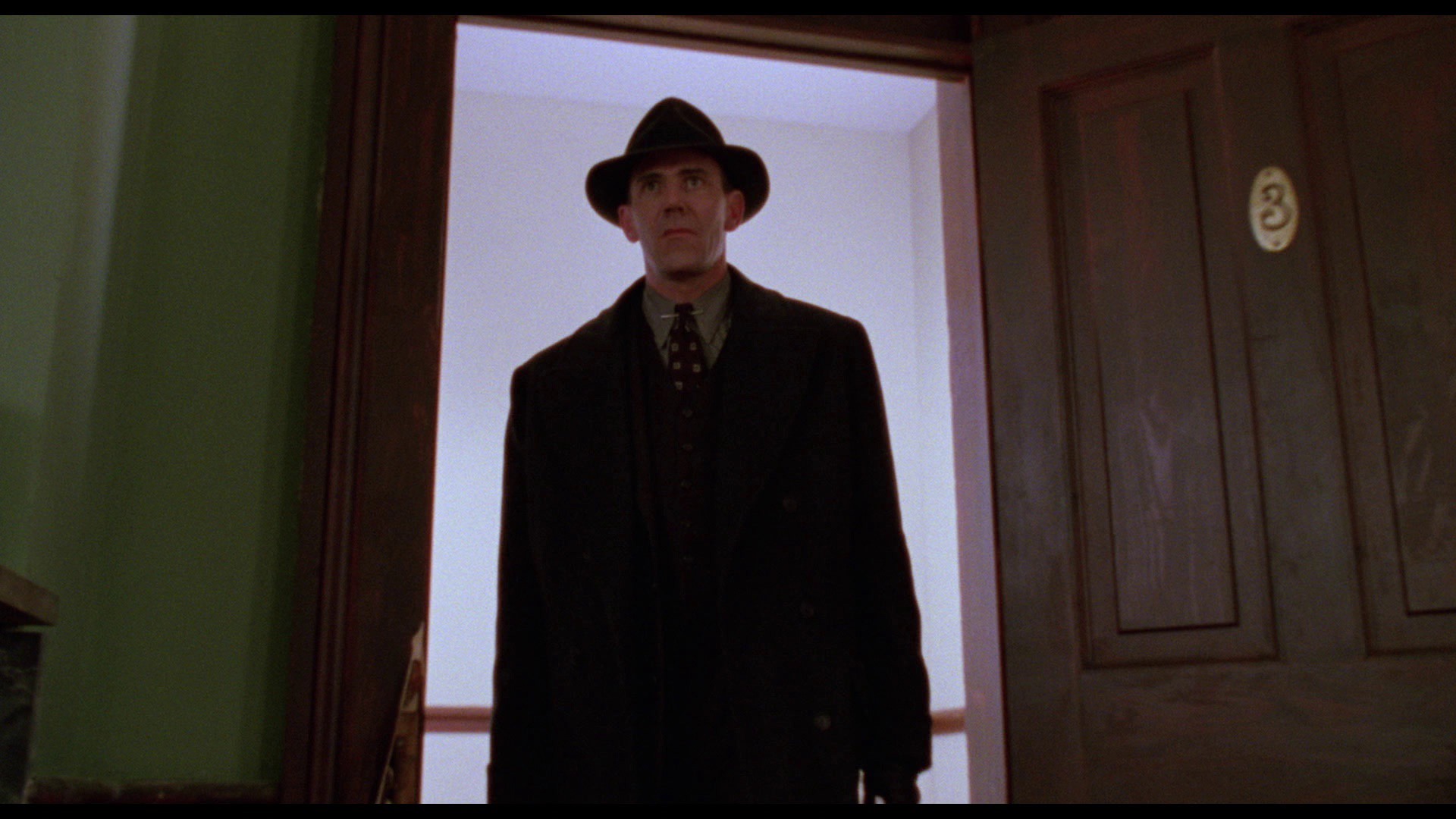
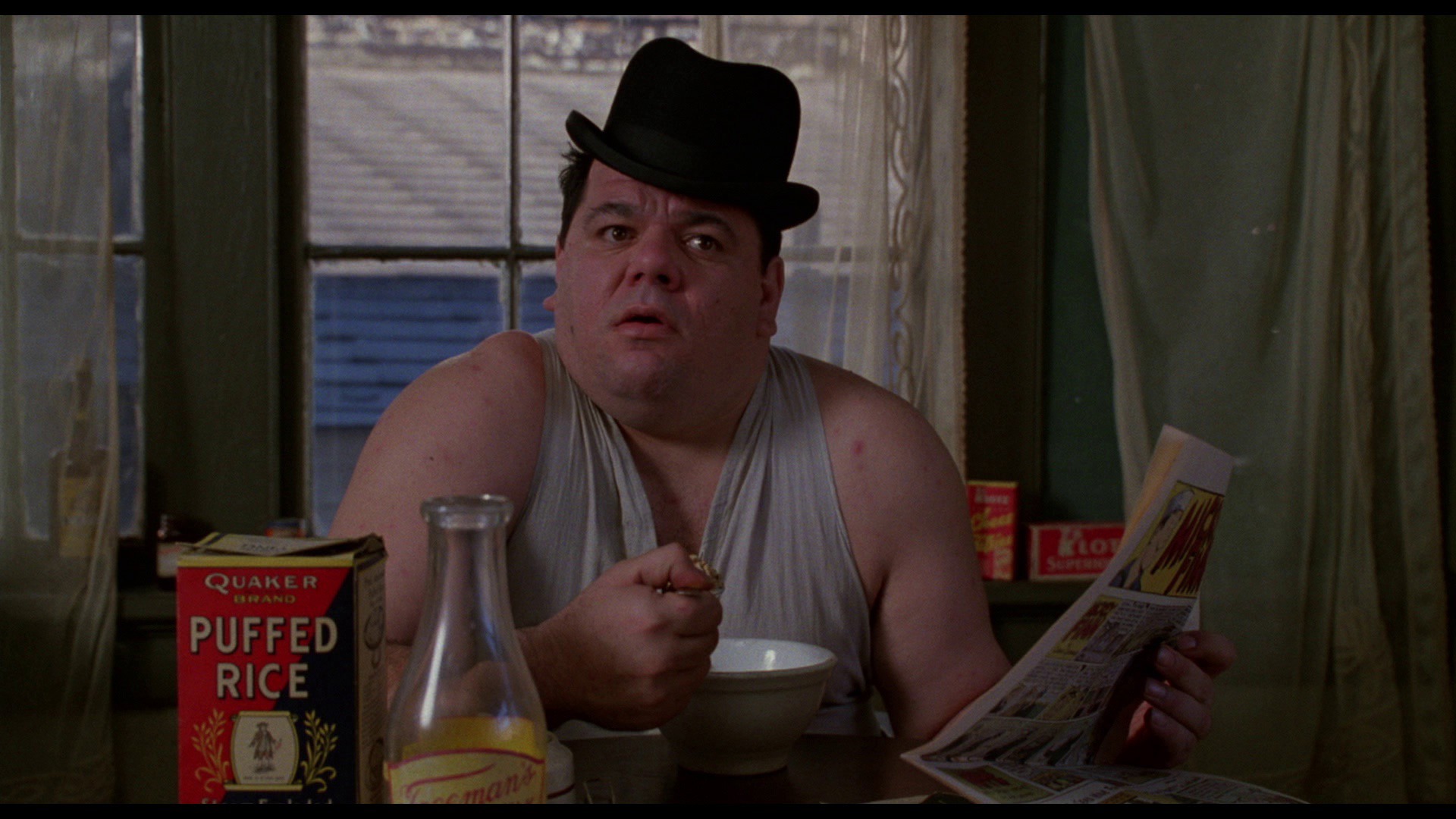
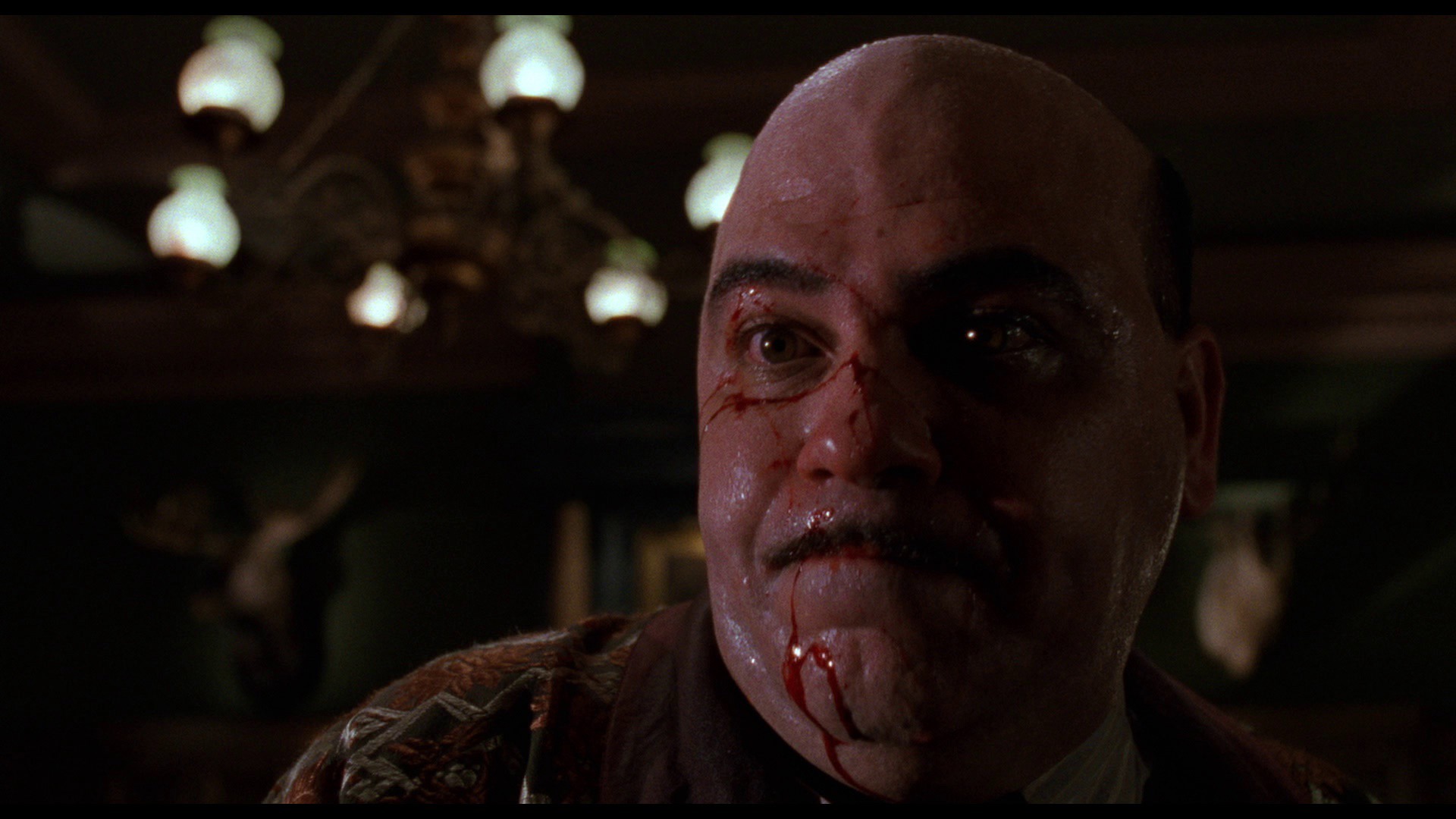
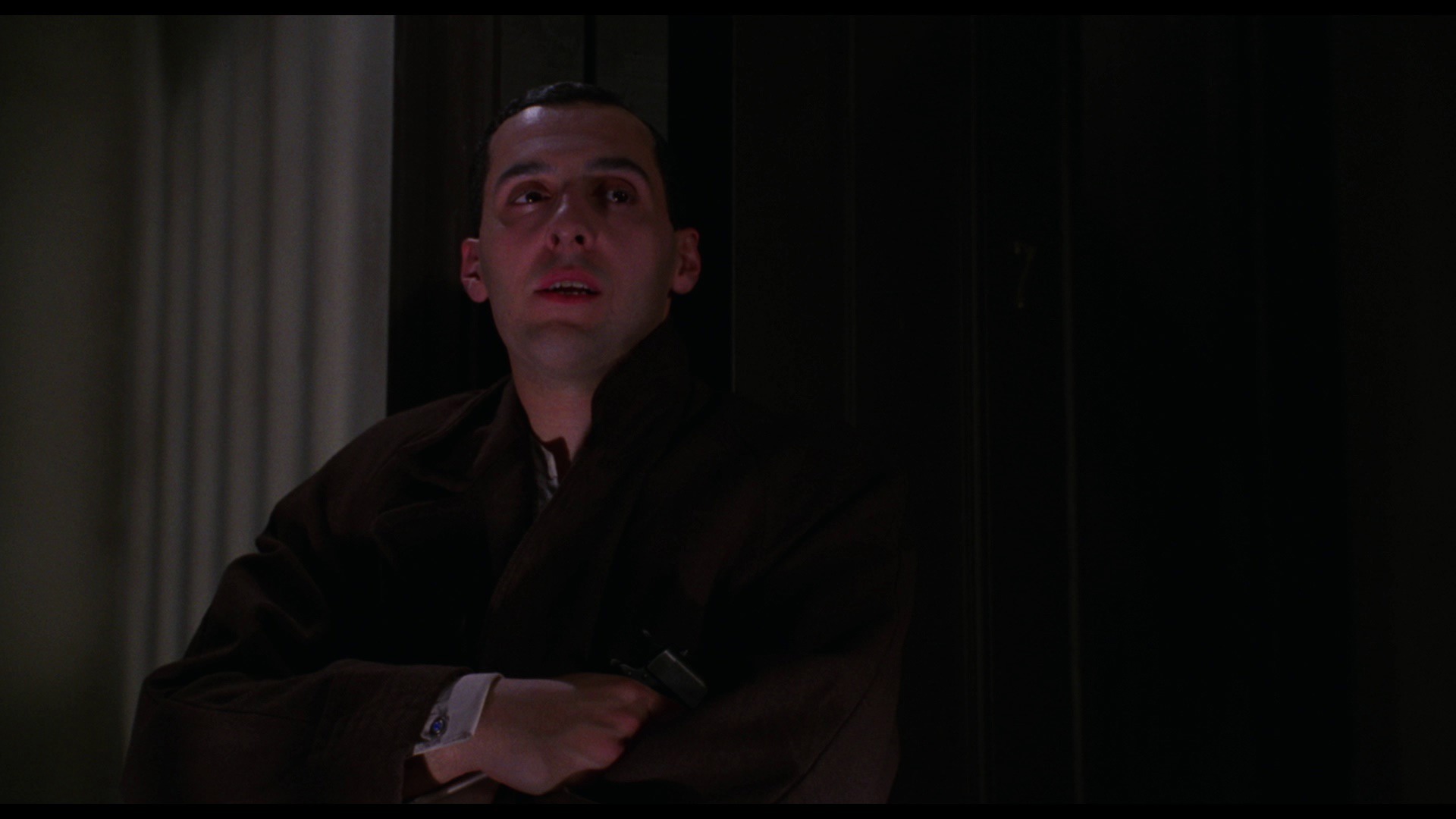
Sadly, Criterion appears to be simply reusing an older master, more than likely the same one Fox used for their own Blu-ray and, possibly, DVD editions. At least mostly, which I'll get back to in a moment. According to the notes supplied here, the master comes from a scan of the 35mm original negative. To be honest, it doesn’t look it, with the picture seeming to come from a later generation print a lot of the time, the opening and closing credits themselves almost certainly coming from a very dupey theatrical print. The image on the whole ends up showing a lack in the finer details and textures, with grain that comes off a bit clumped and muddled, and limited range in the shadows. The image is rarely all that crisp outside of a handful of close-ups, and it is never what I would really call film-like. It does have more of a video texture.
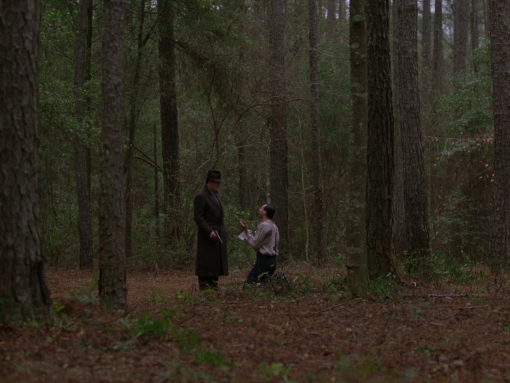
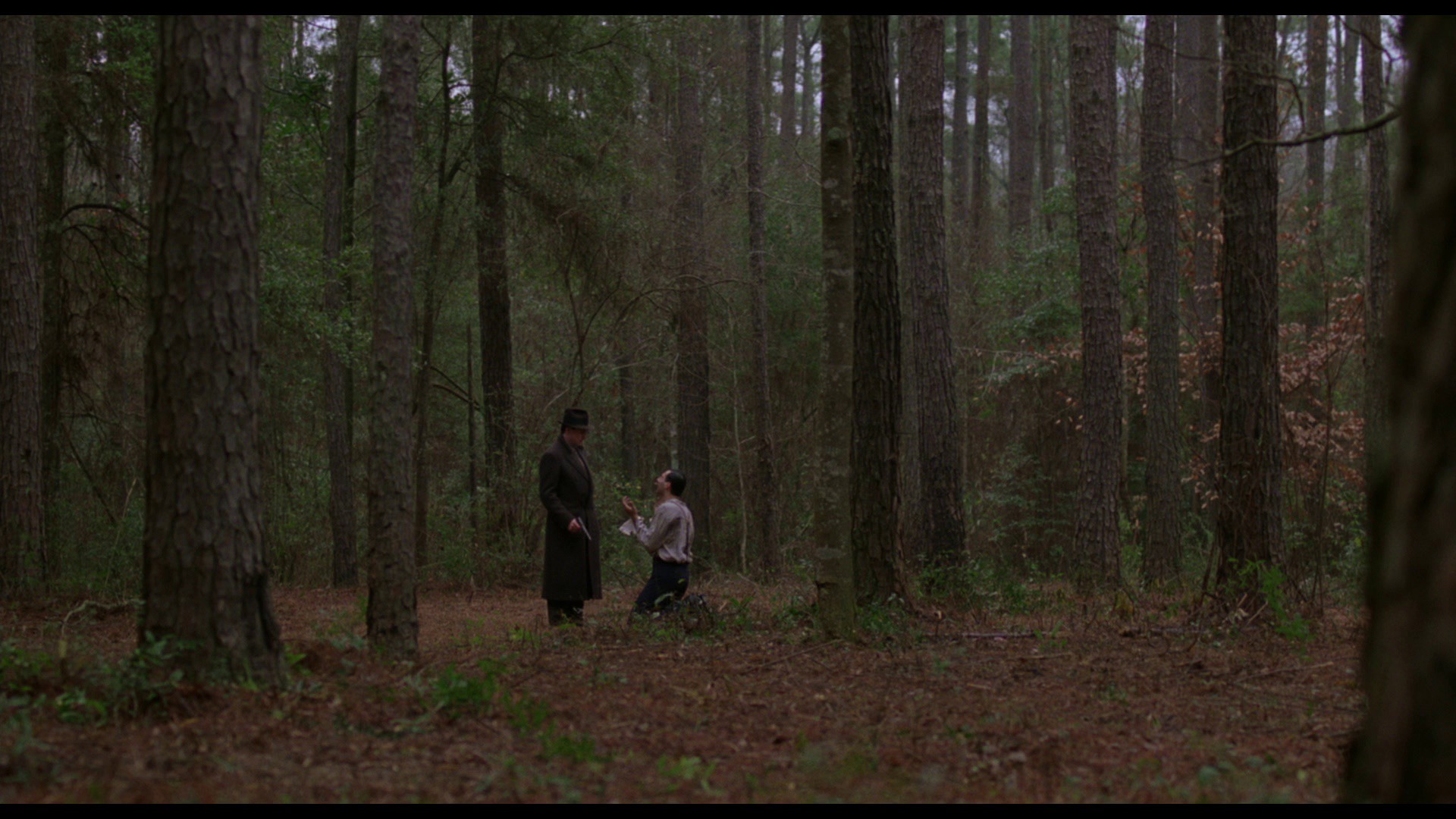
This could all come down to a dated scan, too, not necessarily the source, and there are a lot of artifacts that suggest that. On top of grain looking muddled it can also come off very noisy, getting especially bad in some of the shots that take place in the wooded area of Miller’s Crossing. This doesn’t look like an encode problem at all, but something baked into the master. There can be some minor ringing around objects here and there as well, another issue that feels to be baked into the supplied master.
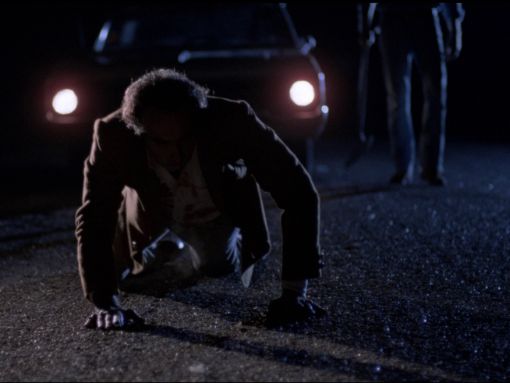
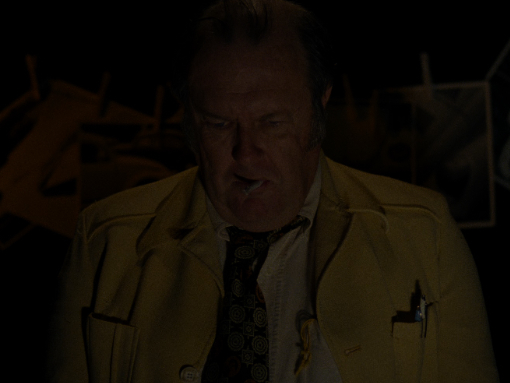
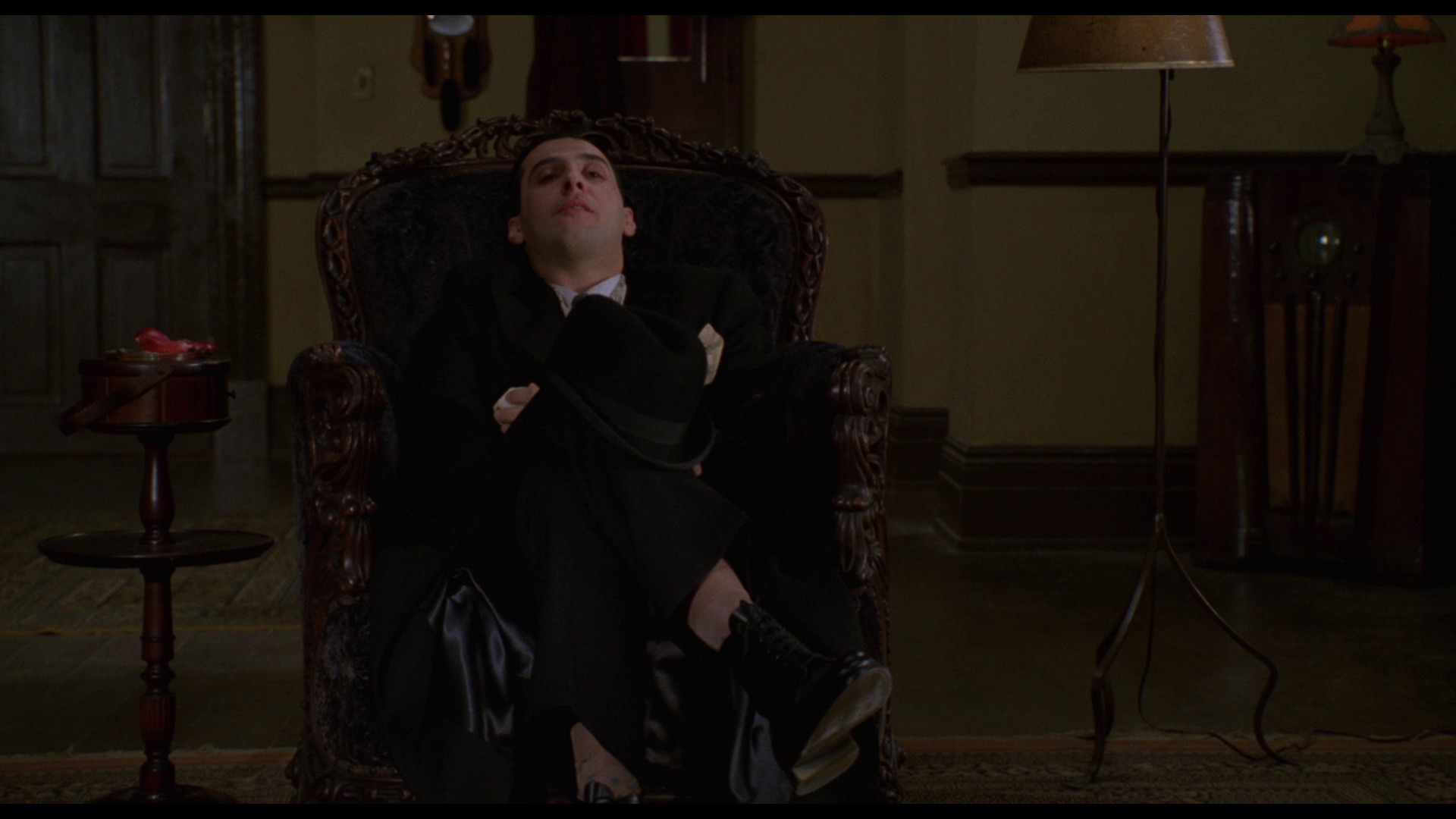
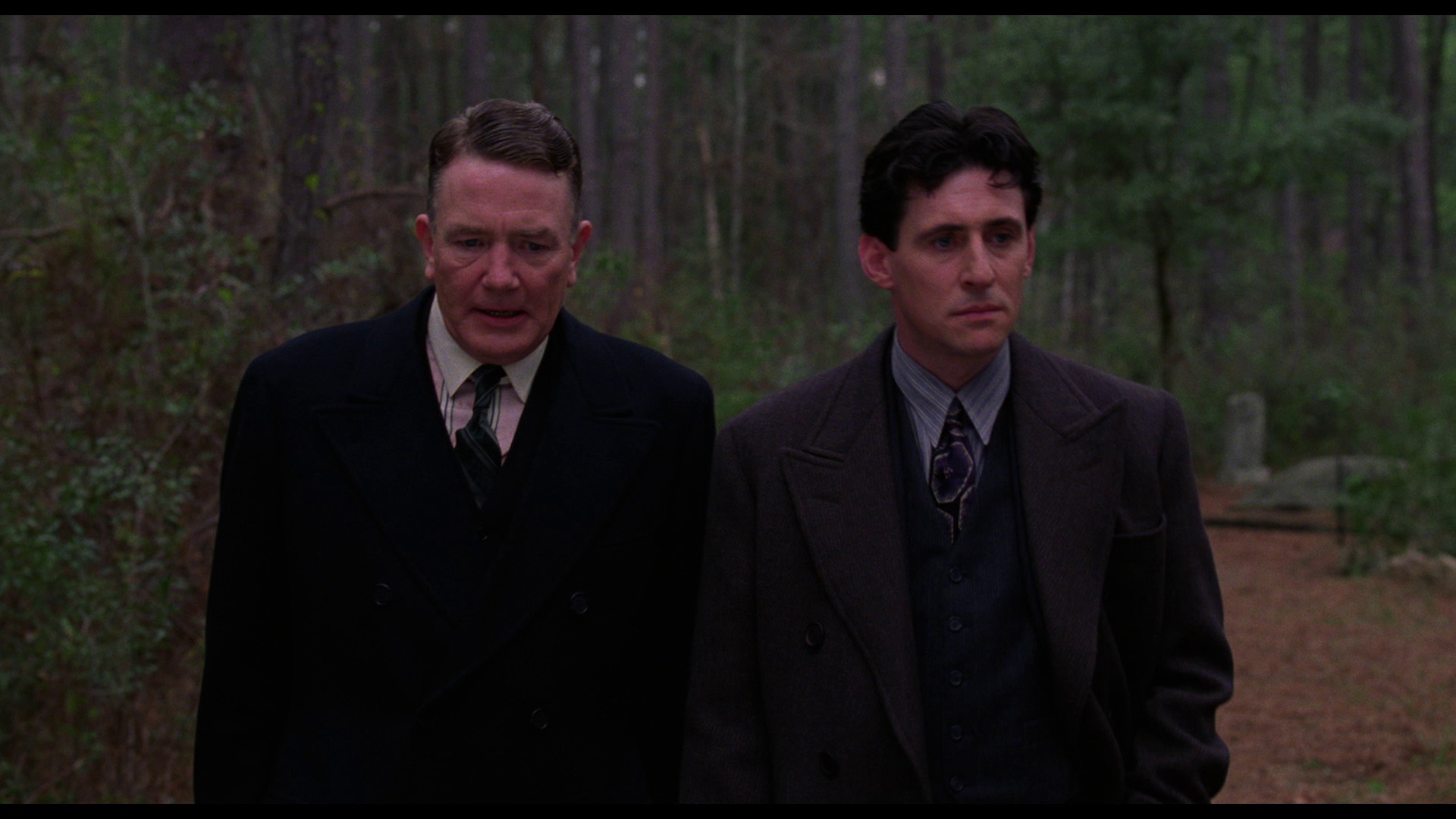
The film’s colour scheme is limited to browns and greens but they look good at least. Blacks are a bit off, looking crushed in darker shots and destroying detail in the shadows, but in brighter sequences they look fine. There are also a few marks scattered about, but they’re few and far between.
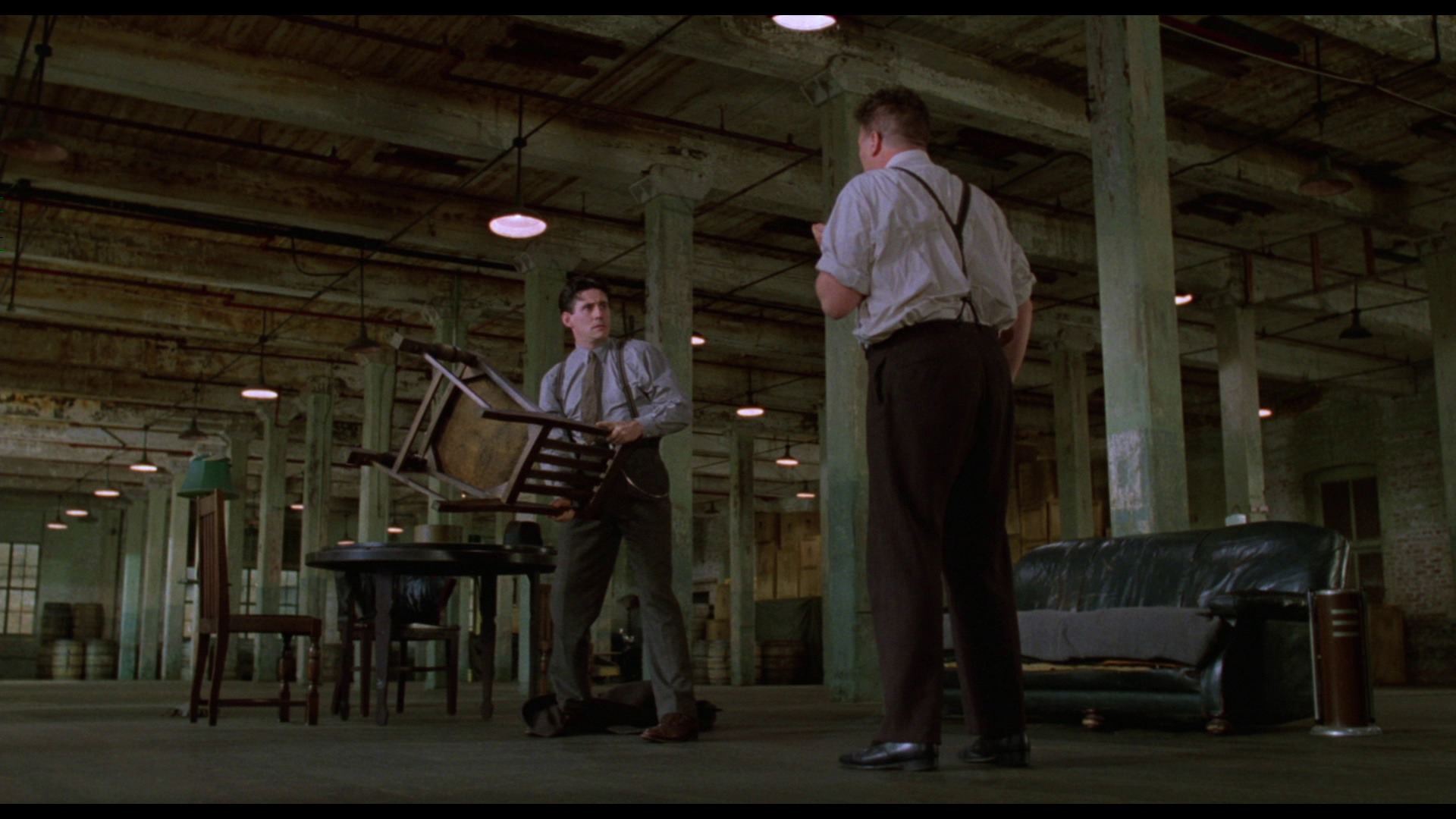
As to the one difference I alluded to earlier, there is a short moment missing: in previous releases, after Tom (Gabriel Byrne) hits Frankie (Mike Starr) with a chair in one scene, Frankie looks at Tom with a confused look and then says “Jesus, Tom” before sulking off. The moment with that line has been cut out, but everything around it is still there. Whether or not its intentional on the Coens’ part I can’t say, but it does feel deliberate because it's a clean cut. Update: The edit on here is a minute-and-a-half to 2-minutes shorter than previous releases, and an e-mail from Criterion that was shared online indicates the Coens made some trims to this version, as they did with their director's cut of Blood Simple. Oddly, Criterion mentions this nowhere on the release.
In the end it’s just an average high-def presentation, hampered mostly by what appears to be a dated master, possibly the same one created for the DVD. It’s a sharp looking film that would easily benefit from a fresh scan and it’s a shame that wasn’t in the cards.
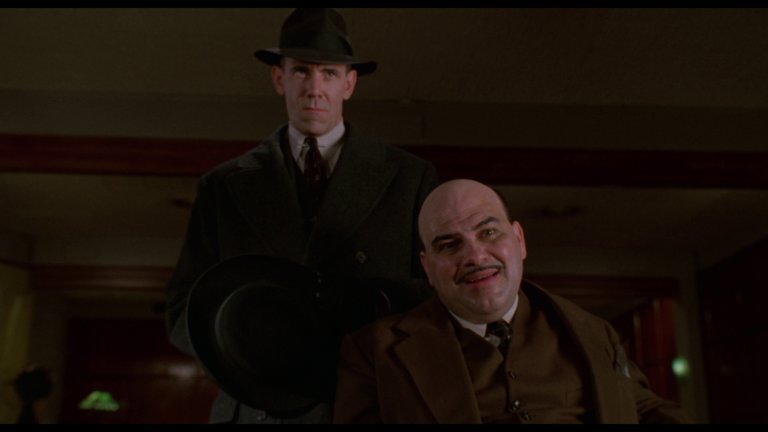
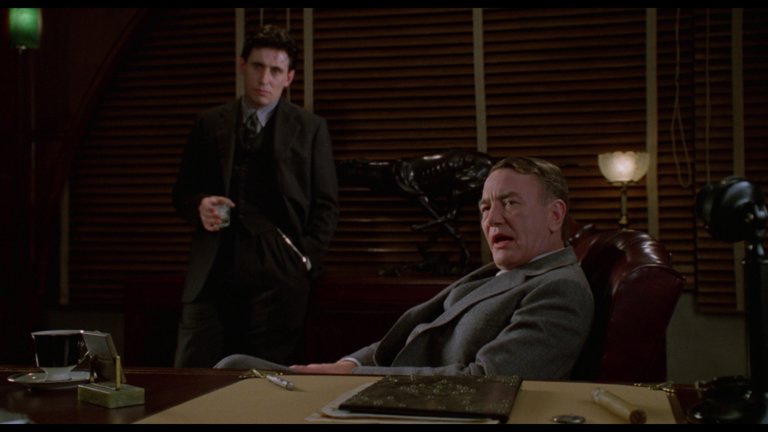
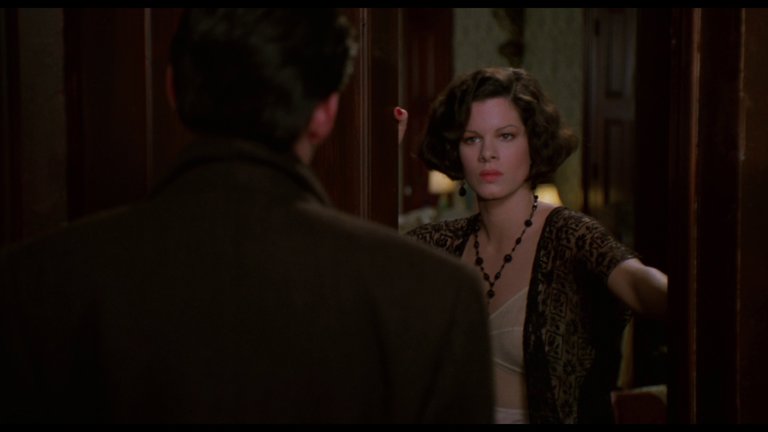
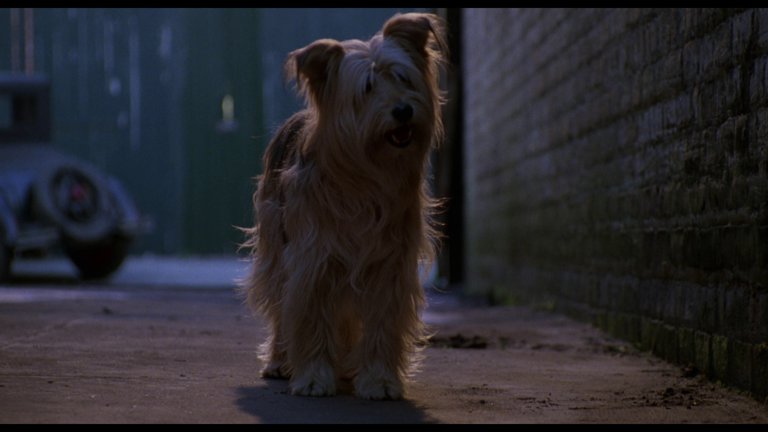
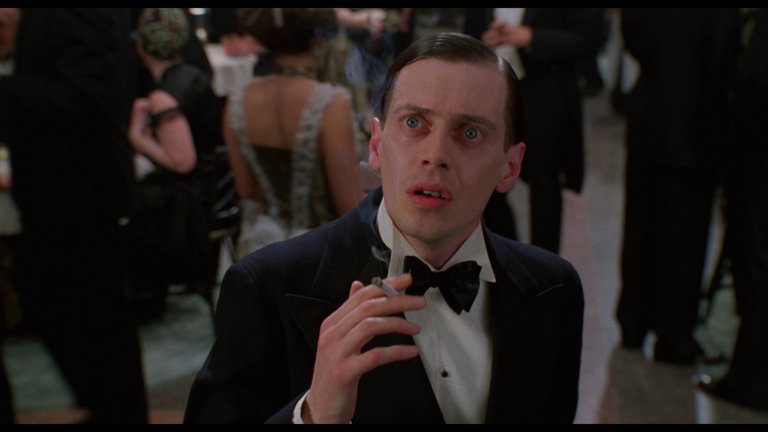
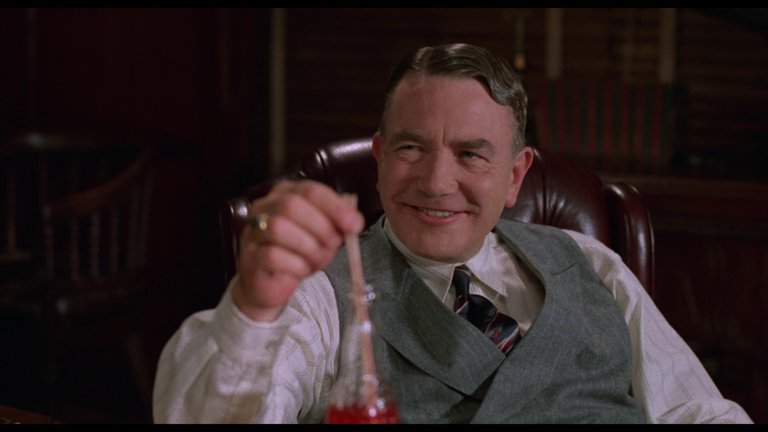
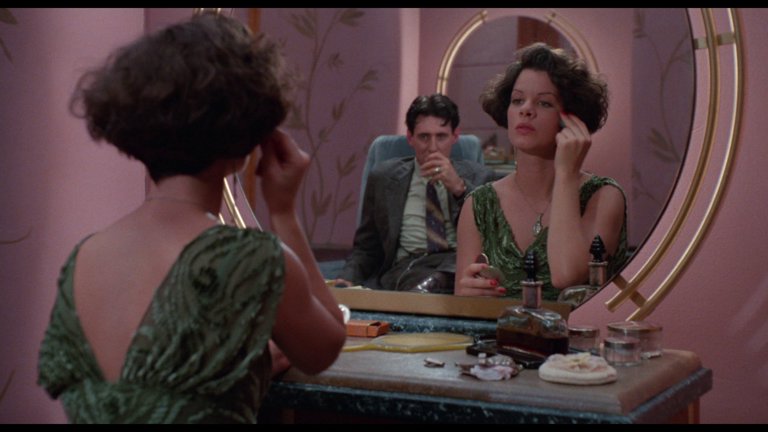
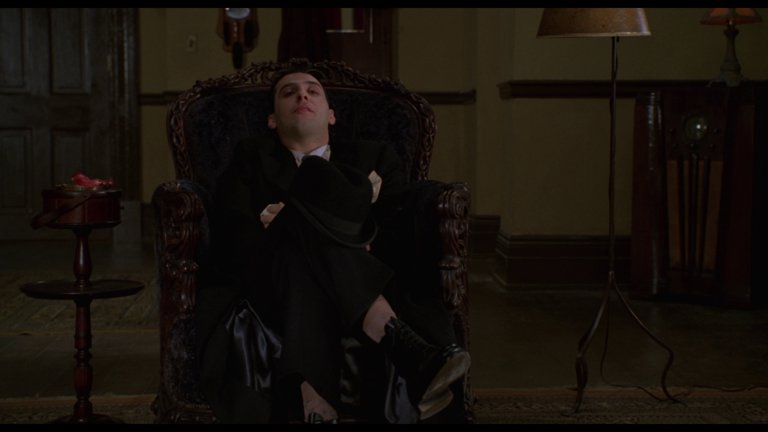
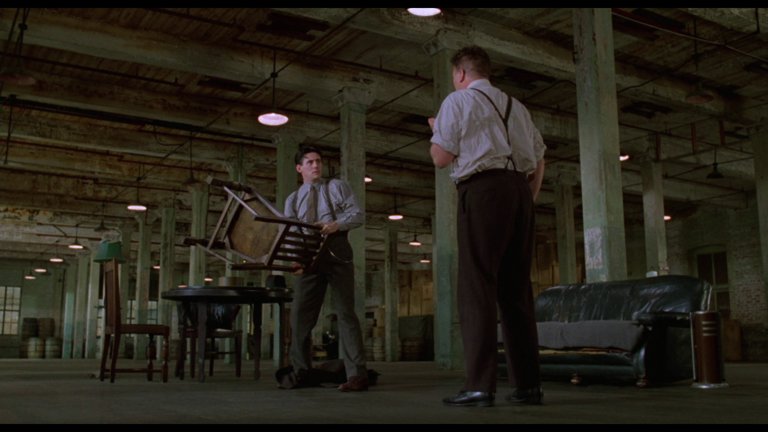
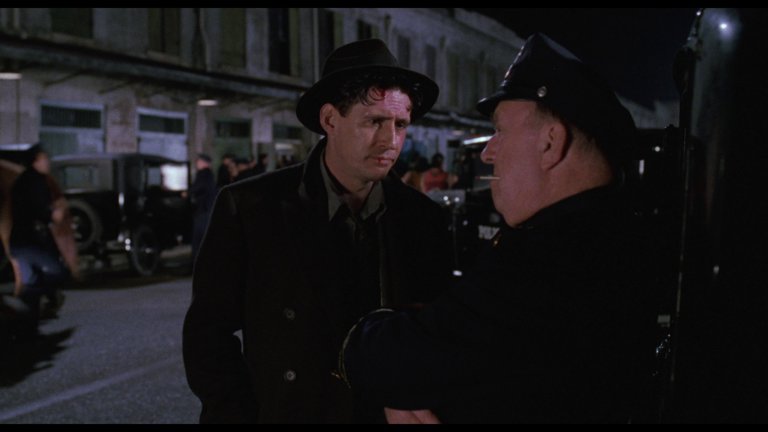
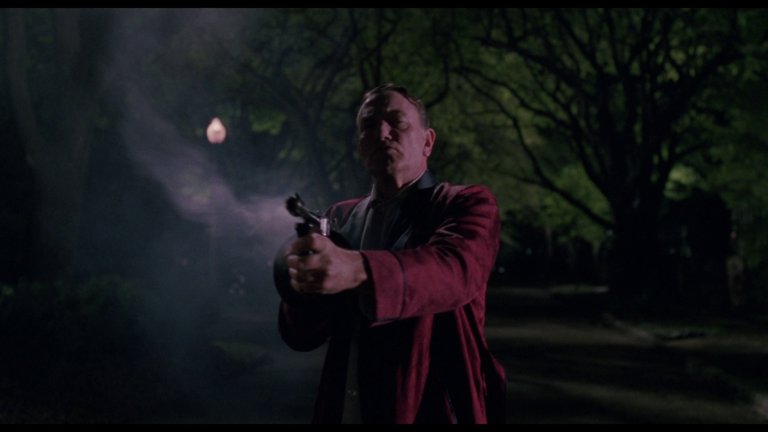
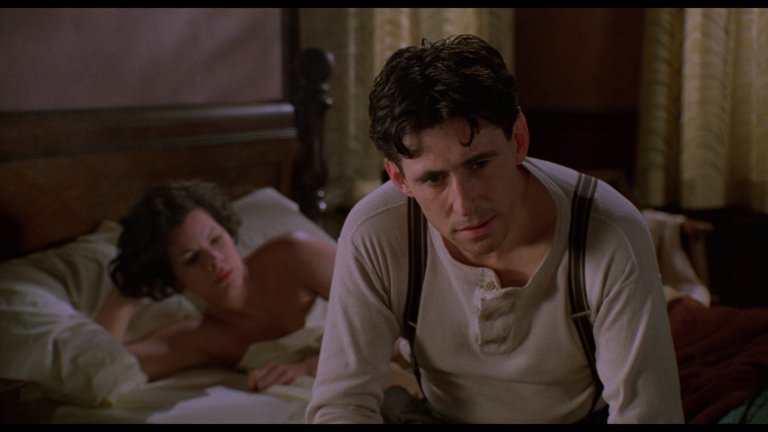
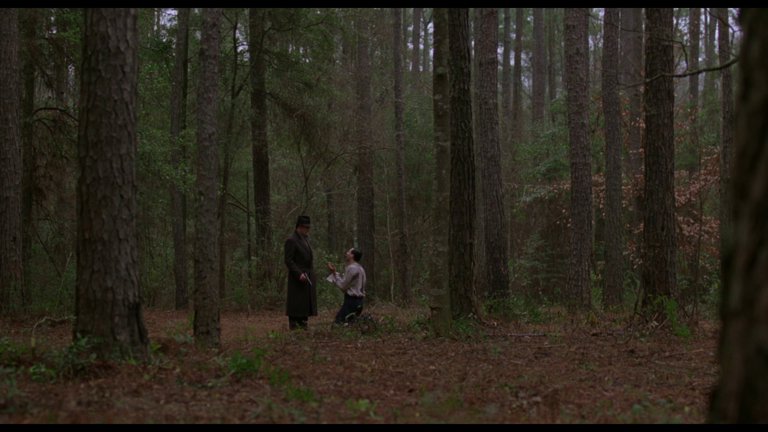
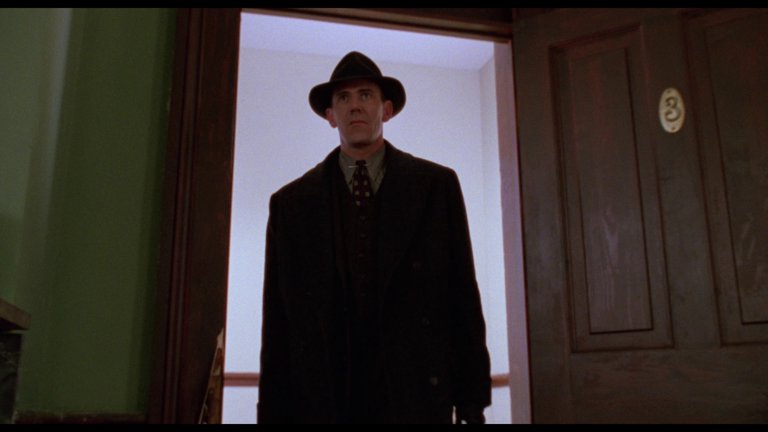
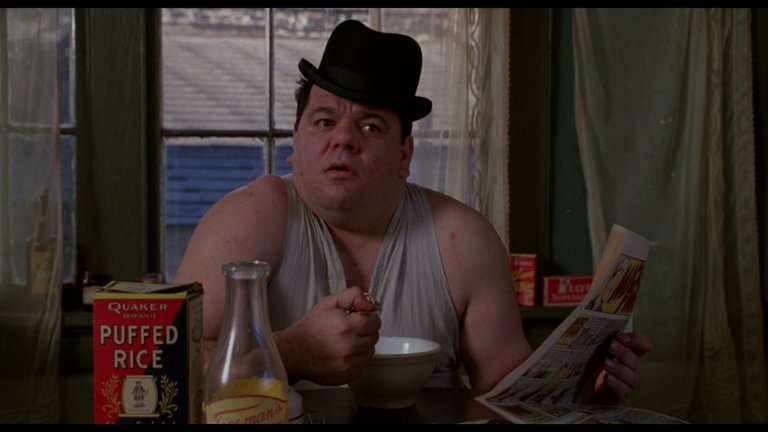
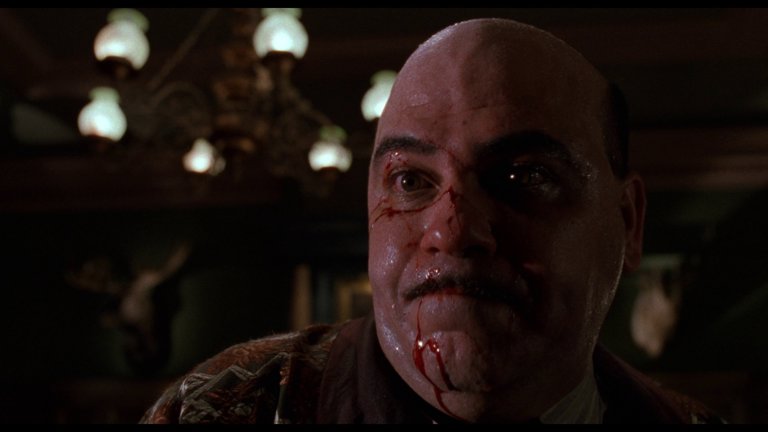
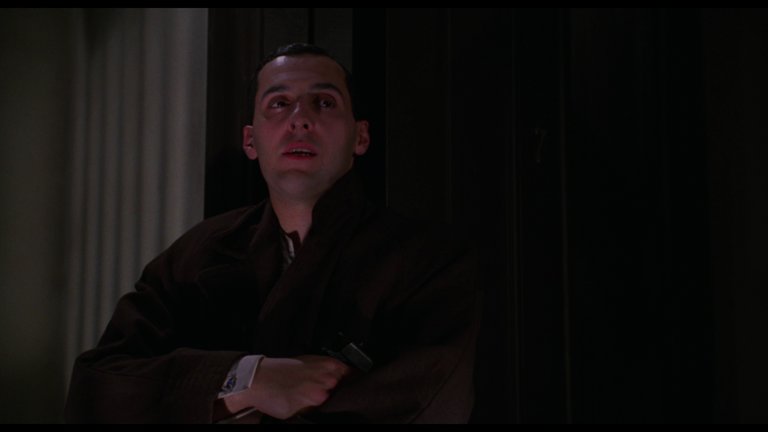
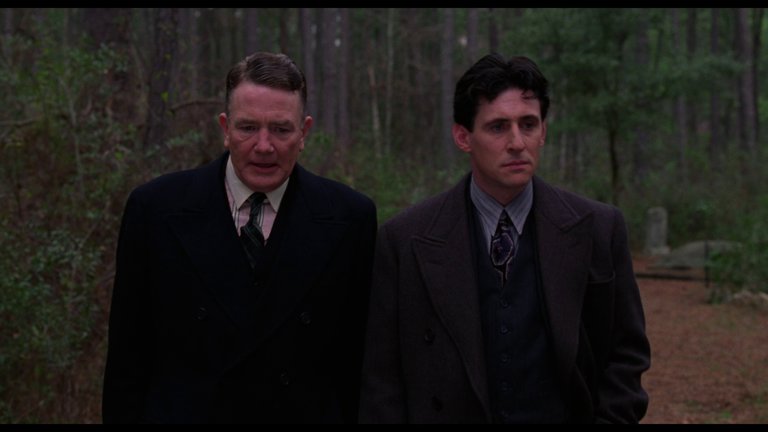
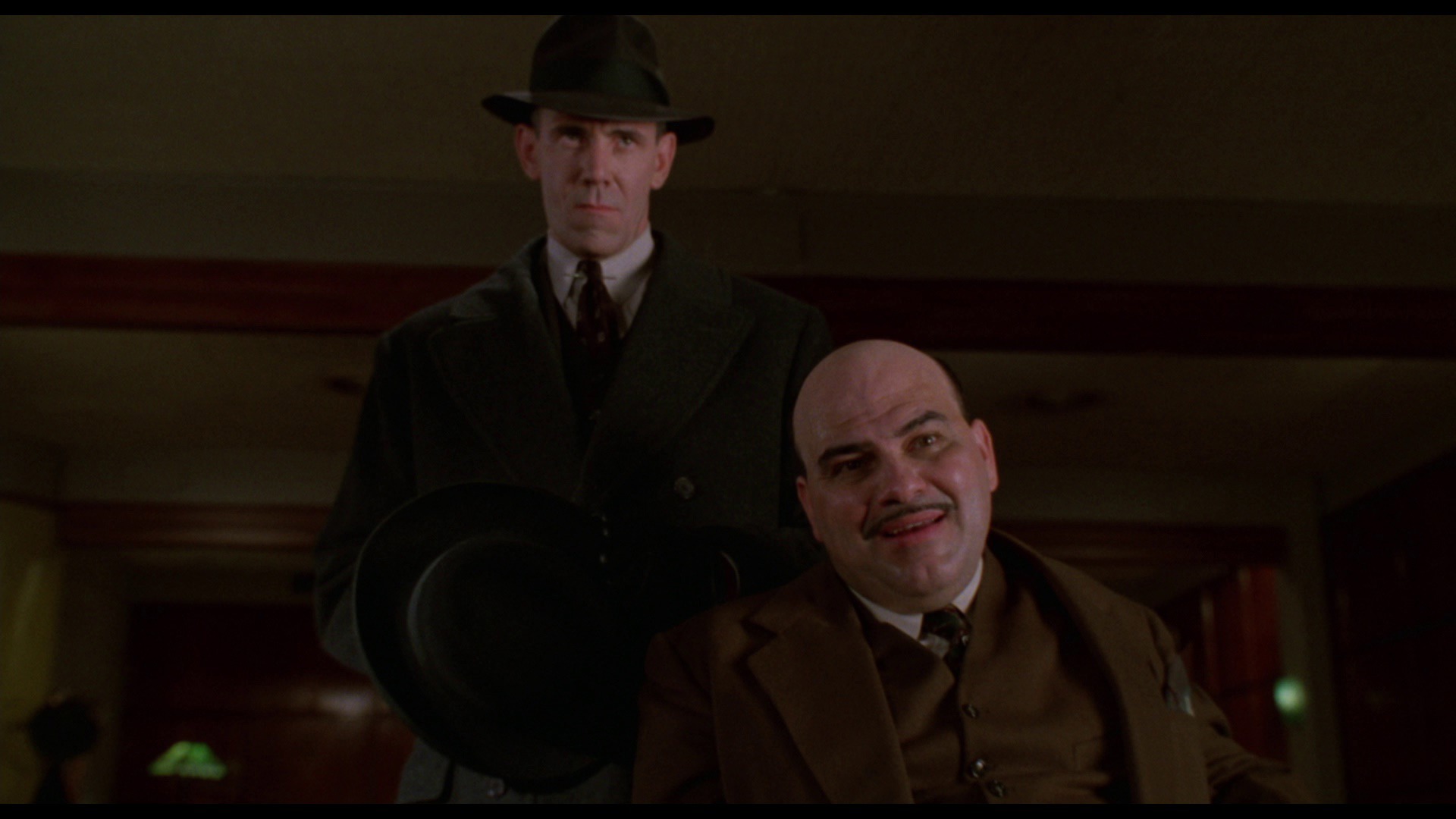
Miller's Crossing - Screen Captures
Audio 8/10
Criterion includes the 5.1 remix presented in DTS-HD MA and not the original 4.0 soundtrack found on Fox’s DVD and Blu-ray editions. The good news is that this is not the same 5.1 remix that was also found on Fox’s Blu-ray, that remix missing a music cue close to the end of the film. That music cue has been restored here, though again, as mentioned in the video portion, the “Jesus, Tom” line is missing.
The film’s sound design is pretty striking for what it is, and it translates wonderfully to this presentation. It’s still front heavy with the audio nicely mixed between the fronts, dialogue sounding very sharp and clean. The surrounds throw in some background effects and ambient noise, and I noticed some activity during a couple of sequence featuring a few tommy guns and explosions.
The soundtrack especially shines when it’s delivering Carter Burwell’s incredible score, completely surrounding the viewer and delivering some impressive highs and lows. Range overall is also striking, from quieter talking scenes to louder, violent sequences. It’s a strong remix that makes ample use of the surround channels without overdoing it or causing any distractions.
Extras 8/10
Where Criterion’s edition clearly upgrades over Fox’s previous editions is in the area of supplements. Criterion does port over some archival material from the previous editions, specifically the promotional interviews filmed around the time of the film’s release with actors Gabriel Byrne, Marcia Gay Harden, John Turturro, and Jon Polito. Polito’s contribution is “new” in that it didn’t appear on the previous releases, while the interviews with the other actors had. Now edited together and running around 14-minutes, the four, recorded separately, discuss the film’s take on the gangster genre and their respective characters, Byrne even addressing why critics might have reacted poorly to the film at the time. Amusingly, Polito threw me off because I’m not sure if I’ve ever heard his actual voice, which sounds a bit different here compared to the exaggerated one he uses in films, or at least the ones of his I’ve seen.
The rest of the material has been newly created for this edition. The two best features are a new interview with the directors, Joel and Ethan Coen, and another featuring actors Gabriel Byrne and John Turturro, both conducted by author Megan Abbott and running 29 and 32-minutes respectively. Abbott, an author of crime fiction, was an interesting choice as a moderator for both, but it became clear why she was chosen early into the Coen interview. Though it would be easy to assume that the two were influenced by noir films of the 40’s, which the two do go over, their primary influence for Miller’s Crossing were the original writings of Raymond Chandler, James M. Cain, Dashiell Hammett, and others, but Hammett in particular. They note how, as good as they were, most Hollywood noir of the 40’s could feel the same due a lot to studios and the production code, and in turn lacked a lot of the edge and spark the source novels had, like the slang or the imagery the author's prose provided. Plus, it didn’t help that they shared many physical similarities, like how Humphrey Bogart ended up playing two very different detectives in a few films: Hammett’s Sam Spade and Chandler’s Philip Marlowe. Through the interview they talk about their favourite books and the books that played a heavy influence here, Hammett’s The Glass Key and Red Harvest being the key ones, and they quote passages from them. They all then discuss specific elements and moments in the film that can be tied back to these books. It ends up being a very thoughtful and informative discussion around crime literature, the work of Hammett, and the inspirations for the film.
The interview with the actors also ends up being a fun one, the two first recalling how they got their respective roles. The Coens had apparently wrote the role of Bernie specifically for Turturro, who was friends with Frances McDormand, but it sounds like Byrne got the role by chance, having been in New York (his first time) and just trying out for the role, teaming up with a nervous Marcia Gay Harden to work out their lines. The two also talk about the Coens and their sense of humour, and then talk up their fellow co-stars, Byrne beyond impressed by how quickly Steve Buscemi could speak and then both sharing some stories around Albert Finney—filling in for actor Trey Wilson who had just passed away—who was all in for St. Patrick’s Day in New York. Where the conversation is best is where the two talk about their characters and then working out the key scene between them at Miller’s Crossing. It’s a wonderful and fun discussion, and I’m very happy Criterion was able to get the two together.
Composer Carter Burwell and music editor Todd Kosow then sit for 17-minutes together to discuss the film’s score and incorporation of music reflective of the period, with a focus on “Danny Boy” and its use during the scene around an assassination attempt. This called for an all-new recording of the song, Burwell getting ”Ireland’s Golden Tenor” Frank Patterson to perform it. Having a new recording then allowed them to fit it better to the scene. Kosow even explains how he incorporated “perspective” with the editing in the scene, which allowed the music to not only be part of the sequence’s “score,” but also made it live in the scene as well. It’s short but a wonderful technical discussion.
The remaining two interviews are audio only and conducted remotely, one with director of photography Barry Sonnenfeld, running 15-minutes, and then another with production designer Dennis Gassner, running 10-minutes. Gassner talks about the Coens’ approach and finding the appropriate locations and props to match what the directors were hoping to visualize. Sonnenfeld’s interview is pretty much an updated one to the one he recorded initially for Fox’s DVD edition, offering details around his background, how he came to first work with the Coens when he was hired to film the investor trailer for Blood Simple (all because he just happened to have his own camera) before talking about the film’s visuals, influenced heavily by Bernardo Bertolucci’s The Conformist. He breaks down how the assassination attempt was shot and then talks about his wedding, which happened at the wrap party. He claims here that Turturro based his performance on him and his mannerisms, though it should be mentioned that Turturro denies this in his interview, appearing to be taken aback by the suggestion.
Glenn Kenney provides a nice, lengthy essay in the included fold-out insert, filling in that academic portion well enough. Oddly, Criterion doesn’t include the film’s trailer, which was found on Fox’s releases.
Compared to the other Coen releases from Criterion (Blood Simple and Inside Llewyn Davis) the supplements feel a little slight, and the features don’t really delve that much into the reassessment the film has received, having been mostly dismissed during its initial release. At the very least the new material is all very engaging, particularly the actor and director interviews, and it’s all an improvement over Fox’s features.
Closing
The supplements are good and worth going through, but the presentation is unfortunately held back by a clearly dated master, more than likely the same one Fox used previously.
BUY AT: