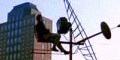
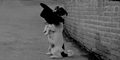
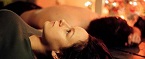
Fantastic. This is perhaps my favourite Haneke film, full of disconnected shots each telling a little story about a fragmented multi-cultural society, bookened by
two of the greatest tracking shots of the decade. So many great scenes: the journalist dictating over photographs, the supermarket argument, the scene shifting between two groups in the cafe, the sounds of discord in another apartment distracting Binoche from her ironing, the dubbing of the film within a film. Though perhaps the harrowing
scene on the Metro is the standout.
It encompasses so many important topics. The class and race ones are most prominent (with a bit of gender in there too), but the film also deals with rural agriculture versus the city and the uneasy relationship between the two with the sometimes forced, sometimes chosen immigration from one mode of living to the other. As much as barriers between races, there are generational barriers too, from the older Arab man facing down the angrier youths in that train scene to the father trying to force his reluctant son into the family farming business, to the fractured family (and culture) left behind in a different country in order to earn.
It is also about playacting against 'reality' in the Funny Games-esque psychological torture film and loss of a child in an accident being set against something more minor but just as devastating like the train scene. Also this emphasises public versus private spaces too, with the question of whether being humiliated in public and being turned into a pawn in someone else's personal grievance is better or worse than a betrayal in a relationship that is only visibly significant to you (or what about someone like the immigrant beggar who exists in public spaces but is passed by like a non-person, at least until they try and beg in front of someone's shop, raising the ire of the owner!), and the way that perhaps showing emotions is somehow only acceptable in fiction now. You are only allowed to burst into tears, or be angry about societal injustices (justified or bullyingly so), or beg, or dream when it is safely tucked away on the publicly visible-but-private dreamspace of a cinema screen and not in your real life, otherwise you are an over emotional monster who makes everyone else feel uncomfortable by simply having to be faced by your distress. Or laughter! Or mere presence.
I think we as the audience are most meant to observe the complex power dynamics going on too even in something as innocuous as a conversation, in the fluid way that individuals in their different environments and with different levels of knowledge of each other move from 'victims' to 'saviours' to 'aggressors' both in the way they are perceived (and misinterpreted) by the outside world and in their own fluctuating behaviours towards the different people that they meet. Everyone's flawed in their own different ways, imposing their own judgements whether in getting incensed by the casual, thoughtless bullying of a beggar, or in providing a commentary over your warzone photographs. The tragedy of this film is that everyone is desperate to communicate with each other (or at least help someone out) but aren't getting through to each other in a comforting way, rather one that only makes the divisions between them appear that much starker, like a black screen separating each scene in the film.
With this and Mulholland Drive (and La ciénaga earlier in the year), Criterion are gathering together some of the very best films of the 2000s now.


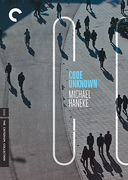

 )
)