Guided throughout by the swells and dips of Tchaikovsky’s music, Ken Russell’s The Music Lovers examines the tragedies of Tchaikovsky’s life through opulent and fantastic musical sequences running alongside a narrative of the composer’s life between 1875 and 1881. Touching on his disastrous marriage with Antonia Miliukova, his relationship with his patroness Nadezhda von Neck, and his repressed homosexuality, The Music Lovers is anchored by magnetic central performances from Glenda Jackson following her Academy Award for Women in Love, coupled with Richard Chamberlain as a neurotic Tchaikovsky.
Forming part of Ken Russell’s collection of experimental composer biopics, The Music Lovers features plenty of his signature provocation and excess, but ultimately takes a sympathetic lens to Tchaikovsky’s life in a repressive Russian society.
• Presented in High Definition
• Newly recorded audio commentary by film historian Matthew Melia
• Interview with Alexander Verney-Elliott (2024): Ken Russell's son looks back upon his father's work, and remembers his own appearance in The Music Lovers
• Emily Bronte Enters the Big Brother House (2007, 16 mins): Ken Russell staged, directed and filmed this 'Radical Bronte' ballet for young people, illustrating Jane Eyre
• The Guardian Interview: Melvyn Bragg (1988, c76mins): Ten years after the inception of The Southbank Show, Melvyn Bragg discusses his career in television and film writer Ronald Harwood, at the National Film Theatre in London.
• Galina Ulanova in "Swan Lake" (1940, 6 mins): one of the greatest ballerinas of all time is seen performing a dance from Swan Lake. As this rare footage is silent, for best results, watch it as you listen to your favourite recording of the Adagio from Act 2
• USSR Today: Edited highlights from three editions of the Soviet newsreel, gathering items about Tchaikovsky and Russian musical arts.
• Original trailer
• **FIRST PRESSING ONLY** Illustrated booklet with new writing on the film by Matthew Melia, a new essay by Caroline Langhorst and contributions from Alexander Verney-Elliott and Lisi Russell
The Music Lovers
-
MichaelB

- Joined: Fri Aug 11, 2006 10:20 pm
- Location: Worthing
- Contact:
The Music Lovers
Confirmed as a 17 June release.
-
patreig
- Joined: Mon Jun 09, 2014 11:30 am
Re: The Music Lovers
Any info about the long awaited release of Dance of the Seven Veils?
-
M Sanderson
- Joined: Sat Oct 22, 2016 7:43 am
Re: The Music Lovers
Very excited to revisit this prime Russell, this time on blu ray.
Also would be very interested regarding news on the long suppressed 7 Veils.
Also would be very interested regarding news on the long suppressed 7 Veils.
-
ethel
- Joined: Tue Mar 10, 2009 9:47 am
Re: The Music Lovers
Seven Veils is still up on YouTube if you can’t be bothered waiting another 34 years to see it…
-
TechnicolorAcid

- Joined: Wed Oct 11, 2023 11:43 pm
Re: The Music Lovers
Although it should be noted that the version up on YouTube is in abysmal quality and appears to be far worse than the version that appeared on BBC a while back.ethel wrote: Sun Apr 14, 2024 5:52 am Seven Veils is still up on YouTube if you can’t be bothered waiting another 34 years to see it…
Comparison Between the Two Versions
The YouTube version:
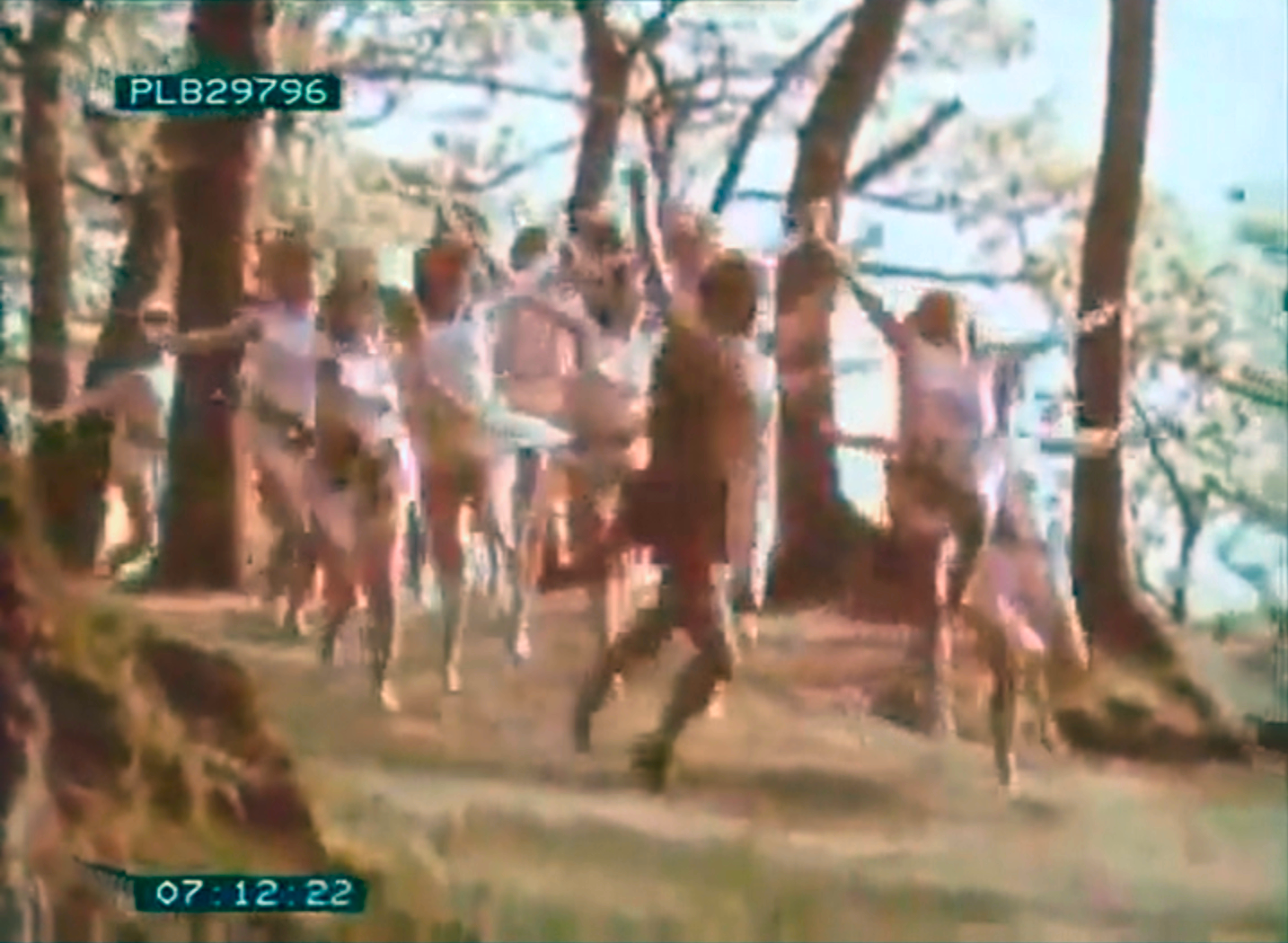
The Newer Restoration:

The Newer Restoration:
-
MichaelB
- Joined: Fri Aug 11, 2006 10:20 pm
- Location: Worthing
- Contact:
Re: The Music Lovers
I can confirm first-hand that the BFI is sitting on superior materials - but I suspect the Strauss rights issue is only one of many. As with all BBC productions of the era, it was only ever intended for one-off broadcast, which means that all the contracts will have to be renegotiated, including the music performance/recording rights.
Incidentally, "a while back" is February 1970 - its first and only legal screening.
Incidentally, "a while back" is February 1970 - its first and only legal screening.
-
patreig
- Joined: Mon Jun 09, 2014 11:30 am
Re: The Music Lovers
You were much more optimistic a while ago :MichaelB wrote: Sun Apr 14, 2024 8:30 pm I can confirm first-hand that the BFI is sitting on superior materials - but I suspect the Strauss rights issue is only one of many. As with all BBC productions of the era, it was only ever intended for one-off broadcast, which means that all the contracts will have to be renegotiated, including the music performance/recording rights.
Why such a drastic (and unfortunate) change of perspective?Re: The Ken Russell Collection
#43 Post by MichaelB » Sat Nov 12, 2016 12:36 pm
M Sanderson wrote:
So the Strauss film could find its way to Blu ray in a few years? Russell is our most suppressed filmmaker so this would be a crucial release.
There's no good reason why not - there's almost certainly a market for it, the BFI has a pretty decent print (with far better colour than the barely watchable timecoded copy on YouTube), and the only thing preventing a release right now is the Richard Strauss Estate, whose control over the music expires at midnight on January 1st 2020 (i.e. the first day of the year after the 70th anniversary of the composer's death, in accordance with current European copyright law).
-
MichaelB
- Joined: Fri Aug 11, 2006 10:20 pm
- Location: Worthing
- Contact:
Re: The Music Lovers
There's no change of perspective at all, drastic or otherwise. The Strauss copyright situation prevented any kind of release until New Year's Day 2020, but thereafter the hurdles are the same as that which would be faced by literally any other BBC drama of the period when it comes to making it viable for a commercial release. See also the Alan Clarke productions, Play for Today, etc. etc.
-
MichaelB
- Joined: Fri Aug 11, 2006 10:20 pm
- Location: Worthing
- Contact:
Re: The Music Lovers
Full specs confirmed:
THE MUSIC LOVERS
A film by Ken Russell
Starring Richard Chamberlain and Glenda Jackson
Released on BFI Blu-ray on 24 June 2024
As part of Ken Russell’s series of imaginative, experimental biopics of great composers, THE MUSIC LOVERS is filled with his signature provocation and excess, but ultimately brings a sympathetic lens to bear on Tchaikovsky’s life in the repressed society of 19th-century Russia. The BFI’s Blu-ray release presents the film in High Definition, with extras including a new audio commentary by film historian Matthew Melia and a new interview with Ken Russell’s son.
Guided throughout by the swells and dips of Tchaikovsky’s music, the film, with screenplay by Melvyn Bragg, unfolds in opulent and fantastical musical sequences that portray scenes from the composer’s life between 1875 and 1881. Touching on his disastrous marriage with Antonina Miliukova, his relationship with patroness Nadezhda von Meck and his repressed homosexuality, THE MUSIC LOVERS is anchored by magnetic central performances from Glenda Jackson as Antonina, following her award-winning role in WOMEN IN LOVE, and Richard Chamberlain as a memorably neurotic Tchaikovsky.
Special features
• Presented in High Definition
• Newly recorded audio commentary by film historian Matthew Melia
• It Runs in the Family (2024, 20 mins): Ken Russell’s son, Alexander Verney-Elliott, looks back upon his father's work, and remembers his own appearance in The Music Lovers
• Charlotte Brontë Enters the Big Brother House (2007, 16 mins): Ken Russell staged, directed and filmed this 'radical Brontë' ballet for young people, illustrating Jane Eyre
• The Guardian Interview: Melvyn Bragg (1988, 76mins): ten years after the inception of The South Bank Show, Melvyn Bragg discusses his career in television and film with writer Ronald Harwood, at the National Film Theatre in London
• Galina Ulanova in "Swan Lake" (1940, 4 mins): one of the greatest ballerinas of all time performs a dance from Tchaikovsky’s masterpiece
• Musical Highlights from USSR Today (1953-56, 10 mins): edited highlights from three editions of the Soviet newsreel, gathering items about Tchaikovsky and Russian musical arts
• Costume designs: original sketches by Shirley Russell
• Original trailer
• ***First pressing only*** Illustrated booklet with new writing on the film by Matthew Melia, a new essay by Caroline Langhorst and contributions from Alexander Verney-Elliott and Lisi Russell; notes on the special features and credits.
Product details
RRP: £19.99 / Cat. no. BFIB1518 / 15
UK / 1971 / colour / 124 minutes / English language with optional descriptive subtitles / original aspect ratio 2.35:1 BD50: // 1080p, 23.98fps, LPCM 2.0 stereo audio (48kHz/24-bit) and DTS-HD Master Audio 5.1 audio
-
TechnicolorAcid
- Joined: Wed Oct 11, 2023 11:43 pm
Re: The Music Lovers
Was there ever a filmmaker with as great of a year as Ken Russell’s was in 1971? The Devils is undoubtedly his magnum opus, a deranged and blackly comic marvel that is also occasionally very warm and spiritual, while The Boy Friend is perhaps his most underrated work, filled with an enduring sweetness paired with some of the best musical sequences made post-Classic Hollywood. Yet despite both of these films’ greatness, I somehow end up thinking about The Music Lovers the most as my favorite film from Russell’s 1971 cycle.
A large part of that is that there’s a very noticeable love of Tchaikovsky as both a person and especially as a composer throughout The Music Lovers, the film reveling in just letting the emotion of Tchaikovsky’s work overtake the audience to the point that Russell’s film becomes less of a biopic than an opera. That’s perhaps most evident in the first instance of this, an 11-minute wordless sequence of Tchaikovsky performing ‘Piano Concerto No. 1 in B-flat minor’ that structurally introduces all of its key players, serving as an overture for the rest of the film, doing all of this through pure imagery and camera movement that is nothing short of masterful. Yet beyond the storytelling aspect of the sequence, Russell, by using the music to introduce us to each character, is commenting on the impact music (or even just art in general) has on us as the listener and how each of us form different connections to a work based on our own experiences and desires. I think that, if The Music Lovers was just this one singular scene, it would be perfection but that doesn’t mean the rest of it isn’t great far from it.
I noted that Russell also clearly has a deep love for Tchaikovsky as a person as well, a gifted man whose work at the start is labeled vulgar and “women’s stuff” by stuffy prudes with more care for ‘proper’ technique than artistic value as well as someone threatened with having his work censored and forgotten about if he became too taboo. Richard Chamberlain’s role as Tchaikovsky filled with a deep degree of sympathy for the man (partially because Chamberlain himself was a closeted homosexual around the time of filming) and both men do a lot to make the audience sympathize with a man who is, if nothing else, a deeply broken man tormented by his inability to change who he is at his core in an environment where his core would leave him barred from his passions.
Yet despite the fact that Tchaikovsky is painted as a sympathetic man, perhaps The Music Lovers’ greatest strength is its acknowledgement that the cruelty he has faced from the world has itself led to him enacting his own cruelty towards the people who love him. The most serious damage is inflicted on Tchaikovsky’s wife Nina, a hopeless romantic trying to escape her past as a prostitute sold to men by her own mother and yet somehow only ending up more ruined and corrupted by the cruelty the men in her life give her, firstly with the drunken soldier who ravages her and her home and then with Tchaikovsky. A large part of that is related to Tchaikovsky’s own inability to change and how that eventually boils into resentment of Nina, a symbol of the facade he has to maintain for the rest of his life, turning that resentment into initially only sudden outbursts until it escalates with him strangling her almost to death. And when Tchaikovsky leaves, his separation essentially leaves Nina vulnerable to her mother’s corruption again under the guise that her lovemaking with other composers would make Tchaikovsky realize his mistake. Yet he never returns and it breaks Nina, her ultimate fate in the madhouse as cruel and as heartbreaking as, if not more so than, any moment in The Devils.
It’s not just Nina that Tchaikovsky’s cruelty affects too but also the people he genuinely does love whether it’s Nadezhda’s heartbreak at realizing she can never get Tchaikovsky to fall in love with her, the Count’s grief of his love not only rejecting him but also denying that they were ever in love, or of his sister’s sense of betrayal in Tchaikovsky’s abandonment of Nina. And it’s that complexity in observing Tchaikovsky that makes The Music Lovers so special because despite all of the love and appreciation it wants you to feel for its central figure, Russell’s film is also about dismantling the pure image that Tchaikovsky was given as information about him that was considered too shocking was censored and denied publication (which perhaps explains why several critics bashed Russell for what they believed was him just making up information about Tchaikovsky’s life).
Overall, on a good day, I think there’s a case for this being Russell’s greatest film, a bombastic, complex, wonderfully acted and beautiful looking film about broken people and a must-watch for those interested in Tchaikovsky or classical music in general. Also highly recommend the Blu-Ray of this, it’s fantastic and rewatching it on the disc really highlights Russell’s gorgeous compositions.