The 1980 Mini-List
-
swo17

- Bloodthirsty Butcher
- Joined: Tue Apr 15, 2008 2:25 pm
- Location: SLC, UT
Re: The 1980 Mini-List
It's something I didn't vote for
-
geoffcowgill

- Joined: Thu Jun 28, 2007 11:48 pm
Re: The 1980 Mini-List
I'm of the apparently unpopular opinion that 1980 was a just fine year for movies. In fact, my planned top pick for 1981 was on the 1980-eligible list, and it ended up at number 4 for '80. Only one Orphan in my submitted list of 25, Grown Ups.
1-Raging Bull
2-Elephant Man, The
3-Melvin and Howard
4-Atlantic City
5-Stardust Memories
6-Kagemusha
7-The Empire Strikes Back
8- Berlin Alexanderplatz
9- Grown Ups
10- Gregory’s Girl
1-Raging Bull
2-Elephant Man, The
3-Melvin and Howard
4-Atlantic City
5-Stardust Memories
6-Kagemusha
7-The Empire Strikes Back
8- Berlin Alexanderplatz
9- Grown Ups
10- Gregory’s Girl
-
brundlefly

- Joined: Fri Jun 13, 2014 4:55 pm
Re: The 1980 Mini-List
The Indian films I’ve seen from this year, ranked. Part one of three. These first five I adore.

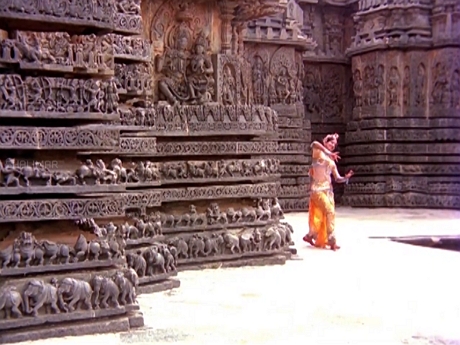
1. Sankarabharanam (K. Viswanath)
This Telugu film is in some ways my favorite of the Indian musicals I’ve seen, though I’m not naturally inclined toward its classical sound. Music is sacred in this, not something to be doled out as interlude or obligation; it’s “an infinite flow of elixir,“ the binding, boundless force of connection between living things. This is a story of two strangers’ deep appreciation and severe dedication to its sustenance.
He is a temperamental master vocalist who stays furious days after a performance is interrupted by a negotiation concerning an unknown woman. She has been raised by her mother to be a courtesan, trained in song and dance to entertain clients, but fell too in love with music to devote herself to anything else. It’s an interruption that will beget continuity. He will need to save her, she will provide him salvation. They almost never speak, and their relationship is implied as chaste. They have their music. Here is how they meet.
They almost never speak, and the film can follow their example. Other than a pair of introductions, the first thirteen minutes are without dialogue. Even when the wordlessness errs artificial, it’s welcome. (Viswanath amplifies both the singer’s authority and the courtesan’s insecurities by avoiding star casting, importing seasoned stage actor J. V. Somayajulu –who can look a little like Brezhnev, or Oskar Homolka – and moving dancer Manju Bhargavi center and minimizing her make-up.) Words are for lawyers and gossips and annoying little children. When the musician speaks, it’s often to lecture or scold; though the film too often assumes he’s right, it’s also knows that’s his problem.
The film has its outbursts as well. It is fundamentally a melodrama determined to resist melodramatic tones, and it insists you embrace both its story and manner. Episodic thrusts are made to fit one way or another, by charm or amusement, because its true focus is strong. The music is all that matters. Nothing but the music. Its climax is a symbolic one that will either make your eyes roll or well up. I found it perfect.
Sankarabharanam makes its classical music palatable the same way it reconciles plot and tone, corralling raga into pop-sized spurts. This film made without regard to selling records wound up selling a lot of them, making its playback singer a crossover recording star and driving a renewed popular interest in traditional music. Viswanath would continue mining this vein in years to come.
Sankarabharanam is streaming on YouTube with optional English subtitles. Crushed from 1:33 to the wrong aspect ratio, so watch with a video stretcher like this one.
Other musical highlights: "Raagam Taanam Pallavi", "Shankaraa Naadasareeraparaa".

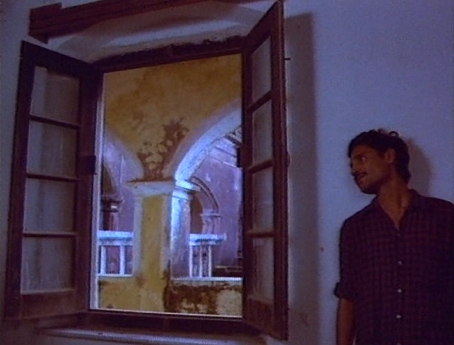
2. Satah Se Uthata Aadmi / Arising from the Surface (Mani Kaul)






3. Esthappan (Govindan Aravindan)
Esthappan inhabits a small fishing village where traditional lifestyles coexist (for now) with encroaching modernization. He may be a drunken nuisance or a holy fool or a great seer and artist. Depends who you ask. But he does not lead a normal life. He does not have "a house, a net, a wife." He may not be alive at all, anymore, if he ever was. “He who has nothing has no end or beginning.”
In a time of change, he exists in both the old place and the new place. Esthappan may have saved the daughter of a poor prostitute from illness, he may have saved the daughter of a wealthy mixed-race couple from drowning. People tell stories about Esthappan. People contradict stories about Esthappan. People tell stories about people telling stories about Esthappan. He may have come from the ocean, he may have walked into the ocean, he may be in several places at once. At some point everyone who ever met him will be gone, but everyone will still know him.
Aravindan and his stellar DP Shaji contemplate the purpose, permanence, and malleability of local legend through a tale of tales that came from who knows where, but their real story is this place and the people who they found there. As in Kummatty and Thampu, they thrill at faces. Wonder at where the people who had those faces then are now, take comfort knowing they'll always be right here forever should you need see them again.
Unfortunately the version of Esthappan left streaming on YouTube has a watermark that is in conflict with the burned-in English subtitles.

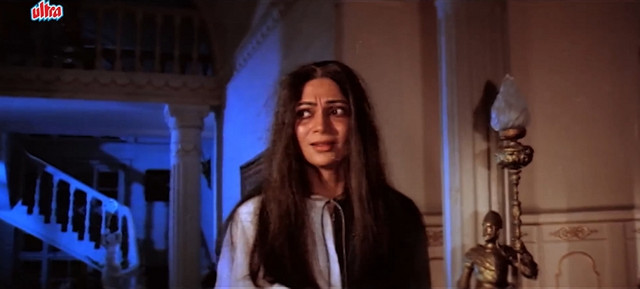
4. Karz / Debt (Subhash Ghai)
If you’ve seen 2007’s reincarnation smorgasbord Om Shanti Om, you’ve already seen bits of Karz; that film opens on the set of this one, during the filming of the dizzying musical number for the insanely catchy hit with which the New Bollywood film shares its name. And if you’ve seen J. Lee Thompson’s 1975 horny paranormal mystery The Reincarnation of Peter Proud, you’ll feel a sense of déjà vu; an acknowledged (but uncredited) inspiration, Karz also features a man who sees flashes of his murder in a previous life and stumbles back toward it.
Karz naturally refashions Proud’s fatalistic somnambulism into something active and overstuffed, a search for justice and birthright instead of a struggle with identity and purpose. And into something musical: Instead of Peter Proud, thirtysomething college prof whose visions begin on a random birthday, we get Monty (Rishi Kapoor), an orphan pop star triggered by a tune. Your past life is a song stuck in your head.
Instead of following Proud’s questionable romance with his own-but-not-really daughter, Monty sets out to seduce and gaslight his former wife (Simi Garewal), now of course much older. (An intertextual add: Rishi’s first role was as a pubescent version of his father in Raj Kapoor’s autobiographical epic Mera Naam Joker. In that, Garewal played a teacher, the object of his sexual awakening.) The movie doesn’t abandon intimations of incest; the relationship between Garewal and her brother is off from the start. Karz retains and reworks some of the least significant details from Proud like it was adapting a checklist instead of a script. The nervous habit of tapping a drinking glass that Proud shares with his former self is reassigned to a mute gangster as a form of communication (a la Breaking Bad’s bell). The random references to Native Americans are now costume ideas. Perfunctory skepticism (“You’re talking about… rebirth in these modern times?”) feels imported to an industry where reincarnation constitutes a small genre (punar janam). “Might you have seen these images in a film?” a doctor asks.
Karz also carries over the feeling in Proud that the murderous wife has a more interesting story and a lot more going on than the main character.
Speaking of a lot going on, Subhash Ghai. You may have emerged from that musical number up there with a lot of questions (Like: Why is Jason Sudeikis so enthusiastic? Wait, how old is Jason Sudeikis? and Are you sure that isn’t Jason Sudeikis?) and often the answer is Why Not. Vidhaata was the first Ghai I saw, it was a fun mess. This earlier film is a great mess. You sense a desperation to have something, anything, happening in every shot, even if just an arbitrary bit of business (Why not start Q-Tipping your ears at a crime scene?) or a ridiculous choice of wardrobe or decor. Usually, it’s movement – of the frame, within the frame (sometimes to manufacture a questionable frame-within-the-frame), into and out of the frame. There are comic henchmen nicknamed “Left” and “Right” who leap in from their respective sides. The main titles are scattered around a set so there’s somewhere for the lens to land before it starts looking again.
Obsessed with how Ghai has two guitarists wheeled into the foreground to frame Kapoor, wheels them right back out so he can push in. Successfully fills four whole seconds: Ghai copies Peter Proud’s flash frame flashbacks but, the same way the story also integrates bits of Diabolique, Hamlet, an adorable painting of kittens, who knows what all else – “Om Shanti Om” is itself an uncredited remake – makes them one of many options. Techniques that could be thematically appropriate – double-exposures, background shadows and silhouettes – register as something else to do. Other punar janam use the same actor for both lives; it’s easy shorthand, treats their star to a double role. Karz preserves Proud’s separate casting, which makes sense for its story, but also adds another mouth to feed. As befits a masala, tones butt against each other, but Ghai double-exposes those as well. We’re asked to believe a grown woman is terrified by a Silly Symphony. It regularly stages staged fights. While it largely de-complicates Peter Proud by heroing up Monty, Kapoor does get an anguished scene where he seethes with both lust and fury and it’s chilling.
It builds to the most elaborate dedication of a high school auditorium in history ever and an overcaffeinated climax that can’t keep the time of day straight. But Karz is never so much incoherent as excitedly impetuous. Its accumulation of why nots froths amusement into joy, its density of distraction makes happenstance preordained. Leagues above slapdash filler, its immediate pleasures have led to lasting reputation. It bests the overburdened Om Shanti Om from before its time.
Karz is streaming on YouTube with optional English subtitles (and a few brief sound drop-outs) and is available to rent on Amazon. Om Shanti Om is streaming on Netflix.
The musical highlights are long, involved sequences, you may want to preserve their surprises (especially the last one’s) for the feature. But in case you don’t: "Dard-E-Dil", "Kamaal Hai, Kamaal Hai", "Ek Haseena Thi" (another uncredited grab).
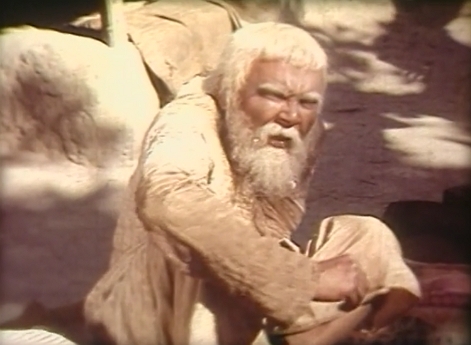
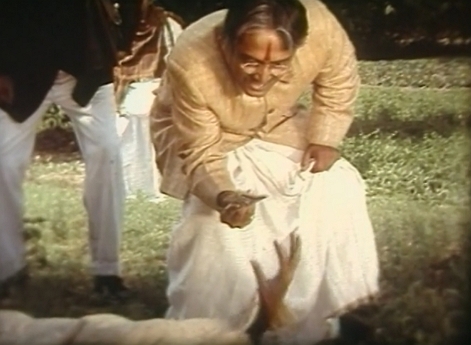
5. Bancharamer Bagan / The Garden of Bancharam (Tapan Sinha)
Death plays hide-and-seek, foxes and dogs play tug-of-war.
Bancharam’s father once saved the life of the zamindar for whom he toiled; he was rewarded with a plot his son has developed into a lush and fruitful garden. That zamindar’s son has grown into an idle, insomniac tyrant whose covetousness transcends his physical being and bleeds into subsequent generations. They want most what they cannot have. Bancharam’s only surviving descendant, a grandson, eyes the land for development. But Bancharam lives on, perhaps against his own will.
This Bengali drama is an adaptation of a play by Manoj Mitra, stars the playwright, and (at least in translation) its theatrical origins are most preserved in select acting styles and cosmetics. It’s talky, but exterior settings and era-spanning action automatically open things up. Sinha teases a formal adventurousness early, but is mostly content to keep things flowing smoothly. Focusing on the fracas, keeping easy parable and moral wagging to the minimum, letting the changing face of the nation play out incidentally. Occasionally he pauses for groundskeeping. There should probably be more of that.
The fuel for the film is predictably delicious estate comedy, crowd-pleasing cruelty erupting as everyone acts the wrong way to news of death or dying. None of this would work as well without Mitra keeping Bancharam a cantankerous question mark. It’s a physical performance, a lemon-puckered puss atop a gnarled frame, a manifestation of perpetual misery waiting on a promise. What mix of natural humility, internalized obeisance, and sarcasm the old man gives off is inscrutable. Survival has rubbed away the line between calculation and obliviousness. He is a captivating and insufferable hero. And perhaps his company would not be worth it if the film didn’t earn the right to emotionally turn a corner, which it does, though still casts some irony on an affirmation.
A small treasure, like its garden.
I swear the first time I watched it Bancharamer Bagan was full-frame and complete, but that link’s gone dead. The subtitled options left on YouTube are this digital restoration that’s been heinously cropped from 1.33:1 to 2.35:1, and another ancient print with translucent burned-in titles that’s been trimmed by 20 minutes.
Next: Eight others to be admired. Later, some for amusement, some to be avoided.
1978 - 1981 - 1982 (1, 2)
1. Sankarabharanam (K. Viswanath)
This Telugu film is in some ways my favorite of the Indian musicals I’ve seen, though I’m not naturally inclined toward its classical sound. Music is sacred in this, not something to be doled out as interlude or obligation; it’s “an infinite flow of elixir,“ the binding, boundless force of connection between living things. This is a story of two strangers’ deep appreciation and severe dedication to its sustenance.
He is a temperamental master vocalist who stays furious days after a performance is interrupted by a negotiation concerning an unknown woman. She has been raised by her mother to be a courtesan, trained in song and dance to entertain clients, but fell too in love with music to devote herself to anything else. It’s an interruption that will beget continuity. He will need to save her, she will provide him salvation. They almost never speak, and their relationship is implied as chaste. They have their music. Here is how they meet.
They almost never speak, and the film can follow their example. Other than a pair of introductions, the first thirteen minutes are without dialogue. Even when the wordlessness errs artificial, it’s welcome. (Viswanath amplifies both the singer’s authority and the courtesan’s insecurities by avoiding star casting, importing seasoned stage actor J. V. Somayajulu –who can look a little like Brezhnev, or Oskar Homolka – and moving dancer Manju Bhargavi center and minimizing her make-up.) Words are for lawyers and gossips and annoying little children. When the musician speaks, it’s often to lecture or scold; though the film too often assumes he’s right, it’s also knows that’s his problem.
The film has its outbursts as well. It is fundamentally a melodrama determined to resist melodramatic tones, and it insists you embrace both its story and manner. Episodic thrusts are made to fit one way or another, by charm or amusement, because its true focus is strong. The music is all that matters. Nothing but the music. Its climax is a symbolic one that will either make your eyes roll or well up. I found it perfect.
Sankarabharanam makes its classical music palatable the same way it reconciles plot and tone, corralling raga into pop-sized spurts. This film made without regard to selling records wound up selling a lot of them, making its playback singer a crossover recording star and driving a renewed popular interest in traditional music. Viswanath would continue mining this vein in years to come.
Sankarabharanam is streaming on YouTube with optional English subtitles. Crushed from 1:33 to the wrong aspect ratio, so watch with a video stretcher like this one.
Other musical highlights: "Raagam Taanam Pallavi", "Shankaraa Naadasareeraparaa".
2. Satah Se Uthata Aadmi / Arising from the Surface (Mani Kaul)
3. Esthappan (Govindan Aravindan)
Esthappan inhabits a small fishing village where traditional lifestyles coexist (for now) with encroaching modernization. He may be a drunken nuisance or a holy fool or a great seer and artist. Depends who you ask. But he does not lead a normal life. He does not have "a house, a net, a wife." He may not be alive at all, anymore, if he ever was. “He who has nothing has no end or beginning.”
In a time of change, he exists in both the old place and the new place. Esthappan may have saved the daughter of a poor prostitute from illness, he may have saved the daughter of a wealthy mixed-race couple from drowning. People tell stories about Esthappan. People contradict stories about Esthappan. People tell stories about people telling stories about Esthappan. He may have come from the ocean, he may have walked into the ocean, he may be in several places at once. At some point everyone who ever met him will be gone, but everyone will still know him.
Aravindan and his stellar DP Shaji contemplate the purpose, permanence, and malleability of local legend through a tale of tales that came from who knows where, but their real story is this place and the people who they found there. As in Kummatty and Thampu, they thrill at faces. Wonder at where the people who had those faces then are now, take comfort knowing they'll always be right here forever should you need see them again.
Unfortunately the version of Esthappan left streaming on YouTube has a watermark that is in conflict with the burned-in English subtitles.
4. Karz / Debt (Subhash Ghai)
If you’ve seen 2007’s reincarnation smorgasbord Om Shanti Om, you’ve already seen bits of Karz; that film opens on the set of this one, during the filming of the dizzying musical number for the insanely catchy hit with which the New Bollywood film shares its name. And if you’ve seen J. Lee Thompson’s 1975 horny paranormal mystery The Reincarnation of Peter Proud, you’ll feel a sense of déjà vu; an acknowledged (but uncredited) inspiration, Karz also features a man who sees flashes of his murder in a previous life and stumbles back toward it.
Karz naturally refashions Proud’s fatalistic somnambulism into something active and overstuffed, a search for justice and birthright instead of a struggle with identity and purpose. And into something musical: Instead of Peter Proud, thirtysomething college prof whose visions begin on a random birthday, we get Monty (Rishi Kapoor), an orphan pop star triggered by a tune. Your past life is a song stuck in your head.
Instead of following Proud’s questionable romance with his own-but-not-really daughter, Monty sets out to seduce and gaslight his former wife (Simi Garewal), now of course much older. (An intertextual add: Rishi’s first role was as a pubescent version of his father in Raj Kapoor’s autobiographical epic Mera Naam Joker. In that, Garewal played a teacher, the object of his sexual awakening.) The movie doesn’t abandon intimations of incest; the relationship between Garewal and her brother is off from the start. Karz retains and reworks some of the least significant details from Proud like it was adapting a checklist instead of a script. The nervous habit of tapping a drinking glass that Proud shares with his former self is reassigned to a mute gangster as a form of communication (a la Breaking Bad’s bell). The random references to Native Americans are now costume ideas. Perfunctory skepticism (“You’re talking about… rebirth in these modern times?”) feels imported to an industry where reincarnation constitutes a small genre (punar janam). “Might you have seen these images in a film?” a doctor asks.
Karz also carries over the feeling in Proud that the murderous wife has a more interesting story and a lot more going on than the main character.
Speaking of a lot going on, Subhash Ghai. You may have emerged from that musical number up there with a lot of questions (Like: Why is Jason Sudeikis so enthusiastic? Wait, how old is Jason Sudeikis? and Are you sure that isn’t Jason Sudeikis?) and often the answer is Why Not. Vidhaata was the first Ghai I saw, it was a fun mess. This earlier film is a great mess. You sense a desperation to have something, anything, happening in every shot, even if just an arbitrary bit of business (Why not start Q-Tipping your ears at a crime scene?) or a ridiculous choice of wardrobe or decor. Usually, it’s movement – of the frame, within the frame (sometimes to manufacture a questionable frame-within-the-frame), into and out of the frame. There are comic henchmen nicknamed “Left” and “Right” who leap in from their respective sides. The main titles are scattered around a set so there’s somewhere for the lens to land before it starts looking again.
Obsessed with how Ghai has two guitarists wheeled into the foreground to frame Kapoor, wheels them right back out so he can push in. Successfully fills four whole seconds:
No Spoiler, Just GIF
It builds to the most elaborate dedication of a high school auditorium in history ever and an overcaffeinated climax that can’t keep the time of day straight. But Karz is never so much incoherent as excitedly impetuous. Its accumulation of why nots froths amusement into joy, its density of distraction makes happenstance preordained. Leagues above slapdash filler, its immediate pleasures have led to lasting reputation. It bests the overburdened Om Shanti Om from before its time.
Karz is streaming on YouTube with optional English subtitles (and a few brief sound drop-outs) and is available to rent on Amazon. Om Shanti Om is streaming on Netflix.
The musical highlights are long, involved sequences, you may want to preserve their surprises (especially the last one’s) for the feature. But in case you don’t: "Dard-E-Dil", "Kamaal Hai, Kamaal Hai", "Ek Haseena Thi" (another uncredited grab).
5. Bancharamer Bagan / The Garden of Bancharam (Tapan Sinha)
Death plays hide-and-seek, foxes and dogs play tug-of-war.
Bancharam’s father once saved the life of the zamindar for whom he toiled; he was rewarded with a plot his son has developed into a lush and fruitful garden. That zamindar’s son has grown into an idle, insomniac tyrant whose covetousness transcends his physical being and bleeds into subsequent generations. They want most what they cannot have. Bancharam’s only surviving descendant, a grandson, eyes the land for development. But Bancharam lives on, perhaps against his own will.
This Bengali drama is an adaptation of a play by Manoj Mitra, stars the playwright, and (at least in translation) its theatrical origins are most preserved in select acting styles and cosmetics. It’s talky, but exterior settings and era-spanning action automatically open things up. Sinha teases a formal adventurousness early, but is mostly content to keep things flowing smoothly. Focusing on the fracas, keeping easy parable and moral wagging to the minimum, letting the changing face of the nation play out incidentally. Occasionally he pauses for groundskeeping. There should probably be more of that.
The fuel for the film is predictably delicious estate comedy, crowd-pleasing cruelty erupting as everyone acts the wrong way to news of death or dying. None of this would work as well without Mitra keeping Bancharam a cantankerous question mark. It’s a physical performance, a lemon-puckered puss atop a gnarled frame, a manifestation of perpetual misery waiting on a promise. What mix of natural humility, internalized obeisance, and sarcasm the old man gives off is inscrutable. Survival has rubbed away the line between calculation and obliviousness. He is a captivating and insufferable hero. And perhaps his company would not be worth it if the film didn’t earn the right to emotionally turn a corner, which it does, though still casts some irony on an affirmation.
A small treasure, like its garden.
I swear the first time I watched it Bancharamer Bagan was full-frame and complete, but that link’s gone dead. The subtitled options left on YouTube are this digital restoration that’s been heinously cropped from 1.33:1 to 2.35:1, and another ancient print with translucent burned-in titles that’s been trimmed by 20 minutes.
Next: Eight others to be admired. Later, some for amusement, some to be avoided.
1978 - 1981 - 1982 (1, 2)
Last edited by brundlefly on Sun Mar 30, 2025 8:23 am, edited 1 time in total.
-
brundlefly
- Joined: Fri Jun 13, 2014 4:55 pm
Re: The 1980 Mini-List
The Indian films I’ve seen from this year, ranked. Part two of three.

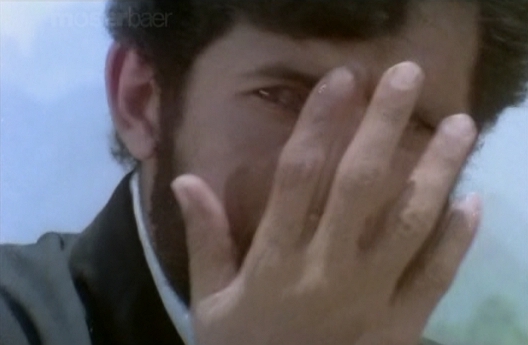
6. Aakrosh / Outrage (Govind Nihalani)
One of the most harrowing climaxes you’ll ever witness, at the end of a frustrating path. Nihalani’s revered directorial debut about a murder in a tribal village is a considered portrayal of the intimate, communal, and existential devastation brought on by systemic corruption, exploitation, and prejudice.
It’s framed as pat legal thriller: Cub lawyer (Naseeruddin Shah) takes on his prosecutorial mentor (Amrish Puri) while defending a tribal man (Om Puri) accused of killing his wife, discovers a conspiracy. His gradual awakening and encroaching paranoia are well charted, but he starts at place of bewildering naivete and Shah plays him shocked at every foregone conclusion; the film’s structure is methodical but each scene clunks into the next, making it feel haphazard. It’s great at muddying waters – the mentor’s background makes him more than a facile stand-in for The Law – but then slops together thin illustrative representatives for a good ol’ boy card game. A lot lands too obvious, and it gets easy to roll your eyes or tune out altogether and miss the less pronounced behavioral observations. Nihalani may count on you forgetting which faces he has been shuffling through the background.
The director favors realism and sunlit spaces, but leans into the searing, mostly wordless performance of Om Puri for expressive dark mode flashbacks (including an awkward lovemaking scene that’s less sensual than a reminder of what it’s not allowed to show, and an attack scene made brutal by obstruction), effectively granting the character an interior voice. Nihalani was the cinematographer for Shyam Benegal’s first seven features, and he’s working with writers – playwright Vijay Tendulkar, whose name is on many engaged parallel cinema projects from the ‘70s and early ‘80s, and Satyadev Dubey – who also contributed to Benegal’s work. But here the choppiness of cherry-picked scenes doesn’t successfully accumulate into a fulfilling societal portrait the way the best of those films do. Even though an early question – "You want to practice law, not revolution, right?" – works as well as a challenge to the legal system itself, Aakrosh instead feels pitched more as personal activation (akin to Albert Pinto, further down this list, also starring Shah), cycling silence, talk, and action in the face of endlessly renewed injustice and wondering if persistence can be enough.
Shemaroo has a cropped version of Aakrosh streaming with optional English subtitles on YouTube and their site.


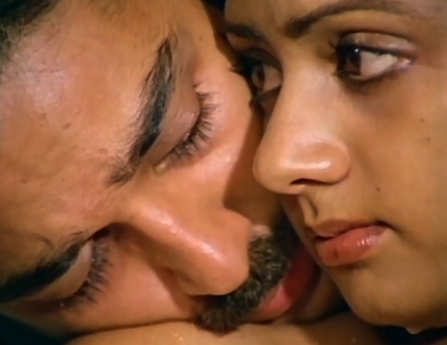

7. Varumayin Niram Sivappu / The Color of Poverty is Red (K. Balachander)(1980) & Zara Si Zindagi / Slice of Life (K. Balachander)(1983)
Balachander uses an employment crisis in the nation’s capital to stage a Romantic-comic wail about personal promise exhausted in the face of compromise and demands for success. Varumayin Niram Sivappu launches like a political tract, focusing on three over overeducated, unemployed roommates, and befitting them, it comes out quick-witted and angry.
And hungry. Cigarettes have replaced food (butts are “hot fruit,” versus new packs of “fresh fruit”), a pantomime meal featuring empty dinnerware becomes a radio play, the bouncy first musical number plays empty stomachs as percussion. “Sing a song to forget our hunger,” it starts, spitting sarcasm, pointing fingers high (“Sing about the greatness of our country/Why do you need food, brother?”) and low (“There are children everywhere… We’re running out of names.”).
Focus falls to Rangan (Kamal Haasan), a philosophy grad who longs to live to the ideals of his hero, the Tamil poet Bharathi. Toward that he has broken with his brahmin family and rejected its classical musical heritage – there are shades of Five Easy Pieces in VNS’ generational angst – and has set into taking and rejecting a series of low-level jobs, finding dishonesty everywhere. He’s “an idealist in every way,” trying to go “straight on a curved path.” It’s easier to identify with Rangan than sympathize with him; the insubordination that energizes the early part of the film properly turns to frustration. Rangan’s path keeps bringing him back to the arts: Theres a romance with an actress kept in poverty by her gambling father, a rival in a toxic theater director, a friend in a cloying mute painter. These can feel insufferably symbolic in a movie initially playful with practical woes. And then there’s all that subtitled quoted Bharathi.
Zara Si Zindagi is available to rent with English subtitles on Amazon. The version of Varumayin Niram Sivappu streaming at aha has subs but has been cut by 20 minutes.


8. “Arrival” (Mani Kaul)
Kaul’s documentary short catching the flow of labor and product into and through Mumbai belongs alongside your favorite farm-to-table tales and city symphonies. Eschews linearity to ponder distance, proximity, association; it resists obviousness and has some sublime sequences. One pan made me think he’d made a bus dis- and reappear.
National Film Award winner for Best Experimental Film ("For searing imagery and outstanding soundtrack"), you can stream it on YouTube. No subtitles, but it is mostly wordless. It does include slaughterhouse scenes.
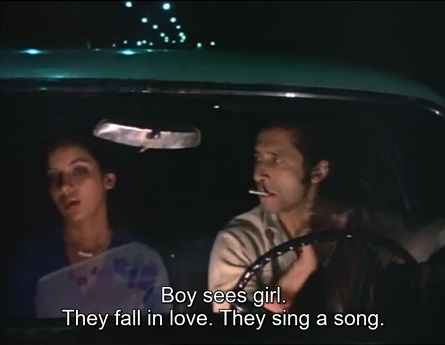

9. Albert Pinto ko Gussa Kyon Aata Ha / Why Does Albert Pinto Get Angry? (Saeed Akhtar Mirza)
Musical highlights: "Chalti Bhi Hai Gadi Bhi Hai", ”Achcha Albert Ko Achcha Nahin Lagta”.


10. Hirak Rajar Deshe / Kingdom of Diamonds (Satyajit Ray)
Baby’s first book of tyranny. Ray picks up his grandfather’s fantasy characters a decade later, but this second movie has nothing approaching the formal fun of Goopy Gyne Bagha Byne’s ghost dance. Our heroes – quest long completed, now on an ambassadorial mission to the titular domain – often feel like the tourists they are. Lead figures don’t click either: Utpal Dutt, who made bosses in Bhuvan Shome and Gol Maal, memorably intimidating, makes scant impression as the king. Soumitra Chatterjee’s schoolteacher is the figure of noble, anguished resistance; he should be at the center but is admired from a distance.
The richest section’s a quasi-comical survey of thought control, from image maintenance and information management to descriptions of literal brainwashing, often told in verse – though the teacher refuses to rhyme – and with wit (“There is no end to knowledge. It is futile trying to learn.”) against picture book backdrops.
Is it troubling this lands familiar and dull? You watch jackboots roust homeless camps and burn books – in a children’s film! –and it feels like scrolling through both a newsfeed and a used checklist. Perpetual relevance doesn’t always imbue a shine. Teaching the kids so they can see the next Big Bad coming seems noble effort, but so far seeing it coming hasn’t much helped. Ray made this in the wake of The Emergency and it arrived in the shadow of Indira Gandhi’s return to power; how well you like it may depend on how you prioritize admiration for Ray’s audacity.
Hirak Rajar Deshe is streaming on YouTube in this playlist; the dialogue has English subtitles, the songs only have Bengali sing-along prompts.

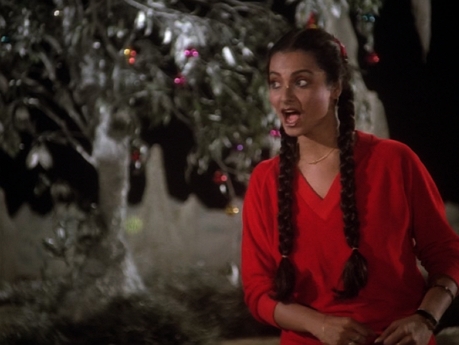
11. Khubsoorat / Beautiful (Hrishikesh Mukherjee)
On the other hand, rhyming is rebellion in Mukherjee’s comedy.
When her only sister leaves their lively, progressive home to marry into a large conservative family with a dictatorial matriarch (Dina Pathak), Rekha (deemed "more jolly than necessary") follows as a minor chaos gremlin, fostering secrets and encouraging pockets of uprising. While there are quick fits of pertinent political discussion, Mukherjee and scripter Gulzar favor compromise and comfort.
It is nice that women set the rules and the tone, and nice that Pathak’s not playing a demon; her strictness holds her household together, she spends her spare time helping underprivileged women, and she has honed an enjoyably sharp dismissiveness. Conflict plays out in the art direction, and while the movie’s amused by Rekha’s Romper Room moon milk rivers and backyard stagecraft, it looooves upper-middle-class textures; you know the meeting of minds will happen in front of tastefully patterned wallpaper. Khubsoorat is satisfied with a limited amount of ideas, gets smaller as it goes along, inevitably feels like surrender.
The biggest open delight involves men watching women act out. Ashok Kumar's mediating father-in-law glows orgasmically at everything Rekha does. A friend of the family enthuses so much when his wife takes part in a deception that he practically steals her scene.
Though Aakrosh took most of the major categories at the year’s Filmfare Awards, Khubsoorat won Best Picture and Actress.


12. Insaf Ka Tarazu / The Scales of Justice (B.R. Chopra)
How does the adaptation of a relatively obscure American exploitation movie become a Best Picture nominee, one of the top grossing films of the year, gateway to an entire popular subgenre?
Jyotika Virdi succinctly lays out the background:
I watched this on DVD. All the versions streaming free on YouTube seem to be edited in one way or another.

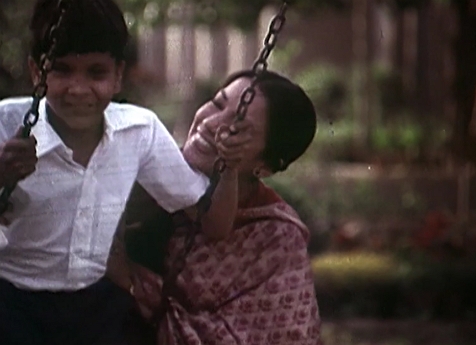
13. Sparsh / The Touch (Sai Paranjape)
A gentle and often pleasant movie built around the relationship between the principal of a school for the blind (Naseeruddin Shah) and a young widow (Shabana Azmi). She has isolated herself in her grief but is a natural caretaker; he can be prickly with pride and self-pity.
It tries to be a love story, but that feels an imposition; it has trouble making the case they want to be with other outside of school. The leads (both good) shine more with the kids than with each other. This was Paranjpye’s first mainstream feature after working in documentary and children’s film and those serve this. She’s willing to sit back and observe and resist cliché, occasionally dips into playful asides (a room full of candles shows its potential, the dramatization of a bedtime story). It's nice that the ending is understated, perhaps open-ended, but it comes way too late. Whenever the kids' enthusiastic energy isn’t driving this it drags.
(The Internet likes to say that Al Pacino studied Shah’s performance in this when he was preparing for Scent of a Woman, but the internet doesn’t cite legitimate source for that. And also: If you’re going to stage the Mahabharata at a school for the blind, why focus on the archery parts?)
Sparsh won three National Film Awards (Screenplay, Actor, Hindi Film) in 1980 and was shelved. After Paranjpye named a villain for its producer in a later film, Sparsh was released and won three Filmfare Awards (Film, Director, Dialogue) in 1985. It’s currently streaming with optional English subs (via Shemaroo) on Plex and Rubert Murdoch’s Tubi in its original aspect ratio. (The version on Shemaroo’s own site and YouTube is cropped.)
1978 – 1980 (1, 2) – 1981 - 1982 (1, 2)
6. Aakrosh / Outrage (Govind Nihalani)
One of the most harrowing climaxes you’ll ever witness, at the end of a frustrating path. Nihalani’s revered directorial debut about a murder in a tribal village is a considered portrayal of the intimate, communal, and existential devastation brought on by systemic corruption, exploitation, and prejudice.
It’s framed as pat legal thriller: Cub lawyer (Naseeruddin Shah) takes on his prosecutorial mentor (Amrish Puri) while defending a tribal man (Om Puri) accused of killing his wife, discovers a conspiracy. His gradual awakening and encroaching paranoia are well charted, but he starts at place of bewildering naivete and Shah plays him shocked at every foregone conclusion; the film’s structure is methodical but each scene clunks into the next, making it feel haphazard. It’s great at muddying waters – the mentor’s background makes him more than a facile stand-in for The Law – but then slops together thin illustrative representatives for a good ol’ boy card game. A lot lands too obvious, and it gets easy to roll your eyes or tune out altogether and miss the less pronounced behavioral observations. Nihalani may count on you forgetting which faces he has been shuffling through the background.
The director favors realism and sunlit spaces, but leans into the searing, mostly wordless performance of Om Puri for expressive dark mode flashbacks (including an awkward lovemaking scene that’s less sensual than a reminder of what it’s not allowed to show, and an attack scene made brutal by obstruction), effectively granting the character an interior voice. Nihalani was the cinematographer for Shyam Benegal’s first seven features, and he’s working with writers – playwright Vijay Tendulkar, whose name is on many engaged parallel cinema projects from the ‘70s and early ‘80s, and Satyadev Dubey – who also contributed to Benegal’s work. But here the choppiness of cherry-picked scenes doesn’t successfully accumulate into a fulfilling societal portrait the way the best of those films do. Even though an early question – "You want to practice law, not revolution, right?" – works as well as a challenge to the legal system itself, Aakrosh instead feels pitched more as personal activation (akin to Albert Pinto, further down this list, also starring Shah), cycling silence, talk, and action in the face of endlessly renewed injustice and wondering if persistence can be enough.
Shemaroo has a cropped version of Aakrosh streaming with optional English subtitles on YouTube and their site.
7. Varumayin Niram Sivappu / The Color of Poverty is Red (K. Balachander)(1980) & Zara Si Zindagi / Slice of Life (K. Balachander)(1983)
Balachander uses an employment crisis in the nation’s capital to stage a Romantic-comic wail about personal promise exhausted in the face of compromise and demands for success. Varumayin Niram Sivappu launches like a political tract, focusing on three over overeducated, unemployed roommates, and befitting them, it comes out quick-witted and angry.
And hungry. Cigarettes have replaced food (butts are “hot fruit,” versus new packs of “fresh fruit”), a pantomime meal featuring empty dinnerware becomes a radio play, the bouncy first musical number plays empty stomachs as percussion. “Sing a song to forget our hunger,” it starts, spitting sarcasm, pointing fingers high (“Sing about the greatness of our country/Why do you need food, brother?”) and low (“There are children everywhere… We’re running out of names.”).
Focus falls to Rangan (Kamal Haasan), a philosophy grad who longs to live to the ideals of his hero, the Tamil poet Bharathi. Toward that he has broken with his brahmin family and rejected its classical musical heritage – there are shades of Five Easy Pieces in VNS’ generational angst – and has set into taking and rejecting a series of low-level jobs, finding dishonesty everywhere. He’s “an idealist in every way,” trying to go “straight on a curved path.” It’s easier to identify with Rangan than sympathize with him; the insubordination that energizes the early part of the film properly turns to frustration. Rangan’s path keeps bringing him back to the arts: Theres a romance with an actress kept in poverty by her gambling father, a rival in a toxic theater director, a friend in a cloying mute painter. These can feel insufferably symbolic in a movie initially playful with practical woes. And then there’s all that subtitled quoted Bharathi.
More...
Language is an issue and a subject. Rangan has become multi-lingual to stave off boredom during his unemployment. His casual use of other languages temporarily interests one employer; he wins another job by lying that he doesn’t speak his native Tamil. The actress outrages her audience when she slips into the wrong tongue. K. Hariharan says the Tamil heroes are “struggling to make their presence felt in the capital city in which powerful articulations of the Hindi language are entrenched” (which of course goes to the larger issue of national representation) and points out that in ensuing years in the Tamil home state, there were violent language protests wherein people set fire to public displays in Hindi and then to themselves. All important and easily lost in translation.
Salvation comes in one of the peculiarities of Indian cinema. Because there are different film hubs, and so many different languages and cultures with substantial populations, movies may get remade quickly and several times over. Sometimes by the same filmmaker with some of the same cast. Sometimes multiple language versions are shot simultaneously, as during the early days of sound or some international productions; sometimes remakes wait to see what has worked. There may have to be retooling between cultures. As an outsider who enjoys playing compare/contrast, I’m drawn to these, though some of course register as redundancies or inferior echoes.
But Balachander is a talented Tamil filmmaker who likes to tinker. He writes and directs most of his projects, is prolific even before factoring in dupes. (Of the nine titles credited to him in 1981, four are originals, three alt-language versions of those, one a fresh remake of his 1978 original, one a remake of a 1979 Hindi comedy by someone else. He makes enough movies that a character in VNS has seen one of them.) While Balachander filmed VNS in Tamil, he simultaneously shot it in Telugu as Aakali Rajyam. But after he and his star broke through to the better-attended Hindi market in a big way the next year with Ek Duuje Ke Liye, Balachander and Haasan started remaking successful past collaborations for the north.
1983’s Zara Si Zindagi largely follows VNS beat-for-beat, but plies a quick-fix to the Bharathi hurdle by amplifying Rangan’s – now Rakesh’s – pursuit of his own poetry. The move loses cultural context to make it more universal, reinforces the character’s isolating self-concern, tightens the arc of his familial conflict.


It also helps that ZSZ has a more temperate female lead. Haasan’s chemistry with Sridevi in VNS is immediate and strong enough to bend the gravity of the film; Anita Raj in ZSZ is more mature and independent and also more obviously serves the story as a device. Sridevi’s character is allowed more interior space, more sensuality and silliness (and one of the strengths of these Balachander films is that events and characters are allowed to be simultaneously deeply serious and silly), but Raj is the one I believe has an actual life offscreen.
Two takes on the same musical slot look and sound similar but have been tweaked differently: “Sippi Irukkuthu"” (VNS, with Sridevi) and "Tana Dim Tana Dim" (1st song only, ZSZ with Raj). The set-up is that she is fa-la’ing a line of melody to which he has to invent a lyric. Sridevi issues it as a challenge, and she is trying to get him to reveal his feelings for her. His first line goes, “There is a pearl in the shell. There is no time to open and see, my dear!” Raj is actually trying to draw him from his shell, and initiates the song as collaboration. A lot of the lyrics are about the song itself (“With the flowers of melody a garland of song is made,” which I hope sounds better in Hindi) and Balachander stops the song more often, accentuating the work in art and understanding.
Balachander has the same creative crew on both films, but ZSZ has higher production values. Extra camera set-ups, an amusing dip into animation, sets that allow for the deep compositions they favor (and underutilize). But sensing you’re not on location can be a problem. ZSZ is more sentimental, less cynical, lacks the scruffy energy that gets (VNS going. The Hindi counterpart to that first song, “Ghar Se School,” is still a lot of fun. But it’s now mostly about how frustration leads to aimlessness. Anger has been replaced by more muscular dancing. ZSZ also loses VNS’s final gag, afraid to send the audience snarking out the door.
An ideal version would land somewhere between these two, but an ideal version would also be antithetical. These are films with built-in missing pieces. Balachander loves jump cuts, and disappearances are a motif, sometimes a gag. Art goes unfinished: There are aborted plays, half-painted canvases, books and poems sold as scrap. Clothing goes borrowed, a perfect fit would be a miracle, sometimes you just take what you can get.
Salvation comes in one of the peculiarities of Indian cinema. Because there are different film hubs, and so many different languages and cultures with substantial populations, movies may get remade quickly and several times over. Sometimes by the same filmmaker with some of the same cast. Sometimes multiple language versions are shot simultaneously, as during the early days of sound or some international productions; sometimes remakes wait to see what has worked. There may have to be retooling between cultures. As an outsider who enjoys playing compare/contrast, I’m drawn to these, though some of course register as redundancies or inferior echoes.
But Balachander is a talented Tamil filmmaker who likes to tinker. He writes and directs most of his projects, is prolific even before factoring in dupes. (Of the nine titles credited to him in 1981, four are originals, three alt-language versions of those, one a fresh remake of his 1978 original, one a remake of a 1979 Hindi comedy by someone else. He makes enough movies that a character in VNS has seen one of them.) While Balachander filmed VNS in Tamil, he simultaneously shot it in Telugu as Aakali Rajyam. But after he and his star broke through to the better-attended Hindi market in a big way the next year with Ek Duuje Ke Liye, Balachander and Haasan started remaking successful past collaborations for the north.
1983’s Zara Si Zindagi largely follows VNS beat-for-beat, but plies a quick-fix to the Bharathi hurdle by amplifying Rangan’s – now Rakesh’s – pursuit of his own poetry. The move loses cultural context to make it more universal, reinforces the character’s isolating self-concern, tightens the arc of his familial conflict.
It also helps that ZSZ has a more temperate female lead. Haasan’s chemistry with Sridevi in VNS is immediate and strong enough to bend the gravity of the film; Anita Raj in ZSZ is more mature and independent and also more obviously serves the story as a device. Sridevi’s character is allowed more interior space, more sensuality and silliness (and one of the strengths of these Balachander films is that events and characters are allowed to be simultaneously deeply serious and silly), but Raj is the one I believe has an actual life offscreen.
Two takes on the same musical slot look and sound similar but have been tweaked differently: “Sippi Irukkuthu"” (VNS, with Sridevi) and "Tana Dim Tana Dim" (1st song only, ZSZ with Raj). The set-up is that she is fa-la’ing a line of melody to which he has to invent a lyric. Sridevi issues it as a challenge, and she is trying to get him to reveal his feelings for her. His first line goes, “There is a pearl in the shell. There is no time to open and see, my dear!” Raj is actually trying to draw him from his shell, and initiates the song as collaboration. A lot of the lyrics are about the song itself (“With the flowers of melody a garland of song is made,” which I hope sounds better in Hindi) and Balachander stops the song more often, accentuating the work in art and understanding.
Balachander has the same creative crew on both films, but ZSZ has higher production values. Extra camera set-ups, an amusing dip into animation, sets that allow for the deep compositions they favor (and underutilize). But sensing you’re not on location can be a problem. ZSZ is more sentimental, less cynical, lacks the scruffy energy that gets (VNS going. The Hindi counterpart to that first song, “Ghar Se School,” is still a lot of fun. But it’s now mostly about how frustration leads to aimlessness. Anger has been replaced by more muscular dancing. ZSZ also loses VNS’s final gag, afraid to send the audience snarking out the door.
An ideal version would land somewhere between these two, but an ideal version would also be antithetical. These are films with built-in missing pieces. Balachander loves jump cuts, and disappearances are a motif, sometimes a gag. Art goes unfinished: There are aborted plays, half-painted canvases, books and poems sold as scrap. Clothing goes borrowed, a perfect fit would be a miracle, sometimes you just take what you can get.
8. “Arrival” (Mani Kaul)
Kaul’s documentary short catching the flow of labor and product into and through Mumbai belongs alongside your favorite farm-to-table tales and city symphonies. Eschews linearity to ponder distance, proximity, association; it resists obviousness and has some sublime sequences. One pan made me think he’d made a bus dis- and reappear.
National Film Award winner for Best Experimental Film ("For searing imagery and outstanding soundtrack"), you can stream it on YouTube. No subtitles, but it is mostly wordless. It does include slaughterhouse scenes.
9. Albert Pinto ko Gussa Kyon Aata Ha / Why Does Albert Pinto Get Angry? (Saeed Akhtar Mirza)
Musical highlights: "Chalti Bhi Hai Gadi Bhi Hai", ”Achcha Albert Ko Achcha Nahin Lagta”.
10. Hirak Rajar Deshe / Kingdom of Diamonds (Satyajit Ray)
Baby’s first book of tyranny. Ray picks up his grandfather’s fantasy characters a decade later, but this second movie has nothing approaching the formal fun of Goopy Gyne Bagha Byne’s ghost dance. Our heroes – quest long completed, now on an ambassadorial mission to the titular domain – often feel like the tourists they are. Lead figures don’t click either: Utpal Dutt, who made bosses in Bhuvan Shome and Gol Maal, memorably intimidating, makes scant impression as the king. Soumitra Chatterjee’s schoolteacher is the figure of noble, anguished resistance; he should be at the center but is admired from a distance.
The richest section’s a quasi-comical survey of thought control, from image maintenance and information management to descriptions of literal brainwashing, often told in verse – though the teacher refuses to rhyme – and with wit (“There is no end to knowledge. It is futile trying to learn.”) against picture book backdrops.
Is it troubling this lands familiar and dull? You watch jackboots roust homeless camps and burn books – in a children’s film! –and it feels like scrolling through both a newsfeed and a used checklist. Perpetual relevance doesn’t always imbue a shine. Teaching the kids so they can see the next Big Bad coming seems noble effort, but so far seeing it coming hasn’t much helped. Ray made this in the wake of The Emergency and it arrived in the shadow of Indira Gandhi’s return to power; how well you like it may depend on how you prioritize admiration for Ray’s audacity.
Hirak Rajar Deshe is streaming on YouTube in this playlist; the dialogue has English subtitles, the songs only have Bengali sing-along prompts.
11. Khubsoorat / Beautiful (Hrishikesh Mukherjee)
On the other hand, rhyming is rebellion in Mukherjee’s comedy.
When her only sister leaves their lively, progressive home to marry into a large conservative family with a dictatorial matriarch (Dina Pathak), Rekha (deemed "more jolly than necessary") follows as a minor chaos gremlin, fostering secrets and encouraging pockets of uprising. While there are quick fits of pertinent political discussion, Mukherjee and scripter Gulzar favor compromise and comfort.
It is nice that women set the rules and the tone, and nice that Pathak’s not playing a demon; her strictness holds her household together, she spends her spare time helping underprivileged women, and she has honed an enjoyably sharp dismissiveness. Conflict plays out in the art direction, and while the movie’s amused by Rekha’s Romper Room moon milk rivers and backyard stagecraft, it looooves upper-middle-class textures; you know the meeting of minds will happen in front of tastefully patterned wallpaper. Khubsoorat is satisfied with a limited amount of ideas, gets smaller as it goes along, inevitably feels like surrender.
The biggest open delight involves men watching women act out. Ashok Kumar's mediating father-in-law glows orgasmically at everything Rekha does. A friend of the family enthuses so much when his wife takes part in a deception that he practically steals her scene.
Though Aakrosh took most of the major categories at the year’s Filmfare Awards, Khubsoorat won Best Picture and Actress.
12. Insaf Ka Tarazu / The Scales of Justice (B.R. Chopra)
How does the adaptation of a relatively obscure American exploitation movie become a Best Picture nominee, one of the top grossing films of the year, gateway to an entire popular subgenre?
Jyotika Virdi succinctly lays out the background:
B.R. Chopra, in a retrospective interview: “if you see the newspapers of that year, they were full of rape, full of rape… And I told my wife, ‘I would like to make a picture on rape… on justice.’” While on a trip to Jakarta he saw his first multiplex and curious, bought a ticket for Lamont Johnson’s Lipstick.“In 1979 the Supreme Court overturned a High Court ruling and freed two police constables accused of raping Mathura, a minor, in police custody. Nationwide agitations by women’s groups coalesced into demands to revisit the court’s ruling and enact changes in the rape laws. In 1978 a Muslim woman, Rameeza Bee, was raped in police custody in Hyderabad and her husband, a rickshaw puller, was murdered for protesting about it. In 1980 Maya Tyagi was raped in Baghpat, Haryana, then stripped naked and walked through the streets by the police. The ‘Rape bill’ – the upshot of public shock and women’s rage became the Anti-Rape Act in 1986.”
More... Contains plot elements of 'Lipstick' and 'IKT'
In Lipstick, high-profile fashion model Chris (Margaux Hemingway) is raped by her young sister’s music teacher (Chris Sarandon). She seeks justice from the law, is denied; after he rapes again, she turns to violence. The center stretch errs toward the issue film, prosecutor (Anne Bancroft) voicing now-common lament that a rape trial is like being raped all over again, defense attorneys defaming the victim’s image and lifestyle, etc. The trial seems to be an expressive experience, with Sarandon roaming about freely, the room filled with the soundtrack to the rape, the vulnerable sister (Mariel Hemingway) badgered about The Story of O. But otherwise the movie never gets into Chris’ head, and it leers at her far too long. Its heart is with the sister, who had a crush on the teacher, whose pubescent confusion about the complexities of sex leads her to a glass maze confidently navigated by an older predator.
Everything interesting about Lipstick is missing from Insaf Ka Tarazu and that’s probably for the best. This is purely an issues film, one heavy-handed and furious.
The basic framework is left intact: Fashion model (Zeenat Aman), little sister (slightly older, here), rape, injustice, revenge. But IKT adds a prologue, opens with a piercing scream over black, a field of cloth ripped to reveal the victim of an unrelated attack which plays out in silhouette. A hero interrupts, avenges, and then, on trial for murder, compares his actions to those of his recent military service at the nation’s border. (He is in uniform, wearing every medal ever.) “The honour of every woman is the honour of the country.” Without hearing a verdict, the opening credits roll over images of Lady Justice and various religious icons.
The set-up proper is as calculated: Aman’s model – also now a “beauty queen” pageant winner – is named Bharati, per Lalitha Gopalan the “feminine name in Hindi for India.” As in Lipstick she is a single breadwinner raising her younger sister, but unlike Chris, Bharati is in a committed relationship on the verge of engagement. The first musical number is modest domestic bliss, wondering, “If this is the trailer of love, what will the film be like?” The second is a love song that includes lyrics about consent.
Aman entered acting as a beauty pageant winner, came to this film after putting her body on display in Satyam Shivam Sundaram, and a real-life domestic violence incident followed the movie into theaters. Chopra says he approached Anan by calling her “the most rapeable face in India” due to her sex appeal, and cast an unknown (Raj Babbar) as her assailant.
In addition to appeals to patriotism, titillation, and fan knowledge, Gopalan sees audience engagement in the presence of censorship, the knowledge that the state is present throughout. The first image of the film is the same as that in every Indian film: The certificate from the censors’ board. Courtroom scenes reiterate censorship as a judge chooses which photos may be allowed as evidence. Gopalan’s largely concerned with the relationship between the state and the viewer and the female body, desire and denial, and it’s notable that while the rape scenes are not explicit, they’re the only kinetic ones in the film. Though Chopra was a long-established filmmaker, the controversial subject matter forced him to shoot IKT on the cheap and it looks it. But wanting to preserve the violent action of the assaults, and bound by production code, he has to rely on quick cutting and close-ups and comments from questionable wall decorations.
But knowing the state is present, and conceived as an attack on the justice system, IKT‘s most dynamic elements are speeches. Unlike Lipstick, the rapist shows signs of contrition after arrest; his barrister (Shreeram Lagoo) steels him. Lagoo spits out chilling displays of venomous misogyny, bellows the quiet parts. Simi Garewal plays the prosecutor, and she bites back hard, but the film erects a symbolic court that sees Lagoo (who argues against Bharati no matter which side she’s on) and a by-the-book judge (who oversees all three of the film’s trials) as avatars for the legal system.
“Mistakes of the law are making beasts of men.” The rapist in this movie isn’t the music teacher from Lipstick, a wolf in sheep’s clothing; nor the bandits, lecherous feudal lords, or vindictive rivals that populate too many of the films I’ve seen. (Rajeswari Sunder Rajan calls the rape scene in Indian films “almost mandatory.”) The rapist here is a wealthy heir, but one who starts the film as a nervous, delusional fan; he’s an audience member that crowns the beauty queen at the start. As in Lipstick he’s set off by a perceived slight and unrequited interest. But Babbar doesn’t match Sarandon’s arrogance until after the trial; the next time we meet him he’s a calculating predator. (Babbar also isn’t given the same room as Sarandon to create a character, but every time he purrs the words “beauty queen,” you wonder if the experience has let a fetish run wild or if he has developed a fixation around his first rape.)
“I wish the sound of shooting could have awakened the souls in men.” Bharati is also transformed by the trial. Like Chris, she initially tries to resume her modelling career and struggles with her performance, but trauma and stigmatization compel her and her sister to retreat to a smaller city and a more conservative life. IKT expands Lipstick’s final act to include another tier of victim (Virdi: “millions of women in lowly, underpaid positions, acutely vulnerable to men with power”), repeating the cycle without the lifestyle objections raised in the first trial, challenging the court (and perhaps a portion of the audience) with the only type of woman it will hear. Virdi criticizes Bharati’s final testimony as a retreat to stereotypical cultural views of women, but there’s room enough to see it as either a designed performance or the dehumanizing effect of the court’s prejudice. She never disavows her former life, she refuses martyrdom. (The only song that comes after the assault bitterly drips that “Men have found poetry in women’s every cry.”) She has covered her head and presents herself as a husk of what she once was, has transformed to the point the judge cannot recognize her. The speeches drag on and are capped by a parade of symbolic resolutions, but I find the midpoint sting of open prejudice and the late rush of righteous anguish survive any ridiculousness.
It is more of interest and of its time than exemplary. The women’s movement constituted in the wake of the Mathura rape trial denounced IKT on release as exploitation, Rajadhyaksha and Willemen’s Encyclopedia of Indian Cinema refers to it as “notorious.” The reason it made a lot of money may not be the same reason it got a boatload of Filmfare nominations. The rape-revenge genre has of course gone through feminist re-evaluation since, and IKT is sincere and flawed enough to tick boxes in either direction. It methodically and successfully employs the rape-revenge film’s bait/switch identification strategy. In general it punches up, there is power in knowing that you have invited the state to your work to tell it that it is wrong.
Impossible to measure whether it swayed minds or simply capitalized on a burgeoning movement (Chopra: “Afterwards, [the newspapers] were not full of rape.”), but it is credited with bringing the rape-revenge film to India. There had been plenty of rape and plenty of revenging in Indian movies, and famous instances where women righteously killed men. (Virdi: “…in these films women’s fury and power service conservative patriarchal ideals apotheosizing motherhood… women are objects of reverence rather than agents exacting revenge in the name of womankind.”) Though the genre wouldn’t take root until after the country’s rape laws had been amended, by the end of the decade there were a flurry of “avenging woman films” pitched across strata of respectability.
Everything interesting about Lipstick is missing from Insaf Ka Tarazu and that’s probably for the best. This is purely an issues film, one heavy-handed and furious.
The basic framework is left intact: Fashion model (Zeenat Aman), little sister (slightly older, here), rape, injustice, revenge. But IKT adds a prologue, opens with a piercing scream over black, a field of cloth ripped to reveal the victim of an unrelated attack which plays out in silhouette. A hero interrupts, avenges, and then, on trial for murder, compares his actions to those of his recent military service at the nation’s border. (He is in uniform, wearing every medal ever.) “The honour of every woman is the honour of the country.” Without hearing a verdict, the opening credits roll over images of Lady Justice and various religious icons.
The set-up proper is as calculated: Aman’s model – also now a “beauty queen” pageant winner – is named Bharati, per Lalitha Gopalan the “feminine name in Hindi for India.” As in Lipstick she is a single breadwinner raising her younger sister, but unlike Chris, Bharati is in a committed relationship on the verge of engagement. The first musical number is modest domestic bliss, wondering, “If this is the trailer of love, what will the film be like?” The second is a love song that includes lyrics about consent.
Aman entered acting as a beauty pageant winner, came to this film after putting her body on display in Satyam Shivam Sundaram, and a real-life domestic violence incident followed the movie into theaters. Chopra says he approached Anan by calling her “the most rapeable face in India” due to her sex appeal, and cast an unknown (Raj Babbar) as her assailant.
In addition to appeals to patriotism, titillation, and fan knowledge, Gopalan sees audience engagement in the presence of censorship, the knowledge that the state is present throughout. The first image of the film is the same as that in every Indian film: The certificate from the censors’ board. Courtroom scenes reiterate censorship as a judge chooses which photos may be allowed as evidence. Gopalan’s largely concerned with the relationship between the state and the viewer and the female body, desire and denial, and it’s notable that while the rape scenes are not explicit, they’re the only kinetic ones in the film. Though Chopra was a long-established filmmaker, the controversial subject matter forced him to shoot IKT on the cheap and it looks it. But wanting to preserve the violent action of the assaults, and bound by production code, he has to rely on quick cutting and close-ups and comments from questionable wall decorations.
But knowing the state is present, and conceived as an attack on the justice system, IKT‘s most dynamic elements are speeches. Unlike Lipstick, the rapist shows signs of contrition after arrest; his barrister (Shreeram Lagoo) steels him. Lagoo spits out chilling displays of venomous misogyny, bellows the quiet parts. Simi Garewal plays the prosecutor, and she bites back hard, but the film erects a symbolic court that sees Lagoo (who argues against Bharati no matter which side she’s on) and a by-the-book judge (who oversees all three of the film’s trials) as avatars for the legal system.
“Mistakes of the law are making beasts of men.” The rapist in this movie isn’t the music teacher from Lipstick, a wolf in sheep’s clothing; nor the bandits, lecherous feudal lords, or vindictive rivals that populate too many of the films I’ve seen. (Rajeswari Sunder Rajan calls the rape scene in Indian films “almost mandatory.”) The rapist here is a wealthy heir, but one who starts the film as a nervous, delusional fan; he’s an audience member that crowns the beauty queen at the start. As in Lipstick he’s set off by a perceived slight and unrequited interest. But Babbar doesn’t match Sarandon’s arrogance until after the trial; the next time we meet him he’s a calculating predator. (Babbar also isn’t given the same room as Sarandon to create a character, but every time he purrs the words “beauty queen,” you wonder if the experience has let a fetish run wild or if he has developed a fixation around his first rape.)
“I wish the sound of shooting could have awakened the souls in men.” Bharati is also transformed by the trial. Like Chris, she initially tries to resume her modelling career and struggles with her performance, but trauma and stigmatization compel her and her sister to retreat to a smaller city and a more conservative life. IKT expands Lipstick’s final act to include another tier of victim (Virdi: “millions of women in lowly, underpaid positions, acutely vulnerable to men with power”), repeating the cycle without the lifestyle objections raised in the first trial, challenging the court (and perhaps a portion of the audience) with the only type of woman it will hear. Virdi criticizes Bharati’s final testimony as a retreat to stereotypical cultural views of women, but there’s room enough to see it as either a designed performance or the dehumanizing effect of the court’s prejudice. She never disavows her former life, she refuses martyrdom. (The only song that comes after the assault bitterly drips that “Men have found poetry in women’s every cry.”) She has covered her head and presents herself as a husk of what she once was, has transformed to the point the judge cannot recognize her. The speeches drag on and are capped by a parade of symbolic resolutions, but I find the midpoint sting of open prejudice and the late rush of righteous anguish survive any ridiculousness.
It is more of interest and of its time than exemplary. The women’s movement constituted in the wake of the Mathura rape trial denounced IKT on release as exploitation, Rajadhyaksha and Willemen’s Encyclopedia of Indian Cinema refers to it as “notorious.” The reason it made a lot of money may not be the same reason it got a boatload of Filmfare nominations. The rape-revenge genre has of course gone through feminist re-evaluation since, and IKT is sincere and flawed enough to tick boxes in either direction. It methodically and successfully employs the rape-revenge film’s bait/switch identification strategy. In general it punches up, there is power in knowing that you have invited the state to your work to tell it that it is wrong.
Impossible to measure whether it swayed minds or simply capitalized on a burgeoning movement (Chopra: “Afterwards, [the newspapers] were not full of rape.”), but it is credited with bringing the rape-revenge film to India. There had been plenty of rape and plenty of revenging in Indian movies, and famous instances where women righteously killed men. (Virdi: “…in these films women’s fury and power service conservative patriarchal ideals apotheosizing motherhood… women are objects of reverence rather than agents exacting revenge in the name of womankind.”) Though the genre wouldn’t take root until after the country’s rape laws had been amended, by the end of the decade there were a flurry of “avenging woman films” pitched across strata of respectability.
13. Sparsh / The Touch (Sai Paranjape)
A gentle and often pleasant movie built around the relationship between the principal of a school for the blind (Naseeruddin Shah) and a young widow (Shabana Azmi). She has isolated herself in her grief but is a natural caretaker; he can be prickly with pride and self-pity.
It tries to be a love story, but that feels an imposition; it has trouble making the case they want to be with other outside of school. The leads (both good) shine more with the kids than with each other. This was Paranjpye’s first mainstream feature after working in documentary and children’s film and those serve this. She’s willing to sit back and observe and resist cliché, occasionally dips into playful asides (a room full of candles shows its potential, the dramatization of a bedtime story). It's nice that the ending is understated, perhaps open-ended, but it comes way too late. Whenever the kids' enthusiastic energy isn’t driving this it drags.
(The Internet likes to say that Al Pacino studied Shah’s performance in this when he was preparing for Scent of a Woman, but the internet doesn’t cite legitimate source for that. And also: If you’re going to stage the Mahabharata at a school for the blind, why focus on the archery parts?)
Sparsh won three National Film Awards (Screenplay, Actor, Hindi Film) in 1980 and was shelved. After Paranjpye named a villain for its producer in a later film, Sparsh was released and won three Filmfare Awards (Film, Director, Dialogue) in 1985. It’s currently streaming with optional English subs (via Shemaroo) on Plex and Rubert Murdoch’s Tubi in its original aspect ratio. (The version on Shemaroo’s own site and YouTube is cropped.)
1978 – 1980 (1, 2) – 1981 - 1982 (1, 2)