"Let me get my laugh in, will ya? How would you like it if you said something brilliant and I rode right over it like that?"
"Whether you are on a date, or on the job, every day use Wildroot Cream-Oil!"
"This film flown to the U.S.A. via
Pan American World Airways. The World's Most Experienced Airline" (dramatic ominous music)
"Where'd you get that name, Gay?"
"PLACE COMMERCIAL HERE"
"It did seem that we were having more than our share of bad luck. We ran into swarms of locusts; were attacked by animals" (Cut to The Animals performing the House of the Rising Sun)
(spoken in monotone) "There is only one movie I have enjoyed more than this, and that was Julie Andrews in Sound of Music"
"This film will not be shown to the general public without permission of the War Department"
____
I got to The Movie Orgy as well over the weekend. What a fascinating piece of work, in that it anticipates irreverent (but loving) mash ups of the likes of
the late 1990s Exploitica series decades ahead of time. Also David Cairns needs to know (or probably already does) about this straight away, since he has a habit on his blog of
doing screenshot mash ups of film titles that Dante is doing quite a lot here!
Walt Disney's Pinocchio is coming soon! Yes, Pinocchio! You saw him in a few scenes tonight and soon all of Pinocchio's wonderful adventures and beloved cartoon characters will come to a theatre near you. Figaro; Honest John and Gideon; Jiminy Cricket, and...
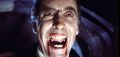
... Elsa Martinelli as The Whip Girl; Anthony Quinn as Kublai Khan; Christopher Lee; Peter Lorre, Boris Karloff, Basil Rathbone... [cuts to Betty Boop]
For a film that runs just under five hours, this really all needs to be seen in one extended sitting rather than broken up, as it keeps having clips from early in the film keep threading back into the film in the most unexpected places and times to achieve a kind of cumulative impact whenever they reappear. The "Don't crowd me. Everyone keeps crowdin' me!" belligerent guy, in particular! That title sequence from the film
Speed Crazy also features the most hilariously fake driving backdrop! Which I think gets pointedly called back to over an hour later with the short-sighted taxi driver sketch! Also Joe the gas pump attendant from the Speed Crazy clips would have been the
exact kind of role that would be the perfect fit for Dick Miller!
I like how the film starts off rather discreet in how it is being edited, showing long sections from the opening of Attack of the 50ft Woman, or the Groucho Marx gameshow. And I like that whilst a lot of the other material is handled really concisely (the jarring and sudden jump edits in a soundtrack or to an incongruous Colgate commercial are what creates a lot of the humour initially), that Attack of the 50ft Woman is the key structural film underpinning everything else and good for getting a sense of timing the film out, as it turns up in the first five minutes and then every 45 minutes or so we get one or two more scenes from the film until it blends together with everything else in the 'monster attack' montage climax of the whole production!
The irreverent usage of the film material really begins about half an hour in, with the use of Teenagers From Outer Space and The Naked City. The Naked City gets used for a brief gag where the opening narration goes into a montage of naked girls, that we pull out from to see a teen watching on his futuristic tele-screen (which is just a chest of drawers with a mirror on it) wearing an airman's headset and microphone before his mother barges in, is shocked by the debauchery, knocks her son(?) out before trying to unplug it before electrocuting herself. To see that sequence decades before parents were barging in on their children looking at naughtiness on the internet was perhaps the most eye-opening moment of the entire film! Although
I guess this was a universal situation whatever the era)
The use of Teenagers From Outer Space is more characteristic for the film though, where we get the opening scene of the aliens coming to Earth and finding that the Earth is not suitable for breeding their Gargons (which are just lobsters, seemingly) and decide to leave, before a smash cut to "The End"! (Incidentally I last encountered Teenagers From Outer Space briefly back when
Ben Minnotte in the Oddity Archive attempted a live stream of it, before it got abruptly shut down and he had to show Spooks Gone Wild instead! It is particularly interesting to see an earlier film using the same public domain music tracks just under a decade before Night of the Living Dead used it to underscore its opening titles!)
Though the most amusing usage comes a while later with the film "Queen Esther: A Story From The Bible":
Truncated opening titles
"But I can't believe I've been chosen Queen. I'm afraid!"
"There's nothing to be afraid of, my child. As long as you obey the wishes of the King, you have nothing to fear. You are the envy of every maiden in the land. But Esther, remember you are not to make it known to anyone that you are a Jew.
The End
This feels like being marinated (less charitably, trapped) in the entire addled millieu of 1950s Americana of B-movies, TV series, gameshows and commercials. Where a news report about preparation for nuclear war, or Mohamed Naguib of Egypt being an ally to protect the Suez canal from Soviet influence whiplashes to a beauty pageant in Atlantic City (it was bizarre to realise that this is where the brief flash of the photographer wearing the vampire fangs from the
end of the Lana Del Rey Video Games music video comes from!), or a fluff piece about Los Angeles fashion designer Don Loper with Anne and Keith (a lady, despite the name) going to Griffith Observatory, just happening to run into Gordon McRae in Warner Bros. Studios (McRae wearing Sheik get up) and going to the Cocoanut Grove; before going back to the situation going on with the Vietnam elections:
For people wracked by the agonies of war, poverty, colonialism and communism...
You and me both, sister!
... it is a time for decision and an overwhelming endorsement of Diem, who receives more than 98% of the votes. In France, far from his torn country, the repudiated, fun-loving Bao Dai bows out! And at 54 Ngo Dinh Diem becomes the country's first President, a resounding victory for the free world.
... which itself segues immediately into a gorgeous looking
Ann-Margaret talking about visiting the fighting men in Vietnam and urging the public buy United States savings bonds, per President Johnson's request.
.... which then segues into an Army recruitment ad.
That gets us into the "TV" section where after a longer clip from The Lone Ranger in the early part of the film where it is given more room to play out, the pace starts to pick up and the likes of Rin Tin Tin (getting his Medal of Honor), Robin Hood, and Lassie are completely overwhelmed by their adverts and sponsorship messages. Robin Hood most hilariously so (continually getting over laid with ads for "Wildroot Cream Oil"!), as it never really gets started, but we only get brief flashes of Rin Tin Tin before Nabisco keeps butting in with yet another advert for Shredded Wheat that now comes with free "Defenders of America" collectible cards in every pack, showing off US military supremacy!
Some of the more amusingly dodgy moments occur with a group of painfully cute youngsters all queuing up for a film show in a small garage, which then turns out to be an illicit stag film showing nude women bathing (which triggers off a series of reaction shots from various B-movies of people showing shock and surprise, including a woman trying to take a picture and being stopped by a policeman, much to her disappointment!)
The highlight of the oddities in this section has to be the clips from Andy's Gang, where we get
this dirge of a Bible song performed by a seriously intensely into it cat playing a miniature organ accompanied by a somewhat less committed seeming mouse banging a drum, that is immediately followed by
this completely inappropriate phrase for a kid's show! Which then introduces a French waiter that makes Eric Idle's French waiter from The Meaning of Life seem completely unstereotypical in comparison!
Want an advert for bath soap narrated
by the bath tub as a Dragnet-style laconic hard boiled detective? It's here. A surprisingly erotic educational video about flower reproduction? Want your young daughter to learn about the evils of Capitalism in a fun manner? Get her the Little Hostess Buffet set, by Marx! Enjoying that cartoon? Let's get Mighty Mouse to say "and now for some more cartoon fun" before cutting to an educational film about the proper way to insert a tampon into the vagina.
At about the 80 minute mark, we are beginning to get the B-movies showing their monsters getting unleashed. A giant spider here; the
cop getting eaten by The Beast From 20,000 Fathoms there (bookended by the opening titles for an educational film "The American Cop" and ending with a celebratory "The End" after he is eaten). The Giant Claw turns up.
George Raft: "I'm The Law" - does a kind of locked room murder mystery where the daughter of the dead Professor looks
incredibly guilty throughout all of the clips ("I warned Junith about those busts, but he wouldn't listen to me. He wouldn't. I... I should have insisted. I don't suppose that there is anything that any of us can do now"), and the pulls a shock turn at the very last moment.
As with any good Mondo-esque film, there are a couple of obviously staged bits, as a rather bitter seeming and intense gentleman shills the
"Fabulous Judeo-Christian Good Guy Kit" in a proto-infomercial which comes with flesh pinchers, a flagellating whip and stocks in your choice of either soft or hard wood. Though that linked clip misses out the most jaw dropping moments of that commercial - the "Judeo-Christian Brotherhood poster" ("And friends, brotherhood is a great Christian ethic. Now friends, this is almost as good as having a darkie for a friend or a companion, except this poster will never riot, break, or burn. And by golly, he'll never marry your sister, no!") and the visualisation of moving out of the New York streets up to the Heavenly Choir at the climax. Which is worthy of coming straight out of Monty Python, and only matched by the very final scene of the film of a trendy with-it Vicar contending with a frantically wiggling Jesus on the cross behind him using a stapler to fix him back on there! (And there is a brilliant Johnson's Baby Powder advert that certainly does a good job of selling its product! Although I hope that the two women sharing the bathroom are just friends sharing an apartment rather than meant to be mother and daughter given the topless sapphic ending to the ad!)
As is usually the case though, the obviously staged bits feel as if they are trying a bit too hard for comedy as compared to the majority of the film being about highlighting the absurdities of pre-existing material and getting its comedy from the editing and juxtapositions. But that sequence at about 90 minutes in somewhat breaks the film's poker face and things begin to get increasingly wild. Nixon starts appearing (he turns up in another sequence of people running a projector only to get something that shocks and appals the audience, and shames the projectionist for having shown it). A trailer for the John Wayne Green Berets film that follows a Tarzan sequence devolves into just showing all of the GIs getting caught in the jungle death traps. We get someone maced in the face to demonstrate its effectiveness. Someone literally sings a cover of "You're Nothing But A Hound Dog" at a bewildered looking Bassett Hound. We get Coronet educational films about preparing for your High School Prom; and training your dog to be a gentleman. Lassie, Rocketman and Superman are here to save the day. Lots and lots of interchangeable western shows. You can get your very own Batmobile from Marx again, which the lead of that Bat Pussy film
really needed to have had access to rather than that space hopper!
The film seems to get stopped in its tracks for a good ten minutes for an intense sequence from College Confidential of parents dealing with their teenage daughter coming home at almost 3 a.m. and talking about having been out with her Professor at his house all evening:
"We kids drop over anytime, even when he's not there, for drinks. I mean non-alcoholic kind, which he serves the uninitiated"
"And what goes on if you're initiated?"
"You'll have to ask someone who has been. Not me, we just play his records and read the books he's brought back from Paris"
"I didn't know your French was that good!"
"Mummy, they're in English... don't look so shocked. They're not as bad as the ones you've got hidden in the attic"
An American Bandstand sequence of kids dancing to "Walk Like A Man" in a hilariously awkward and self-conscious manner is an early highlight sequence, and could have been a template for John Waters' Hairspray! And the College Confidential scene has the other moment that could have inspired Hairspray, as the incensed father rants at his daughter staying out late and calling her parents a pair of Police Officers by talking of putting bars on her windows!
This is also the point where the headache tablet adverts start popping up, which keep occurring more frequently in the second half of the film as the action ramps up, the screaming of terrified women in the various B-movies starts, and we begin to get into the exhaustingly intense
Abbott and Costello sketches. That builds to the laxative adverts later on, as things are taking even more of a turn for the worse.
As Nancy begins to grow to 50ft in the main movie, the last couple of hours focus more on the features, as nature seems to be trying to rise up and stop the peoples of the 1950s in any way they can. Plus after the teens failed to do it, we finally get alien invaded by the Earth vs The Flying Saucers film. And The Amazing Colossal Man turns up as a companion for the 50ft Woman (followed by police cars with weirdly elongated siren run down times). Fred MacMurray appears in a flying car that gets intercut with WWII Bomber Pilots having PTSD rembrances of their half-Japanese children being given away for adoption, that distracts them fatally from fighting the Japanese.
And most hilarious of all as Nancy destroys her house and goes on the quest to catch her two-timing husband, we get a cut to a 1950s UK political advert for the Labour Party: "People Love Labour", I guess!
This weekend Valerie and I went into the country. There wasn't very much to do, and so we spent much of the time just running about. Running about all over the place like children. Goodness how we ran! We ran and ran and ran and ran and ran. Valerie always ran faster than me. She said it was all the smoking I was doing. One day I remember, I made a tremendous spurt and caught her. She slipped and fell, and suddenly I was sprawling all over her. Tumbling and groping and sprawling all over her.
And suddenly, it came to me, out of the blue almost. And I knew it was time a Socialist got in.
People Love Labour
What at first seems like adverts turns out to have been adverts where the actors flubbed their lines. There is an brilliant musical sequence where
Dee Mullins' "War Baby" plays over the army fighting off giant locusts. The nuclear war sirens start going off. W.C. Fields drives a car dangerously. Policemen back project their way onto the scene. People panic over footage of giant locusts climbing tower blocks like King Kong. Prehistoric women get covered by lava from erupting volcanoes. And hilariously Gregory Peck comes face to face with Moby Dick in purloined footage from the John Huston film!
If you have been exposed to radioactive dust wash the exposed areas. Pay particular attention to your hair. Get all the dirt from under your fingernails. If the people of Hiroshima and Nagasaki had known what we know about Civil Defense, thousands of lives would have been saved.
And this voiceover for the trailer for The Shoemaker and the Elves feels as if it eerily anticipates Dante's Gremlins:
"Touched with laughter of angels and sprinkled with stardust, it is the timeless tale of the elves who take over while the town sleeps. See the elves make the shoes in the cobbler's shop. See the elves capture the robber in a barrel of tire! See the tailor's wife try to capture the elves. See all the wonders in the big toy shop!"
We are into the Biblical epic levels of destruction section now, as the elderly are evicted from their soon to be demolished homes by callous worker drones desperately in need of headache medicine afterwards. The Giant Claw and the giant spider invader appear to team up as they get intercut together. Moby Dick tag-teams with the Creature From The Black Lagoon. King Kong and the Flying Saucers take on the Rocketeer in a bi-plane. Abbott and Costello have trouble driving a yacht on the back of their car through the streets. The Amazing Colossal Man gets his Covid booster, and freaks out. The sky churns with thunder as the giant spider is fried; the giant lizards gets hit by a Hot Rod; and the 50ft Woman takes out the cheating couple before meeting her own electrified end.
Eventually the horror is over, the all clear siren is sounded. Though not quickly enough to prevent a pie in the face from being launched post-ceasefire, in what
must be a nod to the missing Dr Strangelove pie fight sequence! Everyone signs off from every piece of film, from The Lone Ranger to Superman; Andy's Gang; Nixon telling us that we'll be sad when he's gone and there is nobody to kick around any more; Daffy Duck and Porky; Zamba the Ape; Jack Nicholson; Hitchcock; The Giant Claw giving the finger as it sinks beneath the waves; the Disney Club kids; a guy "Peace"-ing out with associated hand gesture; and Roy Rogers wishing us happy trails.
The characters and events depicted in this photoplay are fictional. Any similarity to actual persons, living or dead, is purely coincidental.
All this is to say that I wonder what Herr Schreck would make of this piece of work! It seems like it would be tailor made for his interests!
(It also kind of works to explain the pop culture addled aliens in Explorers in some ways, if this is how they were taking in Earth culture!)