Taza, Son of Cochise (Sirk, 1954) Rock Hudson is the elder son of treaty-making chief Cochise, whose deathbed we open on, with Taza and his war-mongering brother, Naiche, at its side. After the burial, Naiche immediately breaks the treaty his father had arranged, so Taza captures him, punishes him and his party, and, when the Army shows up, tries to convince them the aggressors were only a small band of rebels, not the will of the people, and they should let Apache punish Apache rather than consider the whole treaty broken. They, of course, refuse. Eventually Taza agrees to move his people to a reservation if the Army will let him form an Apache patrol with Army support rather than submit to the Army's governance. All of that exposition is pretty cluttered, but once we get to the reservation, Sirk hits his stride. The tension between the war-mongering and the peace-keeping factions simmers while the former tries to get weapons and a romantic sub-plot gets further developed between Taza and Oona, the daughter of an elder who sides with those spoiling for a fight and so would rather marry her to Naiche. Taza torn and unbalanced makes for some good Sirk.
This section is also where the script's treatment of Native Americans is surprisingly respectful: we're shown several glimpses of culture that isn't really otherized, just witnessed, there are references to how their customs have had to change to compensate for their relocation, and there's a large, if otherwise rather stage-lined, cast of real Native Americans performing that culture. We're still left with the good/bad Native divide, with, iirc, all the individuated Natives aside from Taza and Oona being presented as unrepentantly vicious, and there is of course no understanding for, uh, why they might have good reason to be rebellious, but the plot's crux is Taza's argument for Native self-governance confounded only by the white officers' stubbornness and inability to treat them as individuated humans rather than a swarm of pests, and its focus is Taza's conflict, not the officers'. Unfortunately, Sirk's strengths only really support this middle portion of the script. He wasn't a melee action director, and the battle scenes, especially the climactic canyon pass battle, are mostly muddled with no real sense of composed space. It's not the disaster I was half-expecting, nor the hidden masterpiece I've seen a few folks argue it is, but it's got some intriguingly Sirkian touches.
The 1950s List: Discussion and Suggestions (Decade Project Vol. 4)
-
senseabove

- Joined: Wed Dec 02, 2015 7:07 am
- Location: SF Bay
-
hayden
- Joined: Sun May 31, 2020 3:16 pm
Re: The 1950s List: Discussion and Suggestions
Got around to The Ogre of Athens (Koundouros, 1956) the other day, and I'm hoping to put it on my list. Existential satire is always up my alley. Hoping others have a chance to give it a watch.
-
therewillbeblus

- Joined: Tue Dec 22, 2015 7:40 pm
Re: The 1950s List: Discussion and Suggestions
Thanks for the rec, looks like it's up on YT with English subs for free
-
bamwc2
- Joined: Mon Jun 02, 2008 3:54 pm
Re: The 1950s List: Discussion and Suggestions
I watched it about a month ago w/o knowing that it was up on YouTube. I mildly liked it, but didn't consider it anything special.hayden wrote: Tue Aug 18, 2020 2:33 pm Got around to The Ogre of Athens (Koundouros, 1956) the other day, and I'm hoping to put it on my list. Existential satire is always up my alley. Hoping others have a chance to give it a watch.
-
Rayon Vert

- Green is the Rayest Color
- Joined: Thu Jan 09, 2014 2:52 am
- Location: Canada
- Contact:
Re: The 1950s List: Discussion and Suggestions
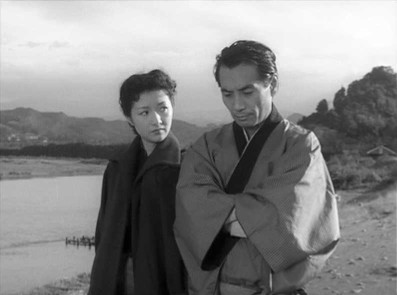
Floating Clouds (Naruse 1955). (1st viewing) Incredibly rich in emotion and a terribly heart-rending film. The dream that represented this romantic idyll during the Japanese occupation of French Indonesia is ceaselessly and ruthlessly shorn of its illusions in concert with the disintegration of Japan during the immediate post-war. All sense of moral compass is lost for these two souls – Kengo isn’t so much a complete egotist as an uncohesive psychological bundle of loose strands, while Yukiko’s obsessive attachment to this person who can only hurt her only feeds a growing death wish. It’s almost a road movie with all of that picking up and travelling to different locations and simultaneously a search to make ends meet, which only adds to the sense of disintegration and groundlessness. Outstanding.
People Will Talk (Mankiewicz 1951). (1st viewing)
TW, I’m with you on this one. It’s definitely a strange film, with the plot as you say divided and the film very awkward and unfocused in the telling, in addition to the storylines being a bit too quirky and not all that weighty as such. (I read before watching about the investigation being the director’s indirect reply to the communist witch hunts, but that didn’t make it more interesting). I kept waiting for the film to “start”, as if all of this was prologue to something else that never came. The end result of all this was also some boredom for me and a difficulty staying engaged with it. Grant as Praetorius did come across as a little pompous and not all that endearing, and I also didn’t find the film funny at all, so that the “sophisticated literateness” of the script (not to mention the lack of pretty much a second of silence in the film’s dialogue) became an irritant because of that. I will say that there’s still charm to be had to some degree in the acting, and the romantic dimension was the one bit that became almost appealing at times, but overall it was mostly just puzzling. But the general consensus about the film seems to be much more positive than our appreciations of it.therewillbeblus wrote: Thu Jun 25, 2020 12:48 amThis was so much worse on a revisit - Though I never really liked it too much, I recalled being more interested in the ‘mystery’ behind Grant’s trial. This outing I had forgotten the answer but found myself drawn to the romance, looking exhaustingly for sparks in its stale zone. The dialogue portion of the script is still fire, but the narrative itself -especially its bifurcated attempt at tackling two distinct portions of the story- carry unclear tonal aims, and I found myself continuously bored (I hate that word, but I cannot think of a better one here) by the attempts at drama. The personalities on display are as obstructed as the egos behind them are headstrong, so we are never offered a pathway into aligning with any of them- and when everything on the screen is a banal puzzlement, then regardless of how good a writer Mank is, the film becomes a wash. Still, the man has a way with words, and there is a very interesting film buried in here- one where maybe we can care more about these dense, (probably?) complex characters.
My Sister Eileen (Quine 1955). (1st viewing) Initially I was a little underwhelmed, maybe because of expectations caused by the opinions on the forum, but by mid-way I was on board and I enjoyed it progressively more and more until the end. I definitely didn’t watch it with the deep analysis TW has given it upthread, especially in terms of the characters, the gender politics and the psychology (presumably revisits with those ideas in mind would enable me to get even more out of it), but there is definitely something to the way the film handles the confining spaces and unleashes tremendous energy through those uses. The story was solid enough and you can tell this was already a self-contained comedy before it was transformed into musical, but beyond the performances by everyone here really it’s the choreography and the staging that made this a pleasure for me. There’s an enormous among of vitality coming through the piece, whether during the numbers or in between.
Journal d’un curé de campagne (Bresson 1951). (revisit) Unique as a film, even within Bresson’s oeuvre since it’s transitional to his fully matured style. I’m sympathetic to TW’s reading upthread but at the same time I always come out of this feeling that the film here is a little too mysterious and opaque to come out with such a definite interpretation. The priest is the figure we’re with and made to identify with, but at the same time it sometimes also feels like this is a more objectively distanced study of a milieu of which he is an object among others, and it’s complicated because at the same time there is this undeniable spirituality to the film, especially with the scene involving the conversation with the Countess and the ending. I mostly just let myself get absorbed and lost in the mood and atmosphere (those lonely, twisted birch trees), and delighting in the complex exchanges between the characters during their encounters that rapidly shift from one emotion to another.
India: Matri Bhumi (Rossellini 1959). (revisit) Like Rossellini’s later history films, it’s partially a question of allowing yourself to be affected by them. It’s an unassuming little documentary about the Indian continent but Rossellini makes it something quite soulful, at once an “objective” report (that roaming camera from one part of India to another) and a fable, with those delicate set-up scenes with non-professional actors. It’s people and animals and nature and the whole cosmos, basically.
All About Eve (Mankiewicz 1950). (1st viewing) Hard to follow HDT and TWBB’s deep analyses with my own short and more superficial thoughts. The contrast with People Will Talk is striking in terms of the expansiveness of the intelligence at work not only in the dialogue but throughout every element of the script. Everything works here (although that last narrative addition at the very end felt a little artificial and unnecessary). This is probably the last of the Bette Davis classics I hadn’t seen, and it’s arguably her best performance – she’s quite simply astounding in so many of her scenes. As strong as the script is, it would’ve been a far lesser thing without her. That scene where Bill challenges Margo’s (well-founded) paranoia for the vulnerabilities it conceals is potent and comes at the right time, not only giving her character more depth but bringing other dimensions to the story than the main premise. The film has an interesting structure because Eve’s character is more functional than anything in the beginning, but the story pretty much leaves Margo for her in the last near-hour, starting with another startling scene that makes us discover the unsettling truth about her character.
-
therewillbeblus
- Joined: Tue Dec 22, 2015 7:40 pm
Re: The 1950s List: Discussion and Suggestions
You're definitely right about the Bresson being more broadly spiritual rather than inviting concrete interpretations (which is why I reject the readings that double down and try to psychoanalze the priest as a phony Jesus wannabe) but I think that's why it's so special. Any writings I do on films of faith rooted in the mysterious vagueness of 'spirituality' (The Young Pope, for one, as much as I've tried..) are destined to be flawed because of the ineffable nature of explaining a spiritual experience. I do believe that they're worth dissecting but definitive stances aren't really what these are asking for. They're two way mirrors, where we are offered an opportunity to sit on both sides: asking us to look at ourselves and unpack our own relationship to the enigmatic unknowns or invisible energies or God, in relation to what we see.
-
bamwc2
- Joined: Mon Jun 02, 2008 3:54 pm
Re: The 1950s List: Discussion and Suggestions
Final Viewing Log:
Along the Great Divide (Raoul Walsh, 1951): Oater from Raul Walsh about US Marshal Len Merrick (Kirk Douglas) and his two deputies that rescue Pop Keith (Walter Brennan) from a lynch mob that wants to hang him for murdering a young cattle rancher. Determined to get him to Santa Lorma where Pop will stand trial, they pick up his daughter Ann (Virginia Mayo) and head off through the desert to try and avoid the mob from getting to them. Of course, the father of the murder victim sends his men after the group of travelers, and they eventually up the victim's brother Billy Shear (John Agar) when he tries to ambush them. The deus ex machina at the end of the film is easy to guess based on a throw away moment in its first ten minutes, but that's really my only complaint. It's a well made film with decent performances all around. Brennan, in particular, is great in the old coot role that he excelled at. Walsh was undeniably in a career ebb by the point he made this, but it's a highlight from the period.
The Big Sky (Howard Hawks, 1952): Another Kirk Douglas vehicle, this time set in the early days of US exploration of the continent. Here he plays Jim Deakins, a trader who makes his way along the Missouri River to exchange furs with Blackfoot Indians. Jim brings along Teal Eye (Elizabeth Threatt) to act as his guide as she attempts to steer them through the unfamiliar territory of hostile tribes. Little by little the men are picked off by mostly unseen enemies firing arrows from the coastline. There's no doubt that Hawks was one of the best American directors of his generation, but this one doesn't exactly feel like any of the other entries in his canon. It has elements from his westerns, but is set too early to be grouped with them and doesn't have the traditional antagonists. That's not a complaint though. It's a fun journey to take as the frontiersmen make their way along the Missouri.
Bloody Spear at Mount Fuji (Tomu Uchida, 1955): Samurai Sakawa Kojūrō (Teruo Shimada) travels the road to Edo along his servant Genta (Daisuke Katô) and spear carrier Gonpachi (Chiezô Kataoka). As they make their way to the city they encounter various fellow travelers, including a young orphan named Jirō (Motoharu Ueki). Jirō idolizes Gonpachi and dreams of being a spear carrier himself. After numerous interactions along the road, the party finally reaches Edo where the drunken and impudent samurai gets himself into trouble. Eventually it's up to Gonpachi to save the day, but at what cost? The episodic journey through on the long march makes for some riveting entertainment. The film doesn't shy away from the injustices of the Japanese shogunate, and the relationship between Gonpachi and Jirō feels real. Definitely recommended.
The Bravados (Henry King, 1958): Stranger Jim Douglass (Gregory Peck) comes riding into town to witness the hanging of four outlaws that raped and murdered his wife six months earlier. Early on they escape and take beautiful town girl Emma Steinmetz (Kathleen Gallant) hostage. Jim goes after them with a posse that leaves all of the heavy lifting up to him. Aware that they're being followed by a crazed tracker, two of the members of the gang try taking him out in one on one confrontations. Instead of killing them, Jim captures them to let the law hang them. Eventually, the two remaining desperadoes make their way to Mexico where Jim is the only one willing to follow them. He meets up Josefa Velarde (Joan Collins) and has a showdown with both the bandits and his own psyche. I've always seen Henry King as a C list director, but he's about as good as he gets here. In allowing Peck to take over as the revenge fueled lead, we get the madness of a broken man on his quest for vengeance. Collins doesn't exactly make for a convincing Latina, and you probably know by now how I feel about her playing a Mexican woman. It's not a bad movie, but it's not a particularly memorable one either.
The Desperate Hours (William Wyler, 1955): Hoosier Dan C. Hilliard (Fredric March) lives in his upper-middle class home with wife Ellie (Martha Scott), teenage daughter Cindy (Mary Murphy), and young son Ralphie (Richard Eyer). One day their suburban dream becomes a nightmare, when a trio of criminals led by Glenn Griffin (Humphrey Bogart) use their home as a hideout until Glenn's moll can bring them enough cash to disappear on. Sure enough she's pulled over for running a red light and the plan goes haywire. The criminals stay holed up there for longer than expected as they constantly terrorize the innocent family. Not wanting to put his family at risk, Dan thwarts several attempts to notify the police. But when the crooks get desperate, will he have what it takes to defend his family? With the exception of Mrs. Miniver, I'm really not a William Wyler fan, but he does a better than average job here. With tense performances from the villains, who are undoubtedly the stars of the picture, it's an effective little noir.
Give a Girl a Break (Stanley Donen, 1953): The prima donna star of a Broadway show quits weeks before opening day, and director Ted Sturgis (Gower Champion) is in a mad scramble to replace her. There's young tap dancer Suzy Doolittle (Debbie Reynolds), ballerina Joanna Moss (Helen Wood), and ex-star Madelyn Corlane (Marge Champion). Production assistant Bob Dowdy (Bob Fosse) falls for Suzy, but their relationship seems doomed when another is chosen for the role. Will Suzy ever get her big break? Does the love struck Bob have a chance with the object of his affection? With great song and dance numbers, this was a real winner. Reynolds, in particular, is magnetic here. As someone with an interest in the film ephemera, she was a friend of several of my friends with backgrounds preserving classic Hollywood memorabilia. I never met her myself, but everyone I know who knew her remembers her fondly.
Jubal (Delmer Daves, 1956): Rancher Shep Horgan (Ernest Borgnine) finds injured drifter Jubal Troop (Glenn Ford) and gives him a place to recover. When Jubal is well enough to work, Shep gives him him a job and becomes his friend. Unfortunately, Shep's wife Mae (Valerie French) despises her husband and falls for their new house guest. Jubal, ignores her advances as best he can, and instead has eyes for pioneer Naomi Hoktor (Felicia Farr). Shep learns about Mae's interest in Jubal, leading to a deadly incident in a saloon. Farmhand Pinky sees this as his chance to make his move on Mae and take over the ranch for himself. He leads a lynch mob in pursuit of Jubal in the hope of blaming him for a pair of killings. The Criterion blu-ray had been sitting in my kevyip for years now, and I almost forgot to pull it out in time for the project. I'm not the biggest Delmer Daves fan out there, but this was a very good representation of what he was capable of as a director. It's a great western, with some of the best actors of the genre.
Try and Get Me! (AKA The Sound of Fury) (Cy Endfield, 1950): Frank Lovejoy stars Howard Tyler, a down on his luck patriarch of a suburban family living beyond their means. Without a job, Howard is desperate for a way to provide for his pregnant wife and young son. Soon he falls in with Jerry Slocum (Lloyd Bridges), a stickup artist looking to break into new areas of crime. Howard finds himself as the getaway driver for one of Jerry's robberies, and eventually his accomplice in a kidnapping. Howard is uncomfortable with a life of crime, but eager to provide for his family. All of that changes when Jerry commits murder and forces Howard to help him dispose of the body. Howard's conscience leads to the pair getting caught, and a sensationalist newspaper launches a campaign against them. But what happens when the publication stirs up a lynch mob desperate to take the law into its own hands? It was interesting to see Lloyd Bridges in a role where he plays the heavy. With a handful of exceptions, I'm mostly familiar with him from his later parody work and guest spots on Seinfeld. He's pretty effective here, as is the lead played by Lovejoy. This was a decent enough noir. I wonder why this isn't better remembered today?
Along the Great Divide (Raoul Walsh, 1951): Oater from Raul Walsh about US Marshal Len Merrick (Kirk Douglas) and his two deputies that rescue Pop Keith (Walter Brennan) from a lynch mob that wants to hang him for murdering a young cattle rancher. Determined to get him to Santa Lorma where Pop will stand trial, they pick up his daughter Ann (Virginia Mayo) and head off through the desert to try and avoid the mob from getting to them. Of course, the father of the murder victim sends his men after the group of travelers, and they eventually up the victim's brother Billy Shear (John Agar) when he tries to ambush them. The deus ex machina at the end of the film is easy to guess based on a throw away moment in its first ten minutes, but that's really my only complaint. It's a well made film with decent performances all around. Brennan, in particular, is great in the old coot role that he excelled at. Walsh was undeniably in a career ebb by the point he made this, but it's a highlight from the period.
The Big Sky (Howard Hawks, 1952): Another Kirk Douglas vehicle, this time set in the early days of US exploration of the continent. Here he plays Jim Deakins, a trader who makes his way along the Missouri River to exchange furs with Blackfoot Indians. Jim brings along Teal Eye (Elizabeth Threatt) to act as his guide as she attempts to steer them through the unfamiliar territory of hostile tribes. Little by little the men are picked off by mostly unseen enemies firing arrows from the coastline. There's no doubt that Hawks was one of the best American directors of his generation, but this one doesn't exactly feel like any of the other entries in his canon. It has elements from his westerns, but is set too early to be grouped with them and doesn't have the traditional antagonists. That's not a complaint though. It's a fun journey to take as the frontiersmen make their way along the Missouri.
Bloody Spear at Mount Fuji (Tomu Uchida, 1955): Samurai Sakawa Kojūrō (Teruo Shimada) travels the road to Edo along his servant Genta (Daisuke Katô) and spear carrier Gonpachi (Chiezô Kataoka). As they make their way to the city they encounter various fellow travelers, including a young orphan named Jirō (Motoharu Ueki). Jirō idolizes Gonpachi and dreams of being a spear carrier himself. After numerous interactions along the road, the party finally reaches Edo where the drunken and impudent samurai gets himself into trouble. Eventually it's up to Gonpachi to save the day, but at what cost? The episodic journey through on the long march makes for some riveting entertainment. The film doesn't shy away from the injustices of the Japanese shogunate, and the relationship between Gonpachi and Jirō feels real. Definitely recommended.
The Bravados (Henry King, 1958): Stranger Jim Douglass (Gregory Peck) comes riding into town to witness the hanging of four outlaws that raped and murdered his wife six months earlier. Early on they escape and take beautiful town girl Emma Steinmetz (Kathleen Gallant) hostage. Jim goes after them with a posse that leaves all of the heavy lifting up to him. Aware that they're being followed by a crazed tracker, two of the members of the gang try taking him out in one on one confrontations. Instead of killing them, Jim captures them to let the law hang them. Eventually, the two remaining desperadoes make their way to Mexico where Jim is the only one willing to follow them. He meets up Josefa Velarde (Joan Collins) and has a showdown with both the bandits and his own psyche. I've always seen Henry King as a C list director, but he's about as good as he gets here. In allowing Peck to take over as the revenge fueled lead, we get the madness of a broken man on his quest for vengeance. Collins doesn't exactly make for a convincing Latina, and you probably know by now how I feel about her playing a Mexican woman. It's not a bad movie, but it's not a particularly memorable one either.
The Desperate Hours (William Wyler, 1955): Hoosier Dan C. Hilliard (Fredric March) lives in his upper-middle class home with wife Ellie (Martha Scott), teenage daughter Cindy (Mary Murphy), and young son Ralphie (Richard Eyer). One day their suburban dream becomes a nightmare, when a trio of criminals led by Glenn Griffin (Humphrey Bogart) use their home as a hideout until Glenn's moll can bring them enough cash to disappear on. Sure enough she's pulled over for running a red light and the plan goes haywire. The criminals stay holed up there for longer than expected as they constantly terrorize the innocent family. Not wanting to put his family at risk, Dan thwarts several attempts to notify the police. But when the crooks get desperate, will he have what it takes to defend his family? With the exception of Mrs. Miniver, I'm really not a William Wyler fan, but he does a better than average job here. With tense performances from the villains, who are undoubtedly the stars of the picture, it's an effective little noir.
Give a Girl a Break (Stanley Donen, 1953): The prima donna star of a Broadway show quits weeks before opening day, and director Ted Sturgis (Gower Champion) is in a mad scramble to replace her. There's young tap dancer Suzy Doolittle (Debbie Reynolds), ballerina Joanna Moss (Helen Wood), and ex-star Madelyn Corlane (Marge Champion). Production assistant Bob Dowdy (Bob Fosse) falls for Suzy, but their relationship seems doomed when another is chosen for the role. Will Suzy ever get her big break? Does the love struck Bob have a chance with the object of his affection? With great song and dance numbers, this was a real winner. Reynolds, in particular, is magnetic here. As someone with an interest in the film ephemera, she was a friend of several of my friends with backgrounds preserving classic Hollywood memorabilia. I never met her myself, but everyone I know who knew her remembers her fondly.
Jubal (Delmer Daves, 1956): Rancher Shep Horgan (Ernest Borgnine) finds injured drifter Jubal Troop (Glenn Ford) and gives him a place to recover. When Jubal is well enough to work, Shep gives him him a job and becomes his friend. Unfortunately, Shep's wife Mae (Valerie French) despises her husband and falls for their new house guest. Jubal, ignores her advances as best he can, and instead has eyes for pioneer Naomi Hoktor (Felicia Farr). Shep learns about Mae's interest in Jubal, leading to a deadly incident in a saloon. Farmhand Pinky sees this as his chance to make his move on Mae and take over the ranch for himself. He leads a lynch mob in pursuit of Jubal in the hope of blaming him for a pair of killings. The Criterion blu-ray had been sitting in my kevyip for years now, and I almost forgot to pull it out in time for the project. I'm not the biggest Delmer Daves fan out there, but this was a very good representation of what he was capable of as a director. It's a great western, with some of the best actors of the genre.
Try and Get Me! (AKA The Sound of Fury) (Cy Endfield, 1950): Frank Lovejoy stars Howard Tyler, a down on his luck patriarch of a suburban family living beyond their means. Without a job, Howard is desperate for a way to provide for his pregnant wife and young son. Soon he falls in with Jerry Slocum (Lloyd Bridges), a stickup artist looking to break into new areas of crime. Howard finds himself as the getaway driver for one of Jerry's robberies, and eventually his accomplice in a kidnapping. Howard is uncomfortable with a life of crime, but eager to provide for his family. All of that changes when Jerry commits murder and forces Howard to help him dispose of the body. Howard's conscience leads to the pair getting caught, and a sensationalist newspaper launches a campaign against them. But what happens when the publication stirs up a lynch mob desperate to take the law into its own hands? It was interesting to see Lloyd Bridges in a role where he plays the heavy. With a handful of exceptions, I'm mostly familiar with him from his later parody work and guest spots on Seinfeld. He's pretty effective here, as is the lead played by Lovejoy. This was a decent enough noir. I wonder why this isn't better remembered today?
-
bamwc2
- Joined: Mon Jun 02, 2008 3:54 pm
Re: The 1950s List: Discussion and Suggestions
I still have one more film from the 50s that I'm going to watch as part of the sc-fi project before I turn in my list.
-
bamwc2
- Joined: Mon Jun 02, 2008 3:54 pm
Re: The 1950s List: Discussion and Suggestions
I have a question about the lists. Does the 60s project begin at the start of September or after the orphan reclamation period?
-
therewillbeblus
- Joined: Tue Dec 22, 2015 7:40 pm
Re: The 1950s List: Discussion and Suggestions
I believe a brief window of 2010s are next, but not an official list. Here's a link to swo's date outlines for future decade projects from the List Projects thread.

-
swo17

- Bloodthirsty Butcher
- Joined: Tue Apr 15, 2008 2:25 pm
- Location: SLC, UT
Re: The 1950s List: Discussion and Suggestions
Yes, we're jumping ahead because isn't that what everyone wants to do? And it will work like any other decade project, the results just won't count toward what's eligible for the all-time list
-
bamwc2
- Joined: Mon Jun 02, 2008 3:54 pm
Re: The 1950s List: Discussion and Suggestions
What does count toward the all time list? Isn't it just whatever anyone feels like voting for?swo17 wrote: Wed Aug 19, 2020 8:36 pm Yes, we're jumping ahead because isn't that what everyone wants to do? And it will work like any other decade project, the results just won't count toward what's eligible for the all-time list
-
swo17
- Bloodthirsty Butcher
- Joined: Tue Apr 15, 2008 2:25 pm
- Location: SLC, UT
Re: The 1950s List: Discussion and Suggestions
In order to reduce "wasted" votes, only films that get at least two top 10 mentions during the individual decade lists are eligible
http://criterionforum.org/forum/viewtop ... 24&t=15962
http://criterionforum.org/forum/viewtop ... 24&t=15962
-
Red Screamer

- Joined: Tue Jul 16, 2013 4:34 pm
- Location: Boston, MA
Re: The 1950s List: Discussion and Suggestions
Everyone's talking about Jerry Lewis and Peyton Place like it's really 1957 up in here! As always, red means the film has a fighting chance of making my list—and hopefully yours.
The Jazz Singer (Ralph Nelson, 1959) Another adaptation of the play, made for TV and starring Jerry Lewis. Its live taping adds some nervous energy to the overpruned material. At this point, Lewis is clearly more comfortable with onstage goofing than with the dramatic aspects of his character and relies too much on anxious tics during the heavier scenes. If you're looking for the germ of his brilliant Buddy Love performance a few years later, look no further than his character's egotistical outbursts here. If anything, watching this made me appreciate how, in the films he directed, Lewis was able to retain the unpredictable rawness of live acting after sculpting his performances through several takes. Any huge Lewis fans will want to see this, at least for his excursion into a realistic Jewish milieu and for the scene of him repeatedly breaking down in tears while trying to sing "Be a Clown" (its most Lewis-y moment), but the rest of you can skip it.
Cairo Station (Youssef Chahine, 1958) Rivals Pyaasa for the most peculiar director-star turn I’ve seen this decade. While I found that film’s lead performance off-putting for the director’s smug role as a misunderstood poet too pure for this world, Chahine casting himself as a creepy and unlikable antihero is amusingly morbid. It's like if Michael Powell cast himself in Peeping Tom. The whole film is bold and bursting with energy, starting with its lively use of setting. I couldn’t figure out the exact combination of sets and locations used, but Chahine uses the space and objects of a train station to spice up everything, from shot-reverse-shots shouted across several tracks to an audiovisual train innuendo that outdoes North by Northwest's. His direction ranges from psychological montage to more classical blocking and fuses elements of union agitprop, psychosexual thriller, and doleful melodrama before settling into a noirish vein somewhere between Drive a Crooked Road and The Sound of Fury if that makes sense. Apparently some people call this neo-realist, which I think is a stretch, but Chahine definitely learned a thing or two from Italian post-war cinema. It’s fast-paced and packed at 77 minutes and if it fizzles out a bit towards the end when it loses some of its earlier loosenesses, it’s still quite a ride to get there.
Giants and Toys (Yasuzō Masumura, 1958) “Silver Caramels refresh you when you’re tired from protesting!” A grim advertising satire, honing in on the desperation that fuels both ends of the affair. The men in the film aren’t given much to do but Hitomi Nozoe as the caramel company’s wonderfully gauche poster girl Kyoko gives the whole thing some life. When she transforms into a star, the film avoids the easy trap of mocking the face of the business instead of its guts. Her final scene is the most moving in the film, wherein she gives a modest rationale for her lavish new life, knowing full well it’s only skin-deep. The peripheral details of the script, like the scenes at Kyoko’s family house before and after the advertising money has rolled in, give us a much-needed look at Japanese life outside of corporate jockeying, though ultimately I think its focus is a bit narrow. The same could be said of the style, which is more strait-laced than I expected for a seemingly goofy subject, but in the end Masumura’s harsh vision packs a punch, or at least a slap.
The Long Hot Summer (Martin Ritt, 1958) I don’t really have any arguments in favor of this except that I enjoyed every minute of it. Every scene is boiled down to money and sex, which is rather un-Faulknerian despite his name branding the opening credits, and would seem myopic if the film didn’t work so well moment to moment. Ritt’s direction is never very formal, but I thought his use of CinemaScope in No Down Payment was economically elegant. Here it’s more standard, with the only notable blocking coming in the general store tango between Woodward and Newman, but it’s hard to care too much when he’s so good with actors. Or they’re so good with him (while Orson Welles conducts screen tests for his Immortal Story makeup). In any other film, Welles would be the villain, and he starts out that way here, but he gets a weird triple redemption at the end that surprised me, with money and sex safely knit together in his own rotten house. What to make of that?
Son of Paleface (Frank Tashlin, 1952) A comic book Western is interrupted when Daffy Duck comes to town, played by Bob Hope. "Interrupt" is a key concept, it turns out, as Hope keeps throwing off the flow and tone of the generic Rodgers-Russell storyline, creating the film’s spellbinding, wonky rhythm. This combined with the fourth-wall breaks and formal gags (like in Rock Hunter, the pre-credits scene is jarring and hilarious) struck me as a remarkably modern style of comedy, more self-destructive than parodic, witty, or cute. That said, when the film takes aim at some of the foundations of the western myth—birthright, heroism, strength, legacy, and white supremacy—it’s pretty sharp too if, as always with Tashlin, too drunk on its own stylish riffs to worry about making points. And, as in the joke where the ghost of Paleface returns from hell to tell his son how much he loves it there, the laughs are worth it. The visual comedy is remarkable in its elastic special effects and meticulous construction, only getting better on rewatch. A western comedy that sustains running verbal gags about Harvard for its whole running time was surprising enough, but one that’s able to stuff costumes and sets with visual Harvard jokes, carefully withholding and revealing them to stay one step ahead of the audience as they become more predictable? Now that’s masterful.
The Sound of Fury (Cy Enfield, 1950) Man, that ending is really something else, with its droning soundtrack loop and dynamic psuedo-documentary shooting style. It was also weird to see this 70-year-old film end with similar images to the videos of police brutality we’ve all seen over and over again this summer, but with the crowd as the more frightening force of the two! The cinematography is great throughout, especially in the woozy canted angles of the nightclub scene. It’s as angry, tough, and unpleasant as any noir I’ve seen this decade, though the Big Heat does a better job of analyzing institutional corruption and social structures (and it doesn’t resort to any annoying onscreen moralizers). About that doubly spelled-out thesis: if the film's argument is that violence is caused by social conditions, why does it characterize Jerry as a manic force of nature? Bridge’s performance is great for what it is, but the dynamic of the two men seems to push some blame away from social conditions and onto him.
The Jazz Singer (Ralph Nelson, 1959) Another adaptation of the play, made for TV and starring Jerry Lewis. Its live taping adds some nervous energy to the overpruned material. At this point, Lewis is clearly more comfortable with onstage goofing than with the dramatic aspects of his character and relies too much on anxious tics during the heavier scenes. If you're looking for the germ of his brilliant Buddy Love performance a few years later, look no further than his character's egotistical outbursts here. If anything, watching this made me appreciate how, in the films he directed, Lewis was able to retain the unpredictable rawness of live acting after sculpting his performances through several takes. Any huge Lewis fans will want to see this, at least for his excursion into a realistic Jewish milieu and for the scene of him repeatedly breaking down in tears while trying to sing "Be a Clown" (its most Lewis-y moment), but the rest of you can skip it.
Cairo Station (Youssef Chahine, 1958) Rivals Pyaasa for the most peculiar director-star turn I’ve seen this decade. While I found that film’s lead performance off-putting for the director’s smug role as a misunderstood poet too pure for this world, Chahine casting himself as a creepy and unlikable antihero is amusingly morbid. It's like if Michael Powell cast himself in Peeping Tom. The whole film is bold and bursting with energy, starting with its lively use of setting. I couldn’t figure out the exact combination of sets and locations used, but Chahine uses the space and objects of a train station to spice up everything, from shot-reverse-shots shouted across several tracks to an audiovisual train innuendo that outdoes North by Northwest's. His direction ranges from psychological montage to more classical blocking and fuses elements of union agitprop, psychosexual thriller, and doleful melodrama before settling into a noirish vein somewhere between Drive a Crooked Road and The Sound of Fury if that makes sense. Apparently some people call this neo-realist, which I think is a stretch, but Chahine definitely learned a thing or two from Italian post-war cinema. It’s fast-paced and packed at 77 minutes and if it fizzles out a bit towards the end when it loses some of its earlier loosenesses, it’s still quite a ride to get there.
Giants and Toys (Yasuzō Masumura, 1958) “Silver Caramels refresh you when you’re tired from protesting!” A grim advertising satire, honing in on the desperation that fuels both ends of the affair. The men in the film aren’t given much to do but Hitomi Nozoe as the caramel company’s wonderfully gauche poster girl Kyoko gives the whole thing some life. When she transforms into a star, the film avoids the easy trap of mocking the face of the business instead of its guts. Her final scene is the most moving in the film, wherein she gives a modest rationale for her lavish new life, knowing full well it’s only skin-deep. The peripheral details of the script, like the scenes at Kyoko’s family house before and after the advertising money has rolled in, give us a much-needed look at Japanese life outside of corporate jockeying, though ultimately I think its focus is a bit narrow. The same could be said of the style, which is more strait-laced than I expected for a seemingly goofy subject, but in the end Masumura’s harsh vision packs a punch, or at least a slap.
The Long Hot Summer (Martin Ritt, 1958) I don’t really have any arguments in favor of this except that I enjoyed every minute of it. Every scene is boiled down to money and sex, which is rather un-Faulknerian despite his name branding the opening credits, and would seem myopic if the film didn’t work so well moment to moment. Ritt’s direction is never very formal, but I thought his use of CinemaScope in No Down Payment was economically elegant. Here it’s more standard, with the only notable blocking coming in the general store tango between Woodward and Newman, but it’s hard to care too much when he’s so good with actors. Or they’re so good with him (while Orson Welles conducts screen tests for his Immortal Story makeup). In any other film, Welles would be the villain, and he starts out that way here, but he gets a weird triple redemption at the end that surprised me, with money and sex safely knit together in his own rotten house. What to make of that?
Son of Paleface (Frank Tashlin, 1952) A comic book Western is interrupted when Daffy Duck comes to town, played by Bob Hope. "Interrupt" is a key concept, it turns out, as Hope keeps throwing off the flow and tone of the generic Rodgers-Russell storyline, creating the film’s spellbinding, wonky rhythm. This combined with the fourth-wall breaks and formal gags (like in Rock Hunter, the pre-credits scene is jarring and hilarious) struck me as a remarkably modern style of comedy, more self-destructive than parodic, witty, or cute. That said, when the film takes aim at some of the foundations of the western myth—birthright, heroism, strength, legacy, and white supremacy—it’s pretty sharp too if, as always with Tashlin, too drunk on its own stylish riffs to worry about making points. And, as in the joke where the ghost of Paleface returns from hell to tell his son how much he loves it there, the laughs are worth it. The visual comedy is remarkable in its elastic special effects and meticulous construction, only getting better on rewatch. A western comedy that sustains running verbal gags about Harvard for its whole running time was surprising enough, but one that’s able to stuff costumes and sets with visual Harvard jokes, carefully withholding and revealing them to stay one step ahead of the audience as they become more predictable? Now that’s masterful.
The Sound of Fury (Cy Enfield, 1950) Man, that ending is really something else, with its droning soundtrack loop and dynamic psuedo-documentary shooting style. It was also weird to see this 70-year-old film end with similar images to the videos of police brutality we’ve all seen over and over again this summer, but with the crowd as the more frightening force of the two! The cinematography is great throughout, especially in the woozy canted angles of the nightclub scene. It’s as angry, tough, and unpleasant as any noir I’ve seen this decade, though the Big Heat does a better job of analyzing institutional corruption and social structures (and it doesn’t resort to any annoying onscreen moralizers). About that doubly spelled-out thesis: if the film's argument is that violence is caused by social conditions, why does it characterize Jerry as a manic force of nature? Bridge’s performance is great for what it is, but the dynamic of the two men seems to push some blame away from social conditions and onto him.
-
bamwc2
- Joined: Mon Jun 02, 2008 3:54 pm
Re: The 1950s List: Discussion and Suggestions
I just watched The Sound of Fury (AKA Try and Get Me!) earlier this week. I agree with you about that final scene. Bridges's performance was unlike anything else I've ever seen him in. I'm sorry to hear that you didn't get more out of Giants and Toys. It should be on my list.
-
knives

- Joined: Sat Sep 06, 2008 10:49 pm
Re: The 1950s List: Discussion and Suggestions
I think earlier in the thread I compared the Chachine to Taxi Driver, though your comments make me wish the gun seller was the lead.
-
alacal2
- not waving but frowning
- Joined: Tue Dec 09, 2008 5:18 pm
Re: The 1950s List: Discussion and Suggestions
Room At The Top (Jack Clayton 1959)
Smoke and mirrors.
Sadly, this was only an Also Ran in the last List. Hoping to bump it back up. A great debut from Clayton who is rapidly becoming one of my favourite directors. A meticulous dissection of and unwavering eye on the dynamics of sex and class - or sex v. class. I agree with BarryConvex's post that the character of Joe Lampton is an opportunist but one who compeeltely lacks a strategy or focus. Neither hero or anti-hero. He 'wants it all' without ever really knowing what 'all' is. A fusion of angry young man and randy young man. Clayton also fascinatingly portrays him as a chameleon right from the opening shot as he's about to disembark from the train by sliding his shiny brogues over his darned socks.
Clayton's use of mirroring is brilliant and never feels mannered. Alice, for instance, both movingly reflects on her age in mirrors and reflects back at Joe on the sort of person she really believes him to be.
Where I disagree with BarryConvex is in the view that Joe has not been punished enough. In the final scenes of his wedding, he feels to me to be both completely neutered by his marriage (he can barely get his vows out) and literally 'out-classed' by his father-in-law. In the final shot the car (cortege?) that drives him and Susan away from church disappears in longshot down what seems a neverending cul-de-sac.
Whilst 'important' for allegedly introducing the British New Wave, this film's strengths run far deeper - Freddie Francis's photography, Signoret's luminous performance and Clayton's intelligent and forensic direction Room At The Top is a movie that keeps on giving.
Smoke and mirrors.
Sadly, this was only an Also Ran in the last List. Hoping to bump it back up. A great debut from Clayton who is rapidly becoming one of my favourite directors. A meticulous dissection of and unwavering eye on the dynamics of sex and class - or sex v. class. I agree with BarryConvex's post that the character of Joe Lampton is an opportunist but one who compeeltely lacks a strategy or focus. Neither hero or anti-hero. He 'wants it all' without ever really knowing what 'all' is. A fusion of angry young man and randy young man. Clayton also fascinatingly portrays him as a chameleon right from the opening shot as he's about to disembark from the train by sliding his shiny brogues over his darned socks.
Clayton's use of mirroring is brilliant and never feels mannered. Alice, for instance, both movingly reflects on her age in mirrors and reflects back at Joe on the sort of person she really believes him to be.
Where I disagree with BarryConvex is in the view that Joe has not been punished enough. In the final scenes of his wedding, he feels to me to be both completely neutered by his marriage (he can barely get his vows out) and literally 'out-classed' by his father-in-law. In the final shot the car (cortege?) that drives him and Susan away from church disappears in longshot down what seems a neverending cul-de-sac.
Whilst 'important' for allegedly introducing the British New Wave, this film's strengths run far deeper - Freddie Francis's photography, Signoret's luminous performance and Clayton's intelligent and forensic direction Room At The Top is a movie that keeps on giving.
-
bamwc2
- Joined: Mon Jun 02, 2008 3:54 pm
Re: The 1950s List: Discussion and Suggestions
I submitted my list yesterday. Here are a few stray observations about it:
Films viewed for the project: 113
Number of films viewed for the project that made my list: 7
Country with the most entries: USA. Most of my entries on my viewing logs from the 50s are from the US. The next decade is the exact opposite.
I'm an atheist, but my top three films on the list are all explicitly religious.
Directors with more than one film on the list: Samuel Fuller, Alfred Hitchcock, Kon Ichikawa, Kenji Mizoguchi, Nicholas Ray, Douglas Sirk, Billy Wilder
Number of films on my list with at least one woman directing them: 2. Sadly, there weren't very many women directing in this decade.
Thing I learned on my summer vacation: There was a lot more nudity in European films of the 50s than I realized.
The next ten that didn't make my list:
51. Compulsion (Richard Fleischer, 1959)
52. 12 Angry Men (Sidney Lumet, 1957)
53. Ace in the Hole (Billy Wilder, 1951)
54. The Killer Is Loose (Budd Boetticher, 1956)
55. Viva Zapata! (Elia Kazan, 1952)
56. Los Olvidados (Luis Buñuel, 1950)
57. The Tall Target (Anthony Mann, 1951)
58. The Big Heat (Fritz Lang, 1953)
59. Murder is My Beat (Edgar G. Ulmer, 1955)
60. Jan Hus (Otakar Vávra, 1955)
Number of films in the Criterion Collection (including their laserdisc days and Eclipse): 26
Films viewed for the project: 113
Number of films viewed for the project that made my list: 7
Country with the most entries: USA. Most of my entries on my viewing logs from the 50s are from the US. The next decade is the exact opposite.
I'm an atheist, but my top three films on the list are all explicitly religious.
Directors with more than one film on the list: Samuel Fuller, Alfred Hitchcock, Kon Ichikawa, Kenji Mizoguchi, Nicholas Ray, Douglas Sirk, Billy Wilder
Number of films on my list with at least one woman directing them: 2. Sadly, there weren't very many women directing in this decade.
Thing I learned on my summer vacation: There was a lot more nudity in European films of the 50s than I realized.
The next ten that didn't make my list:
51. Compulsion (Richard Fleischer, 1959)
52. 12 Angry Men (Sidney Lumet, 1957)
53. Ace in the Hole (Billy Wilder, 1951)
54. The Killer Is Loose (Budd Boetticher, 1956)
55. Viva Zapata! (Elia Kazan, 1952)
56. Los Olvidados (Luis Buñuel, 1950)
57. The Tall Target (Anthony Mann, 1951)
58. The Big Heat (Fritz Lang, 1953)
59. Murder is My Beat (Edgar G. Ulmer, 1955)
60. Jan Hus (Otakar Vávra, 1955)
Number of films in the Criterion Collection (including their laserdisc days and Eclipse): 26
-
therewillbeblus
- Joined: Tue Dec 22, 2015 7:40 pm
Re: The 1950s List: Discussion and Suggestions
I don't know what these are, but I think it's worth noting that often religious-dressed films are more broadly spiritual and use religious iconography as a gateway to elicit more universal life experiences. I also have many on my list, including several in my top 10/15, but would never think of them as "explicitly religious" - perhaps your top three are though.bamwc2 wrote: Fri Aug 21, 2020 2:25 pm I'm an atheist, but my top three films on the list are all explicitly religious.
-
swo17
- Bloodthirsty Butcher
- Joined: Tue Apr 15, 2008 2:25 pm
- Location: SLC, UT
-
bamwc2
- Joined: Mon Jun 02, 2008 3:54 pm
Re: The 1950s List: Discussion and Suggestions
How did you know?
-
swo17
- Bloodthirsty Butcher
- Joined: Tue Apr 15, 2008 2:25 pm
- Location: SLC, UT
Re: The 1950s List: Discussion and Suggestions
Uh, you submitted your list to me?
-
domino harvey

- Dot Com Dom
- Joined: Wed Jan 11, 2006 6:42 pm
Re: The 1950s List: Discussion and Suggestions
My number one fits the religious bill as well to a 

-
swo17
- Bloodthirsty Butcher
- Joined: Tue Apr 15, 2008 2:25 pm
- Location: SLC, UT