The weekend's Claire Denis revisits:
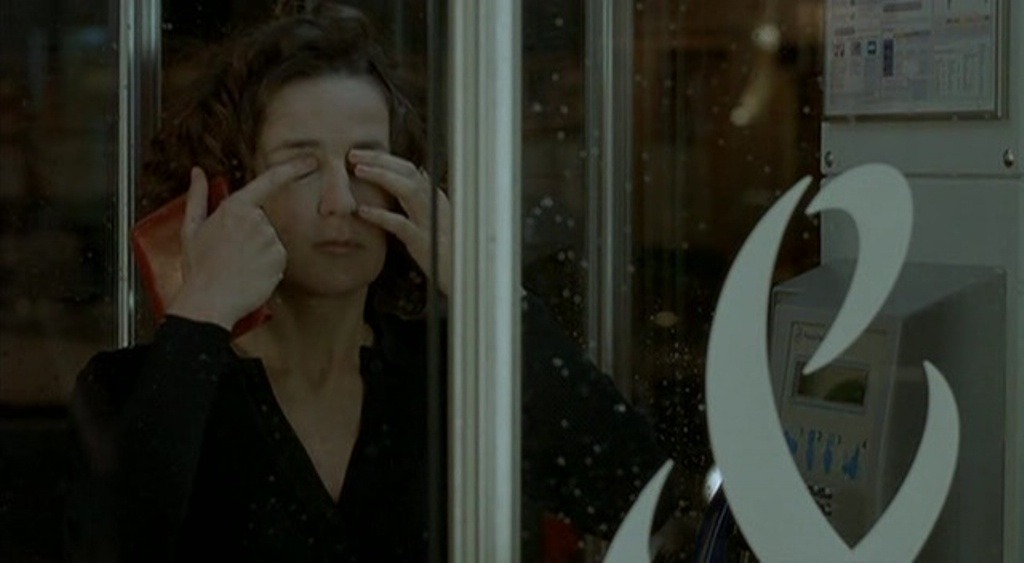 Vendredi Soir
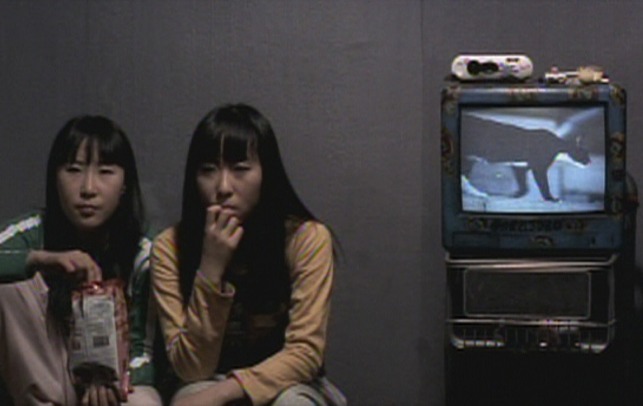
 (Claire Denis, 2002) - This gorgeous, immersive film is at once Denis' most straightforward and most ambiguous film, and it says a lot about her unique skills as a filmmaker that this could be the case. Laure is packing up all her belongings to move in with her boyfriend. She finishes the job late and heads across town to have dinner with friends before meeting the removal men in the morning. But there's a huge traffic jam which brings Paris to a standstill, and a rainstorm, which prompts a radio host to suggest that stranded motorists offer pedestrians shelter in their cars. Laure offers Gregoire Colin a lift, but he refuses and walks out of the film. Instead, Vincent Lindon's Jean hops in. Together, they escape the traffic jam for an oddly deserted Paris, where they have a drink, a meal, and a night of steamy sex, before Laure runs off to her real life at dawn.
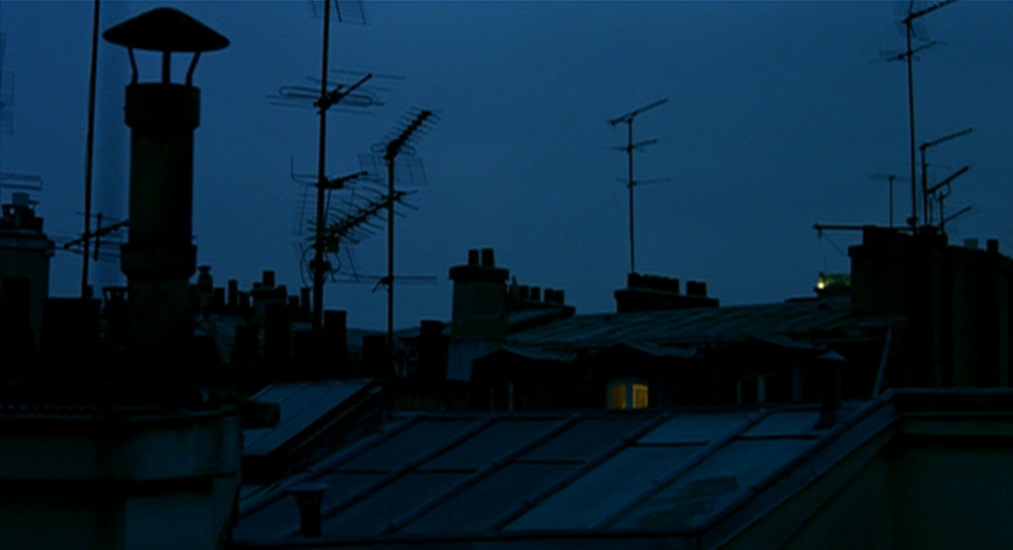
This is an incredibly sensuous film, and Denis and Godard (and Quettier) are gloriously indiscriminate in their sensuality: a shot of a lit-up corner bar can be as sexy as a shot of sealed and labelled boxes can be as sexy as Lemercier and Lindon rolling over one another can be as sexy as blurry headlights in the rain or a twilit roofscape. There are sublime dissolving pillow shots of neon signs that serve as transitions - a brilliant borrowing from and updating of Ozu - and Dickon Hinchliffe's intoxicating score, all adding to the tone of an erotic reverie. And that's where the film's real brilliance emerges: it's established early on that Laure is exhausted and on the brink of sleep, and also that she has an active imagination that allows her little surreal flashes like the anchovies on a pizza smiling at her, or projections like Jean seducing another woman while he's briefly away from her. The entire tone of the film is fundamentally subjective, and there are enough conventional signals (Laure falling asleep at the wheel), seemingly impossible events (Jean escapes the traffic jam by speeding backwards) and unlikely coincidences (Laure finding Jean in a bar after losing him thoroughly on the backstreets) to suggest that some of the night, at least, is imagined by Laure. Perhaps she heard the radio host's suggestion, glimpsed Lindon across the intersection, then fell asleep and dreamed of an erotic encounter with this rakish stranger on her last night of freedom. Or perhaps she did offer him a lift, he left her on the back streets, and she fantasized about finding him again and having a romantic night together. Maybe the only thing she imagined was Jean's sexual encounter with the other woman in the restaurant, or maybe she didn't even imagine that. Denis fills the film with elements that suggest the irreality of a dream, but she doggedly counterbalances that with elements that confirm the reality of what we see, like a brief moment when we stay with the hotel receptionist after both characters have left the scene. It's an extraordinary balancing act, and Denis fully understands that sometimes your life, especially when it's lived late at night, outside your comfort zone, can feel more like a dream than reality.
 L'Intrus
 (Claire Denis, 2004) - First, let's get the domino harvey capsule review out of the way: this film makes no fucking sense.

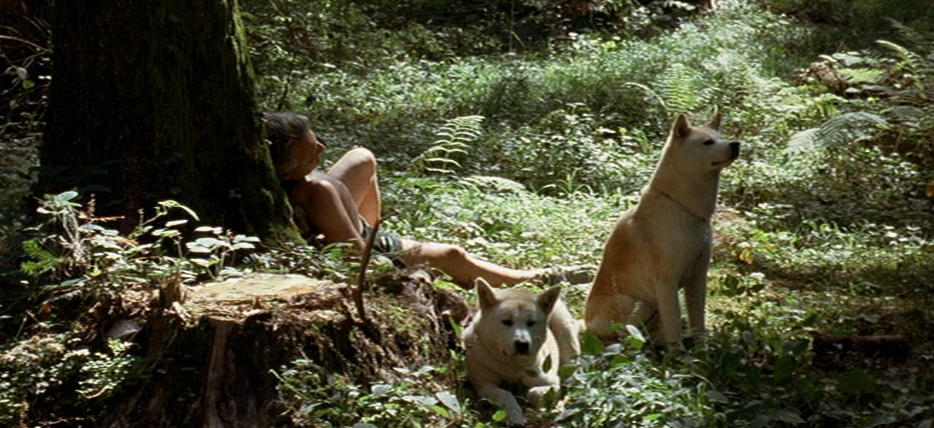
Actually, it does make perfect sense if you pay attention, but it's a far better strategy to approach it with no narrative expectations and let its imagery wash over you, to the throb of Stuart Staples ominous, minimalist score. It's a strange, troubling, trippy, globe-hopping quasi-thriller, and for the first hour it's as much about dogs as it is about people. Everybody has a dog, and everybody we see is connected to the main plot, though their connection to the protagonist, Michel Subor's Louis Trebor, isn't immediately revealed. His name isn't even revealed until the end of the film, in two parts. Characters spy on one another; a killing takes place in a hallucinatory flash and is then almost completely ignored; snowbound dreams intrude on reality; identities and roles swap and mingle. The film has a reputation for withholding narrative information, but watching it this time I was surprised by its continual provision of new information. Just about every scene has some aspect to it that explains character, motivation, context or back story, if you look at it from the right angle. If you're patient and observant, it's possible to reconstruct a narrative that accounts for all the little oddities. Your narrative might be completely different from mine, however, so watch the film first!
Louis Trebor is an extremely wealthy man with a chequered past, living on his own in the Jura mountains with his two beloved dogs. His estranged son lives nearby with his wife and two children, who Louis barely knows (there's a great, tense encounter in the street where Louis accuses his son of always asking for money, which he denies, and Louis pushes a wad of notes on him anyway, which explains where he gets this 'always asking for money' from - he doesn't have any other way to transact their relationship). He has a serious heart ailment and suffers regular attacks. A mysterious woman is in the vicinity, with a team of men. One night, one of the men comes to Louis' cabin to kill him, but is killed by him instead. The next day, he lets the mysterious woman know that he wants to go for the "other option" (whatever that is). This option turns out to be a black market heart transplant. My theory about what's going on here is that Louis, knowing he was dying, employed Yekaterina Golubeva to assassinate him, so he 'didn't know it was coming', but changed his mind at the last minute (possibly because he was not alone that night) and opted for the more expensive Plan B. Louis abandons his family and his dogs and heads for Geneva, where he arranges the payment for his procedure with Golubeva's mysterious woman. The film transitions via ellipsis to Korea, where Louis is recovering in a hotel room, and is plagued by nightmares set in a snowscape where he has been betrayed (in one, he is dragged behind horses by Golubeva's character and forced to pay again, and again; in another, he discovers that his heart - against his orders - has come from a young girl, the one he saw through his binoculars near his home who has now, unbeknowst to him, occupied his cabin and adopted his dogs). More troublingly, he's also haunted by waking visions - unless you believe Golubeva has nothing better to do than stalk him all over the world. In Korea, Louis arranges for a luxury boat to be built for his son, who loves sailing. Then he heads for Tahiti, and we learn that the son he's talking about is somebody we've never met and Louis barely knows, the result of a long ago fling. This final, virtually dog-free section of the film, revolves around Louis's search for his lost Tahitian son, Tikki. Tikki's family are resentful to see Louis back after so much time and are cagey about Tikki's whereabouts. Louis settles in and waits, then becomes extremely ill. It seems his body is rejecting the transplanted heart, and he ends up in hospital. Local friends and family hold an audition to find a substitute son that might rally Louis. A young man, Toni, is finally decided upon, and he meets Louis, who does indeed rally from his deathbed, until he realises that Toni is a fake and becomes ill again. Finally, it is revealed that his real son is dead, and he is taken to the morgue to see the body. When the face is finally revealed, Louis sees instead the face of the son he had abandoned back in Switzerland. With this realisation of his folly he leaves Tahiti, though it is doubtful he will survive the return trip. The Queen of the Northern Hemisphere just laughs.

So, in short, it's the story of a wealthy westerner who, rather than look after his dependents at home, instead devotes his resources to a doomed colonial adventure. Now why would a filmmaker be a making a film about that subject in 2003?

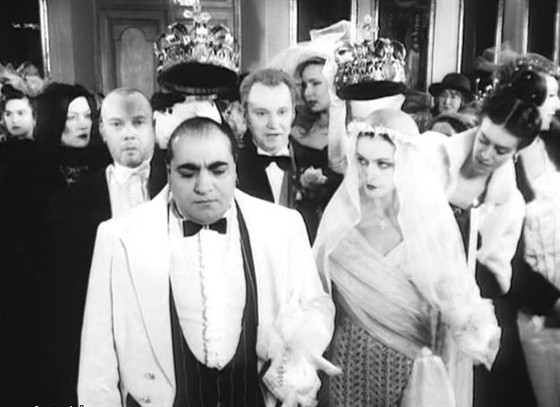
Some days - usually the days immediately after I've watched it - this is my favourite Denis film. Like
Vendredi Soir, it's a film deeply enmired in ambiguity, but it's used in a radically different way in this film, where continuity of character and action is what we have to work to piece together, rather than weighing the 'reality' of individual sequences in a strictly linear, focussed narrative. Both films are extraordinarily dreamlike and thus tend to dissipate in my memory and seem fresh and surprising with every revisit. I feel like I need to include both on my list, but I have no idea how!