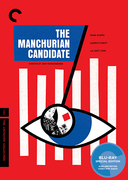
I was thinking about this in relation to
Noiradelic’s comment in the new
Parallax View thread, saying that aside from the test sequence that film is ‘rather thin’. My reaction was similar after a first viewing, and I think it was partly a response to aspects of the film that have since become central to my reasons for loving it.
There is something ‘off’ about
The Parallax View, from the oddly vague characterisation of the central character, to the silly (and confusing) ‘looking for my parrot’ scene, to the ride on the mini-train, to the weirdly staged and timed action sequences. It’s more than tonal ambiguity – it’s an accumulation of small details that make you feel like something is ‘not quite right’ with the film. The brilliance of the Parallax Test sequence is a perfect encapsulation of this sort of counter-intuitive tendency – but I won’t go into spoiler territory for that film here.
It seems to me that
The Manchurian Candidate shares this tendency to some extent: you see it in the (amazing) ‘dream’ sequences, in the banter between the goofy communists, in the bizarre dialogue between Ben and Rosie, in the jarring fight scene with Chunjin (with the accompanying repetition of ‘How did the old lady turn into the Russian?! What was Raymond doing with his hands?!’…and the later conversation between Ben and Raymond about exchanging festive greetings).
There’s something very special about the matter-of-fact way in which these films embrace bathos and anti-climax, right down to the final scene. Listen to Raymond’s tone of voice when he utters his last words, ‘Oh god, Ben.’ It doesn’t sound like deep, life-ending despair, but more like high-handed disgust and contempt – as if he’s mocking his own actions, rather than fully inhabiting the gravitas of the situation. It’s beautifully in keeping with the characterisation of this unlikely hero, who is neither a good nor bad person, just really obnoxious and supercilious.
What I’m describing is hard to pin down, and easier to define in negative terms. For instance, I don’t think you find this in other Frankenheimer films from the same time like
Seven Days in May or
The Train, nor is it quite the same as the off-the-wall satirical humour of
Dr. Strangelove or the more subdued comic touches in
All the President’s Men. It’s more like the weird humour in
Repulsion and
Rosemary’s Baby, in David Lynch films, in Jan Němec’s
The Party and the Guests, or in Frankenheimer’s
Seconds…but in a way it’s more troubling when it’s integrated into what is in many ways quite a conventional political thriller – i.e. it’s precisely because there isn’t a tone of surreal horror permeating the entire film (as in
Seconds) that these ‘off’ moments are so uncomfortable.
The closest comparison I can make is to the Paul Kelly scene in
Crossfire (the 1947 film noir), where a character shows up for one scene and spouts a confusing series of clichés, each of which he then recants: ‘What I just told you – that was a lie… You believe that? That’s a lie too.’ (I think there’s a kind of homage to this in
Blow-Up.) It’s wonderful because it doesn’t seem to belong in the film; you almost find yourself doubting that you saw it. This adds an extra layer of psychological unease to
Crossfire, rendering its message about prejudice and hatred more profound than the on-the-nose preaching towards the end would suggest. You feel you’ve been ‘opened up’ to a new layer of reality, an awareness of disturbed and self-contradictory elements in your mind (and in people’s minds generally) that you didn’t know were there, and might gloss over even if you noticed them.
In
The Manchurian Candidate and
The Parallax View, you get a similar eye-opening feeling. You could summarise the conspiracies at work in these films and make them sound coherent, but that wouldn’t capture the experience of watching the films themselves. It’s not just that the body snatchers are out to get you, or that politicians or corporations are self-serving and evil, or that the warmongers are scheming (or lashing out impulsively) to bring on World War 3. The real message here is both more restrained and more chilling: something is wrong, and the clues are there in plain sight, but you’ll never fully understand it.