The colour could not be treated in a conventional way. Antonioni had precise and rigorous ideas. First of all the grey fog as the basis of almost all sequences of the movie presented me with problems, not inconsiderable. If you start a scene with fog you can't expect to have it always. The use of artificial fog forced me to change filters. The artificial fog would make me take on blue and filtering for theblue environment would produce red faces. Then where I used blue light, to then change setting to the next frame for the arrival of real fog. This happened many times a day. We couldn't turn with the sun, even on an area of shadow because we had to be linked to previous grey. Everybody knows that the reflections of the sky make blue shadows. Each day had surprises. The street shop of Giuliana (exterior) was one of the harder in this respect. There was also the coarse grain of interior and exterior - except for some shots filmed in live studio, which had to be all true. In winter, the fog is going and the grounds are constantly changing, altering the color temperature, varying the light. I should vary continuously the inner light to maintain balance. I have always preferred the solution to vary the Interior against the use of gelatine on the windows for not having to be too low with the external light. Therefore: use of blue light on the inside and outside entrusted only to ambient light with the difficulties of course that I have already outlined. Let us not forget that we shot in winter and many times in low light. There was also the problem of objects at long focal length and the need to take control of the transition from shots with very saturated color to shots shooting with normal objects. So the use of continuous focal gradation. Of course certain effects of long focal length required by the story remained. Sometimes I had to balance recovering. Other times, as in the case of the black house at to Medicina, Antonioni asked for the misty tone of black object with the wonderful effect that you see. While in the scene with the fishmonger's van I had gradated on the passage because of Antonioni was not interested in the colour value, or he rather wanted initial uniformity and then the sweet arrival to shots on the lawn of the worker’s house, with natural and direct colour.
522 Red Desert
-
ellipsis7

- Joined: Tue Nov 02, 2004 5:56 pm
- Location: Dublin
Re: 522 Red Desert
The DP Carlo Di Palma describes the shoot, and uses of lenses and colour...
-
MichaelB

- Joined: Fri Aug 11, 2006 10:20 pm
- Location: Worthing
- Contact:
Re: 522 Red Desert
For what it's worth, only three people can have a truly authoritative idea of what was intended - Antonioni, Carlo di Palma, and the original colour timer. Only the last of these is still alive, and he's now blind - which means that it's now impossible to create a transfer that anyone can legitimately claim to be absolutely definitive. Guesswork is unavoidable at some stage, although in the case of both the BFI and Criterion releases it's of the most highly educated kind.
What's interesting is that the BFI and Criterion worked from exactly the same HD source (a best-light telecine created at Technicolor in Rome in 2008, sourced from the original negative), and each used more or less identical methods when grading and restoring the film - in both cases, a 35mm print was used for reference, with the BFI's coming from its own archive, and Criterion borrowing one from MOMA. I suspect that if both companies had used the same print as reference, the results would be a lot harder to distinguish.
What's interesting is that the BFI and Criterion worked from exactly the same HD source (a best-light telecine created at Technicolor in Rome in 2008, sourced from the original negative), and each used more or less identical methods when grading and restoring the film - in both cases, a 35mm print was used for reference, with the BFI's coming from its own archive, and Criterion borrowing one from MOMA. I suspect that if both companies had used the same print as reference, the results would be a lot harder to distinguish.
-
ellipsis7
- Joined: Tue Nov 02, 2004 5:56 pm
- Location: Dublin
Re: 522 Red Desert
The MOMA print was sourced so...
That would be the most recent resto (c. 2001) by Mediaset/Cinema Forever & others, which had some input from Di Palma (d. 2004), who was still alive, but did not supervise the restoration itself... John Francis Lane says this in his Guardian obit of Di Palma...1964. Italy/France. 35mm print, color, sound, 117 min. Acquired from Mediaset S.p.A.
Intriguingly the BFI print from their archive probably dates to an earlier incarnation, before the Cinema Forever restoration...The film was shot at locations around Ravenna, where, that winter, there was often unwanted sunshine, and Di Palma had to explain to Antonioni that the artificial fog he had chosen played havoc with the colours of the interiors. Visiting the set, I found Di Palma engaged with technicians in painting the grass yellow. "Michelangelo loathes the greens," he explained.
-
MichaelB
- Joined: Fri Aug 11, 2006 10:20 pm
- Location: Worthing
- Contact:
Re: 522 Red Desert
The print that was used for reference was acquired in 2003, though of course that's no indication of when it was actually struck.ellipsis7 wrote:Intriguingly the BFI print from their archive probably dates to an earlier incarnation, before the Cinema Forever restoration...
-
cdnchris

- Site Admin
- Joined: Tue Nov 02, 2004 6:45 pm
- Location: Washington
- Contact:
-
Noiretirc
- Joined: Tue Dec 09, 2008 10:04 pm
- Location: VanIsle
- Contact:
Re: 522 Red Desert
So, um, I adore both L'avventura and Blowup, and I came to this thread to find opinions about Red Desert, ie The Film itself, vice bitrate, tv size, penis size, HD sources, reference prints, colour debates, focal gradation, focal length, balance recovering, penis size, natural colour, direct colour, tintal colours, multiple matrices, penis size, Beaver caps, Vistavision, Technicolour, Technirama, Super Technirame, 1.50 aperture, Eastman positive prints, 35mm reductions, penis size, fine grain, matted to 1.66 or 1.85, etc etc etc. Not that there's anything wrong with all of these things.
But what about the Fuckin Film?
Edit: The above tirade is slightly unfair. Page 2 has some opinions on the actual film, thanks.
But what about the Fuckin Film?
Edit: The above tirade is slightly unfair. Page 2 has some opinions on the actual film, thanks.
-
HistoryProf
- Joined: Mon Mar 13, 2006 7:48 am
- Location: KCK
Re: 522 Red Desert
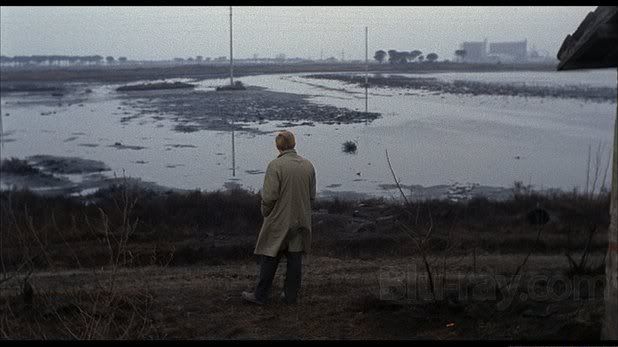
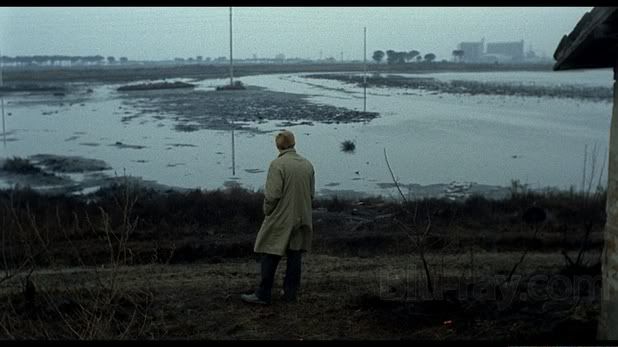
I guess i'm crazy, because to me the Criterion is clearly superior, and the BFI caps at beaver and elsewhere look sickly with the greenish hue. As far as I'm concerned, BFI mucked it up and Criterion did it right. :shrugs:swo17 wrote:Another comparison:
Criterion
BFI
As do my blu-rays of Walkabout, M, The Third Man, Stagecoach, Revanche, Lola Montes, and Ride With The Devil. In short, that is a patently ludicrous comment.Jeff wrote:My Blu-rays of Repulsion, Last Year at Marienbad, Pierrot le Fou, Days of Heaven, Bigger Than Life, and Vivre Sa Vie beg to differ with you.TMDaines wrote:The story of Criterion on Blu-ray continues to be underwhelming transfers.
as always, thanks for the great work chris - you are the single most consistent and helpful reviewer on the internets. I've grown increasingly excited to pick this up on blu and your review has cemented that...i now NEED to own this. It looks fantastic.cdnchris wrote:Blu-ray
-
CrazedCollector

- Joined: Sat May 29, 2010 5:31 am
Re: 522 Red Desert
From first seeing the divide between the BFI and Criterion screencaps on Beaver to reading about the technical work that went into the film's process and its transfers, I'm decided: come late-July, I'm buying both. This is an AB comparison too fun to leave at the screencap level!
-
Particle Zoo

- Joined: Thu May 15, 2008 4:01 pm
- Location: South of England
Re: 522 Red Desert
I’ve watched the Criterion Blu Ray of ‘Red Desert’ and beyond the observation that its colours are slightly warmer than the BFI, I’m going to leave the onerous task of print comparison to people who might know what they are talking about. All I will say on the subject is that we are lucky to live in an age where we can get such a great film in at least three different English friendly editions. I’ve now triple dipped on it, (Madman DVD, BFI and Criterion Blus), and I fully intend to keep all three. The Madman has a different commentary, (Rolando Caputo), whilst not quite as good as David Forgacs on the other two, its well worth a listen. The BFI has sub titles on it’s commentary, a great feature that Criterion hasn’t ported over. The Criterion of course has the early short films, making the aforementioned triple dip a lot easier to justify to myself.
The other obvious difference is the subtitles, I don’t speak Italian, but the Criterion made certain narrative subtleties clearer to me. And it makes me realise how much I’m at the mercy of translators good and bad, as a frequent viewer of films in languages other than my own. Are the subs better on the Criterion than the BFI? I don’t know, but again, I’m glad to have both.
What I can say with certainty is that the Criterion transfer is a beautiful thing to behold. Viewing it through my projector, it had, at times, an almost 3D quality in it’s depth and with a good bottle of pinot noir, made for a great Saturday night. It is as though, in the words of Giuliana in the dream sequence, ‘everything is singing.’
And for me, this film is one the most profound experiences that I have ever encountered in any art form. It hasn’t dated at all, Antonioni’s concerns a year before my birth remain my own in my forty fourth year. Orwell said in ‘1984’, ‘freedom is the ability to state: two plus two equals four.’ But Giuliana’s son demonstrates to her that ‘one plus one equals one.’
Watching this film again after immersing myself in the Brakhage box I found an affinity in the work of these two visual poets. Both of them challenge the viewer to revisit the presumed familiar with a different gaze. (Even the act of seeing itself is ’presumed familiar’ by most people, most of the time). Neither artist insists that you see ‘this’ specifically, but rather opens up the possibility of seeing more in any given situation. This is most explicitly demonstrated in the telephoto lens shots that blur the landscape into blocks, quoting the technique of abstract painting. Here the scenery is aesthetically pleasing, whilst simultaneously suggesting our alienation from the natural world. It could also be a commentary on Giuliana’s state of mind. It addition it suggests that this crying pool that we call reality is always subject to change, because the lens through which we view it is our emotions. There’s always so many things going on, Antonioni’s mis en scene is as densely packed with possible meanings as a paragraph of Burroughs’s prose.
There’s this haunting dream like quality that infuses the film with a beautiful melancholy, ships sail by seen through improbable windows. Corrado and Giuliana try to make a meaningful connection but can’t, (I’ve had that dream, both asleep and wide awake). Ugo and his friends are slowly engulfed by a literal and metaphysical fog. Giuliana says: ‘I can’t look at the sea too long or I lose interest in what’s going on on land.’
If ever a film demanded a hi def presentation on the home video format, it’s Red Desert and I will watch both the Criterion and the BFI repeatedly, because to my mind, it still shows us where we are, artistically, socially and politically. It is the barometer of the age of ambivalence and paradox.
The other obvious difference is the subtitles, I don’t speak Italian, but the Criterion made certain narrative subtleties clearer to me. And it makes me realise how much I’m at the mercy of translators good and bad, as a frequent viewer of films in languages other than my own. Are the subs better on the Criterion than the BFI? I don’t know, but again, I’m glad to have both.
What I can say with certainty is that the Criterion transfer is a beautiful thing to behold. Viewing it through my projector, it had, at times, an almost 3D quality in it’s depth and with a good bottle of pinot noir, made for a great Saturday night. It is as though, in the words of Giuliana in the dream sequence, ‘everything is singing.’
And for me, this film is one the most profound experiences that I have ever encountered in any art form. It hasn’t dated at all, Antonioni’s concerns a year before my birth remain my own in my forty fourth year. Orwell said in ‘1984’, ‘freedom is the ability to state: two plus two equals four.’ But Giuliana’s son demonstrates to her that ‘one plus one equals one.’
Watching this film again after immersing myself in the Brakhage box I found an affinity in the work of these two visual poets. Both of them challenge the viewer to revisit the presumed familiar with a different gaze. (Even the act of seeing itself is ’presumed familiar’ by most people, most of the time). Neither artist insists that you see ‘this’ specifically, but rather opens up the possibility of seeing more in any given situation. This is most explicitly demonstrated in the telephoto lens shots that blur the landscape into blocks, quoting the technique of abstract painting. Here the scenery is aesthetically pleasing, whilst simultaneously suggesting our alienation from the natural world. It could also be a commentary on Giuliana’s state of mind. It addition it suggests that this crying pool that we call reality is always subject to change, because the lens through which we view it is our emotions. There’s always so many things going on, Antonioni’s mis en scene is as densely packed with possible meanings as a paragraph of Burroughs’s prose.
There’s this haunting dream like quality that infuses the film with a beautiful melancholy, ships sail by seen through improbable windows. Corrado and Giuliana try to make a meaningful connection but can’t, (I’ve had that dream, both asleep and wide awake). Ugo and his friends are slowly engulfed by a literal and metaphysical fog. Giuliana says: ‘I can’t look at the sea too long or I lose interest in what’s going on on land.’
If ever a film demanded a hi def presentation on the home video format, it’s Red Desert and I will watch both the Criterion and the BFI repeatedly, because to my mind, it still shows us where we are, artistically, socially and politically. It is the barometer of the age of ambivalence and paradox.
-
jsteffe

- Joined: Sat Mar 31, 2007 1:00 pm
- Location: Atlanta, GA
Re: 522 Red Desert
The new Criterion Blu-ray looks lovely, apart from some minor edge enhancement that I think I spotted at the beginning. Watching it on its own without comparing it to the BFI, the color balance looks great. As usual with HD, the color is rentered with more subtle gradations than on standard DVD.
But I think the biggest difference with a film like this is that the improved definition gives you a more immersive and emotionally engaging experience. This time I caught many more subtleties in Monica Vitti's facial expressions, especially in her eyes. The same is true of other actors--even the orgy in the shack was more convincing this time around because I could better make out the eye play between the various participants. Makes me sad for anyone who would watch a film like this on their iPhone or laptop and think that they've "seen" the film.
But I think the biggest difference with a film like this is that the improved definition gives you a more immersive and emotionally engaging experience. This time I caught many more subtleties in Monica Vitti's facial expressions, especially in her eyes. The same is true of other actors--even the orgy in the shack was more convincing this time around because I could better make out the eye play between the various participants. Makes me sad for anyone who would watch a film like this on their iPhone or laptop and think that they've "seen" the film.
-
jsteffe
- Joined: Sat Mar 31, 2007 1:00 pm
- Location: Atlanta, GA
Re: 522 Red Desert
That's something I hadn't thought of before, but it seems right. On a barely conscious level I did pick up on something like that while watching the film today. I'll have to go back and look at it again, possibly with the Forgacs commentary.david hare wrote:I just hope the Criterion Blu gives you the same striking distinction between matt and gloss painted finishes, starting with Monica in the factory sequence. The use of gloss finishes on industrial elements really brings them to life, compared tgo the matt blues and other primaries which become like Mondrian or Matisse-like blocks of expression within the frame during scenes of Monica's emotional implosions.
-
ellipsis7
- Joined: Tue Nov 02, 2004 5:56 pm
- Location: Dublin
Re: 522 Red Desert
That's a good point, David... Eros and the environment are also supposed to be sick, hence the cool pallid poisoned and fetid greys of the BFI, against the warmer and more comforting grey tones of the CC...
-
Murdoch
- Joined: Mon Apr 21, 2008 3:59 am
- Location: Upstate NY
Re: 522 Red Desert
Watched this last night and while at first I was more bemused than I have been with the other Antonioni films I've seen, after letting my feelings settle over night I find that it conveys a much deeper sorrow than his previous Vitti collaborations, and conveys the threat of modernity much better - Giuliana's accident suggests the individual being an impediment to progress, that as technology has progressed the individual has become more "useless" in society and is simply in the way. It's a much more internal film, as other posters expressed, than L'eclisse or L'avventura which felt as if the Vitti character was a spectator almost as much as the viewer. She seemed to exist peripheral to what was happening: the stock exchange in L'eclisse where she casually gazes on at the chaos, walking in on the affair between the young artist and her married friend in L'avventura and the way neither seems to really notice her presence despite speaking to her. Red Desert shows Antonioni's viewer the anguish that had been brewing within Vitti's psyche, her character seems to be a collective of all the anxiety that she has experienced before. Placing her within the cold and sterile industrial landscape, she is in a regular state of discomfort and nervousness - especially in the beginning scene where she is surrounded by machinery when she meets Harris, she wanders anxiously and the sudden release of steam gives her such fright she scurries away. Even the romantic entanglement she falls into is simply another source of distress by the time it comes to its tragic conclusion. The more I think about this film the more utterly devastating a character study it is. The narrated story told to the son in particular, which threw me off at first, is the most internal aspect of the film, and despite the bright visuals it conveys the most sorrowful moments of the film. When the curious ship appears only to quickly sail off, as if it's discovered the little girl and deemed her unsatisfactory for whatever it came for, or worse yet that the boat drifts purposelessly as Giuliana does, forever dissatisfied with what it encounters. The exchange with the sailor creates a sense of doom finalized for Giuliana, that she has only become more alienated from those around her, so much so that she is a foreigner in her own home
The many shots situated behind Vitti's head reinforce the internal nature of the film, trying to place the viewer in the perspective of Giuliana and emphasizing her anonymity among her surroundings by showing the back of her head in the frame instead of a simple point-of-view shot. I've become so used to actors' faces being the focal point on their body for the camera that the abundance of times Vitti is shown from behind is an unsettling yet profound visual.
This film won't leave my thoughts and I find myself feeling great pity for Giuliana, one of the most multi-dimensional characters I've seen.
The many shots situated behind Vitti's head reinforce the internal nature of the film, trying to place the viewer in the perspective of Giuliana and emphasizing her anonymity among her surroundings by showing the back of her head in the frame instead of a simple point-of-view shot. I've become so used to actors' faces being the focal point on their body for the camera that the abundance of times Vitti is shown from behind is an unsettling yet profound visual.
This film won't leave my thoughts and I find myself feeling great pity for Giuliana, one of the most multi-dimensional characters I've seen.
-
nolanoe
- Joined: Fri Jan 08, 2010 2:25 pm
Re: 522 Red Desert
This might be my favorite Antonioni. So far, it was between ZABRISKIE POINT and L'ECLISSE, but having seen RED DESERT some months ago, I think I like it best.
The film is a lot better/makes much more sense once you realize that it might just be set on the planet mars.
The name, the theme of alienation, the landscape and the factories... I know that it is a stretch, but try to see it as a low budget sci-fi film, much as ALPHAVILLE is (car = Spaceship there / ship = spaceship here). Even if it wasn't intended, it makes nice speculation, and certainly paints Monica Vitti's character's emotions in a different light.
As for the color issues, there is one crucial scene: the flames that come from the fumes in the beginning are meant to be a stark yellow instead of red or orange. I don't have the Criterion, but if somebody got both and would do screengrabs, this would settle this argument very quickly.
With the information, I must say I also strongly tend to the BFI. The CRITERION looks gorgeous though, and I might buy both. Yes, I love the film that much!!
EDIT: Murdoch - where is your avatar from?
The film is a lot better/makes much more sense once you realize that it might just be set on the planet mars.
The name, the theme of alienation, the landscape and the factories... I know that it is a stretch, but try to see it as a low budget sci-fi film, much as ALPHAVILLE is (car = Spaceship there / ship = spaceship here). Even if it wasn't intended, it makes nice speculation, and certainly paints Monica Vitti's character's emotions in a different light.
As for the color issues, there is one crucial scene: the flames that come from the fumes in the beginning are meant to be a stark yellow instead of red or orange. I don't have the Criterion, but if somebody got both and would do screengrabs, this would settle this argument very quickly.
With the information, I must say I also strongly tend to the BFI. The CRITERION looks gorgeous though, and I might buy both. Yes, I love the film that much!!
EDIT: Murdoch - where is your avatar from?
-
Matt

- Joined: Tue Nov 02, 2004 4:58 pm
Re: 522 Red Desert
Because there are some color fluctuations in the first few minutes of the film, I posted 6 captures of the flames from the Criterion DVD here.nolanoe wrote:As for the color issues, there is one crucial scene: the flames that come from the fumes in the beginning are meant to be a stark yellow instead of red or orange. I don't have the Criterion, but if somebody got both and would do screengrabs, this would settle this argument very quickly.
Personally, I think the Criterion BD of the film looks great. Very rich colors, but natural skin tones. And for the first time, to my eyes, Richard Harris' hair color looks almost like something that occurs naturally. Not that I'm denigrating the BFI here - I haven't seen it.
-
nolanoe
- Joined: Fri Jan 08, 2010 2:25 pm
Re: 522 Red Desert
Yeah, you mustn't forget that Antonioni wanted to use the color palette to show the world through the characters eyes - very un-natural and artificial. Now, we could ask 10 people which one they find more unnatural, and 10 people would say 10 different things. The only thing we can go by in terms of what is correct in our speculation, we have the yellow flame, the knowledge that Antonioni wanted the colors to look artificial and the old advertisement photos. Those lean more towards the BFI, yet the Criterion also looks gorgeous in its own right... so I'll try to grab the Criterion as well and enjoy the double experience.
Also Matt, your link doesn't work. It shows me a forum-icon.
EDIT: OK, a quick search made me find your post and I must say, this is much more orange/reddish than yellow. So this does that: BFI is closer indeed.
I will get the Criterion though, because it looks great as well and is a nice addition to the BFI.
Also Matt, your link doesn't work. It shows me a forum-icon.
EDIT: OK, a quick search made me find your post and I must say, this is much more orange/reddish than yellow. So this does that: BFI is closer indeed.
I will get the Criterion though, because it looks great as well and is a nice addition to the BFI.
-
dad1153

- Joined: Thu Apr 16, 2009 2:32 pm
- Location: New York, NY
Re: 522 Red Desert
Saw "Red Desert" on Blu-ray over the weekend. My third Antonioni (after "Blow Up" and "The Passenger") and I'll freely confess that, after a single viewing, I'm so thrown off from seeing it that I don't have a coherent opinion yet. It'd be easy to say it's Antonioni being Antonioni (i.e. same lengthy shots and slow-burn pace as earlier and latter films of his) but, within the amazing visuals it features, the characters and story left me puzzled more than anything. The one movie this reminds me of more than any other is Roeg's "The Man Who Fell To Earth" in how alien and separated from the surroundings (which are more alien-looking in Antonioni's flick) the lead character is. The electronic-heavy music is all the excuse anyone needs that wants to think Giuliana is an alien being having its internal wiring short-circuited by what men are doing to their own planet ("Red Desert" a sci-fi movie?  ). Guess what threw me off and didn't see coming was the neurosis of Monica Vitti being the centerpiece of the movie. I knew Vitti was in "Red Desert" but didn't expect her character's mind (or the back of it that Antonioni keeps going back to in shot after shot) and the way she reacts to her surroundings to be front and center throughout. Richard Harris (who looks/sounds like Devon from "Knight Rider" in his dubbed Italian voice) is pretty bland and nonchalant but, within Antonioni's cast of other bland human characters (except for the horny bald husband in the orgy), Harris and Vitti stand out. Picture on Blu-ray isn't the sharpest or cleanest transfer (tons of grainy and undetailed shots) but, as a representation of the director's artistic visual expression of man's ability (or inability in the case of Giuliana) to cope with his man-made ecological disaster, Antonioni's cinematography and production design (the shot of the street/fruit cart painted in grey blew my little mind... it's one thing to read about but seeing it is something else) really shine in high-def. This one needs to be rewatched because on first viewing it has left me bewildered and confused (why do all men Giuliana comes across want to make love to her when she's clearly going mental?). Commentary and bonus features here I come!
). Guess what threw me off and didn't see coming was the neurosis of Monica Vitti being the centerpiece of the movie. I knew Vitti was in "Red Desert" but didn't expect her character's mind (or the back of it that Antonioni keeps going back to in shot after shot) and the way she reacts to her surroundings to be front and center throughout. Richard Harris (who looks/sounds like Devon from "Knight Rider" in his dubbed Italian voice) is pretty bland and nonchalant but, within Antonioni's cast of other bland human characters (except for the horny bald husband in the orgy), Harris and Vitti stand out. Picture on Blu-ray isn't the sharpest or cleanest transfer (tons of grainy and undetailed shots) but, as a representation of the director's artistic visual expression of man's ability (or inability in the case of Giuliana) to cope with his man-made ecological disaster, Antonioni's cinematography and production design (the shot of the street/fruit cart painted in grey blew my little mind... it's one thing to read about but seeing it is something else) really shine in high-def. This one needs to be rewatched because on first viewing it has left me bewildered and confused (why do all men Giuliana comes across want to make love to her when she's clearly going mental?). Commentary and bonus features here I come! -
Panda
- Joined: Tue Nov 02, 2004 7:22 pm
- Location: New England
Re: 522 Red Desert
I had a freeze-up glitch on the Criterion Blu-Ray at 1:05:55 on the Oppo BDP-83. Anyone else have this problem? I got a replacement disc and it now plays through Giuliana adrift in the fog. Hope there are no other problems.
I do find that the grain works well with the gray canvas Antonioni choose to paint upon.
I do find that the grain works well with the gray canvas Antonioni choose to paint upon.
-
Robin Davies
- Joined: Sat Sep 22, 2007 6:00 am
Re: 522 Red Desert
I enjoyed the extras on the Criterion disc, especially the interviews, but I was disappointed that N.U. was blighted by a Luce logo.
Does anyone know why it was there? I would have expected Criterion to insist on its removal.
Does anyone know why it was there? I would have expected Criterion to insist on its removal.
-
HistoryProf
- Joined: Mon Mar 13, 2006 7:48 am
- Location: KCK
Re: 522 Red Desert
Matango wrote:Is there a prize for the thread most guaranteed to suck all enjoyment out of watching a film?
 boy...I watched this last night, let it simmer, and wanted to come here and get some insight into it all and instead get 5 pages of whining about the transfer. awesome. There are a couple of good posts on page 1, but it saddens me that this place has become so obsessed with the technical side of things that the films themselves have become lost in their own damned threads.
 As for my reaction, I don't know what to really think about this. One bit that threw me was the almost sci-fi tenor to the soundtrack, especially at the end. I felt like I was meant to be watching Invasion of the Body Snatchers with the cues the music gave...but I have to wonder if that ethereal nature - other worldly if you will - is intentional in terms of wanting to convey that this is not necessarily the earth as we know it. Or that Vitti's reality has become so unreal that she truly is "Alien." or something. but then that seems too easy and trite, so again I'm left scratching my head. I can't say I loved it...i certainly didn't dislike it...I just don't know beyond thinking that it was, well, interesting...or perhaps curious is a better word. It just felt like a film where the director wasn't completely sure of what he wanted to say, and reading the interview w/ MA and Godard kind of reinforced that impression. The whole "alienation" thing seems to be almost like an antique neurosis from today's perspective - the post-war psychological version of 'the vapors' cloaked in neo-postmodern philosophy - w/ half a century to further acclimate to the modern world. I can imagine things felt extremely foreign in the post war world of Europe...but it's hard to feel that now, even if I can intellectually perceive and understand it - if that makes sense. so I know he's trying to assert some commentary on the plagues of modernity and industrialization on the human soul, but I can't say I fully understand what it exactly is. Looks good though, and Vitti is at her best, w/ the ability to absolutely stun w/ just a look. those eyes...my oh my.
I can say that it looks stupendous on blu ray...top notch all around. there is some flickering at the very beginning, but then it settles into a glorious transfer that is near perfect in grain and temp imo. the bleak industrial landscape was really striking, particularly when the red elements came into play.
Oh, and I have to say that the ubiquitous dubbing contributed to my disassociative feeling while watching it. For whatever reason, it's the one facet of Italian films I have a lot of trouble overcoming...the lack of synchronicity just pulls me right out and can make some films a real chore. In this case, however, that sense of unreality somewhat helped in furthering the ethereal feel to it all...almost Bunuelian in a way. I'm just too literal-minded I guess and therefore can't simply accept Richard Harris w/ an Italian baritone...especially when he's clearly speaking English and the dub is Italian, so nothing matches.
-
rrenault
- Joined: Wed Nov 17, 2010 7:49 pm
Re: 522 Red Desert
Even if some prefer the BFI coloring, I saw this at MOMA yesterday, and the coloring was identical to the criterion's.
-
ellipsis7
- Joined: Tue Nov 02, 2004 5:56 pm
- Location: Dublin
Re: 522 Red Desert
Yes, that's the point, Criterion graded against that MoMA print, while BFI graded against the print they hold, so the debate still remains wide open...rrenault wrote:Even if some prefer the BFI coloring, I saw this at MOMA yesterday, and the coloring was identical to the criterion's.
-
jsteffe
- Joined: Sat Mar 31, 2007 1:00 pm
- Location: Atlanta, GA
Re: 522 Red Desert
Yes. MichaelB mentioned earlier that Criterion used MOMA's print as a reference, whereas the BFI used a different reference print--hence the slightly different coloring.rrenault wrote:Even if some prefer the BFI coloring, I saw this at MOMA yesterday, and the coloring was identical to the criterion's.
-
MichaelB
- Joined: Fri Aug 11, 2006 10:20 pm
- Location: Worthing
- Contact:
Re: 522 Red Desert
Yes, that's correct. Criterion and the BFI both used exactly the same HD telecine (created in Rome under the BFI's supervision), but the colour timing and grading were performed separately, with Criterion using MOMA's print and the BFI using the BFI National Archive one for reference.
Unfortunately, the only three people who can offer a truly definitive opinion on what was intended are either dead (Antonioni, Carlo di Palma) or blind (the original colour timer), so which of the Criterion or BFI versions is closest to the ideal - if indeed either of them are - is a matter of unresolvable conjecture.
Unfortunately, the only three people who can offer a truly definitive opinion on what was intended are either dead (Antonioni, Carlo di Palma) or blind (the original colour timer), so which of the Criterion or BFI versions is closest to the ideal - if indeed either of them are - is a matter of unresolvable conjecture.
-
Peacock

- Joined: Mon Dec 22, 2008 11:47 pm
- Location: Scotland
Re: 522 Red Desert
Not really; just because a colour timer is blind, doesn't mean he can't visualize... The Criterion and BFI are different enough color wise to be described individually to the man; there's certainly a chance he'll remember how it originally looked.