I've started my journey through this set and wanted to add a couple of comments here. First off I wanted to praise the little montage from the films used over the DVD menu - it works as a wonderfully funny little trailer for the films themselves!
The booklet was also fascinating. I was glad to see that each film has a page of notes devoted to it, along with some essays covering the history and general background of their production. It was interesting to learn that the early organisations promoting sexual health were closely linked to the eugenics movement (I guess the Second World War put a stop to that collaboration), and that many of these organisations were voluntary and local in nature before the government got involved in such matters much later on.
The bewildering array of acronyms on display in a couple of the essays - the NCCVD, the EES, MOsH, the LGB, the BSHC, BIF Films (later GBI), the COI - did a lot to remind of the way those Peter Greenaway films playfully toyed with the British love of official sounding bodies using various acronyms, including finding new meanings for the BFI!
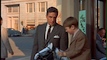
Whatsoever A Man Soweth
I particularly liked the way that all the 'loose' women in the film wear a similar ensemble of fur coat and and a hat with a feather in it, as if it were the official uniform! Maybe I got that impression because I didn't really see any other signifiers of 'prostitute' placed on the ladies on the street who barely begin talking to Tom before he is pushing them away! That is likely a restriction of the film being silent though, since without dialogue (or dialogue in intertitles) I always imagined the ladies were just asking the time or for directions, which helped to make the "get away from me!" response funnier!
There seems to be a clear line between Madonna and whore, who do not move in the same worlds (it does seem that being an unaccompanied woman walking around in public is also a major signifier, since decent women never leave the home), and it is only the man being used as the conduit that allows the disease to spread to the family.
It was also amusing that hospitals seemed to provide personalised lectures and guided tours to any Tom, Dick or Harry who are sent to them for information on VD (even if Tom and Harry never go!), but I guess that was an understandable convention of one character being the audience representative and receiving the medical lecture in the film on behalf of the rest of us (which leads to the wonderful intertitle "Dr Burns puts the facts before Dick"!)
The lecture itself is presented in screen filling blocks of text with the doctor pointing out lines of text from the Final Report from the Commission for Venereal Diseases (in another unintentionally funny moment the doctor points at one passage, turns a page then closes the book, then there is a jump edit to his finger pointing at the same underlined passage in preparation for the next intertitle!) It didn't feel particularly cinematically engaging to have the main point of the whole film thrown at you in a couple of paragraphs of quickly disappearing text, but then this section was bookended with more interesting sequences showing the
Wassermann test and the disease attacking healthy blood cells under a microscope.
This information scene is bookended by more impactful and emotive shock tactics, with the doctor showing the effects of venereal disease on the bodies of men who have contracted it and then after providing Dick with the information sends him across the road to a hospital for blind children to be confronted with the effects of passing on the disease to unborn children.
The rest of the film is a cautionary tale about Dick's comrades, Tom and Harry, and the effects that their brief dalliance with a couple of fur coated, feathery hatted ladies of ill repute cost them. This is especially illustrated through Tom passing the disease on to his wife and unborn child (though the best performance in the film is given by Harry's girl Kate who delivers a number of amazingly doom-laden, portentous looks at the camera without over dramatising her likely fate too much. This relationship does not really pay off dramatically seemingly in order to put a question mark over whether Harry does or does not have VD from his own liaisons, though it does allow for Tom to have someone other than himself to blame for his own actions).
There was a queasy interplay between reality and fiction as real sufferers of the disease are trotted out for the characters to be shocked at. The early scene of showing "rotting legs" omits the faces of the people whose legs or arms they are (and the soldier first shown taking the Wassermann test has his back to us) but the most shocking moment is when Tom is presented with his deformed baby and we have a pan from his face as he is bent over the baby to the poor thing lying there oblivious, providing the queasy verisimilitude of the actor and the real baby together in the same scene, and the feeling that deformity is being paraded and a baby being used simply for shock value, albeit in the cause of a message. The same could apply to the parade of blind children for the camera, and Dick, a little earlier on, but the baby is even more helpless against the prying eyes of the camera while the actor is emoting away above it. I guess this is something that will come up again and again as I go through the films - the fine line between education and exploitation and whether one justifies the other in order to spread an important message.
However that leads me to the best aspect of the film - the various scenes which show street life, train stations, groups of soldiers, crowds and other real locations. This film is full of these interesting moments, especially in the first half before it becomes a stagey piece about Tom's horrific legacy to his family (though there is also a neatly compressed sequence of flashbacks/reiteration of previous events as Dick imparts what he has learnt about venereal disease to Tom) and that makes this film particularly valuable beyond the sexual advice given.