Michael wrote:So I was the only one who voted for Lisa and the Devil. Not even the recent release of the Anchor Bay sets and Tim Lucas' masterpiece of a book could change anything. Thanks a lot!
You're not alone, Michael. The total absence of Lisa and the Devil from this list makes it the first time that I really wish I had participated. It, along with no-shows The Wicker Man, The Go-Between, and Soldier of Orange, would have been very high in a list for me. (But based on what Zedz has said, I doubt that my list would not have caused any of those films to make it onto the list.)
BTW, Domino, I'm another person who is completely unable to comprehend the appeal of Spirit of the Beehive. (At the same time, I also can't understand your love for the sleeping-pill known as Tout Va Bien.)
tryavna wrote: no-shows The Wicker Man, The Go-Between, and Soldier of Orange . . . (But based on what Zedz has said, I doubt that my list would not have caused any of those films to make it onto the list.)
Not a whisper of the latter two (Losey's reputation seems to be at a particularly low ebb at this juncture), but several votes for The Wicker Man, just not high enough on individual lists to put it over the top. I included it on my list last time around, but it was elbowed off by a flood of new titles this time. Even a number one placing for Lisa and the Devil wouldn't have worked, but a top ten one for Wicker Man would have - just!
denti alligator wrote:Finally watched Lisa and the Devil and was unimpressed. What am I missing?
Where to begin...? For me, it represents the apotheosis of Bava's surrealist tendencies. The story is, of course, basically a nightmare that has come alive, and Bava handles it with the same fever-dream logic that you find in Welles' adaptation of The Trial and much of Bunuel's work. (In fact, I would describe it as what a genre horror movie would look like if Bunuel had directed it.) The central conceit -- that of a group of damned souls who continually reenact the events that damned them, their hell therefore being one of their own making -- is a particularly creepy one, and although done numerous times before, it has never been done better. There's pitch-perfect use of Rodrigo's concierto, particularly during the failed rape scene (another one that calls Bunuel's work to mind). And there are some fantastic flourishes here and there: the gliding ghost/reanimated corpse of Alida Valli, the intercutting between the dummies and the real actors, and Telly Savalas' inspired performance as Satan himself.
It may boil down, however, to whether or not you like Bava -- and whether you prefer his early or late work. Personally, I prefer his later, more nihilistic stuff. And Lisa and the Devil is that apogee of that period/style. Perhaps Michael would care to add his own views?
Hmmm.... That's interesting about The Wicker Man, Zedz. Perhaps I should have voted after all.
denti alligator wrote:Finally watched Lisa and the Devil and was unimpressed. What am I missing?
Give it some time. I think it will come back to you. Two, three, four viewings, the film keeps spilling out more riches. How can anyone not be impressed by Bava's use of space, especially in the beginning when Elke gets lost in Spanish alleys? When Elke first meets Alida's son in front of the mansion after that long ride in the car, pay close attention to his face as his eyes first lay on her - the beam, the glow because he sees the lost love in Elke. Very easy to miss and uneffective upon first viewing. But once you've seen the film, familiar with the story, the tragedy of the dead woman, that look the guy gives will touch you. A long bitter breath of melancholy follows, very Vertigo like.
The music box has figurines, each one representing each main character of the film, when Elke stares at it, that extreme close up of her green eyes. We become hypnotized as much as she's hypnotized. The music, her eyes, the circling figurines.
God, there's so much more. Here we have a lollypop-sucking devil trapping the world where the living and the dead crashing into each other, trying to find some love or reclaim it or relive it. I love Bava, he made many masterpieces and I find it impossible to pick the best one. But Lisa and the Devil is definitely his most emotional, his most moving film. Argento, the most popular Italian horror director, has not reached the very zenith of Lisa yet, probably never will.
Bava's Vertigo. Bava's INLAND EMPIRE if that makes any sense to you.
(The only Godard seen so far I dislike even more than Week End).
I haven't really changed my mind much from my initial post on seeing the film - I find it annoying and fascinating in equal measure, if that makes any sense! I find that I keep constantly thinking of the film while Tout Va Bien, which I feel is a fine film in its own right, just has not captured me in the same way.
For the record I love Weekend ("My Hermès handbag!" ), though it might mean a lot to me also because it is tied in with personal experiences. It was the first Godard film I saw at 15 - perhaps inadvisedly I watched it on television the night before going on a trip with my school to France to do a tour of the Normandy landing beaches and the Caen Peace Museum! I remember being a little concerned at the possibility of random violence, enormous traffic jams and militant cannibals roaming the countryside - so much so I remember being very shy about talking to any actual French people!
It actually remains my one trip 'abroad' (unless we're counting Wales and Scotland as separate countries! ), but it was worth it for the chance a few years later to be able to say that I had stood in the same area that the bookend scenes for Saving Private Ryan were filmed! (The school did a tour of the various war graves - the German one was understandably quite austere and low key, the British one was next to a main road(!) and the American one was the grandest, even with a sea view! While I feel the bookends in Saving Private Ryan are a bit of a filmic cheat - they pretend they are the flashback of one character and then reveal themselves to have been from another character's perspective all along - the one thing I thought was really well done was the transition from hearing the waves in the distance, something that I remember being able to hear in the cemetery for real during my visit there, into the D-Day landings. It is a little moment but would likely resonate with those audience members who had visited that site).
Last edited by colinr0380 on Sun Jun 15, 2008 1:42 am, edited 2 times in total.
Oh well, I love Tout va bien (or at least like it a whole lot) and found Letter to Jane beyond unbearable. If Week End (or LtJ) had been my first Godard film, there would likely have been no second one. ;~}
tryavna wrote:The central conceit -- that of a group of damned souls who continually reenact the events that damned them, their hell therefore being one of their own making -- is a particularly creepy one, and although done numerous times before, it has never been done better.
Michael Kerpan wrote:If Week End (or LtJ) had been my first Godard film, there would likely have been no second one.
No worries, we all have different tastes and tolerances - for me the same would apply to Une Femme est une Femme, the only Godard I could say that I do not like, and even in that there are a couple of good bits hiding under my overwhelming dislike of the shallow, self-centred main characters! Weekend's characters may be similar but at least we are meant not to sympathise with them! I'm still unsure whether the messages of Femme are meant to be taken on face value or ironically (unlike the later Band of Outsiders or Masculin Feminin there do not seem to be any tip offs as to how the viewers should place themselves in relation to the work). Is the film a heartfelt non-ironic love letter to Karina and the concept(ion) of 'woman', or is it meant as a scathing insight into a manipulative, pouting personality and its affect on the weak men in her life?
(Actually I told a lie in my last post - Weekend was the second Godard I saw. I forgot that I had seen Contempt the year before!)
I think Lisa and the Devil is a pretentious mess too (and I like most of Bava). The Wicker Man could've made my list on a different day, though; the treatment of sexuality & repression in that film have a frankness and an intensity I haven't seen in many others, and finding that element within a horror film is especially startling.
Pretentious. I see the term "pretentious" used to describe a film here and there. What the hell does that mean? How can a film be "pretentious"? I notice it applies only to films that are regarded as directors' most personal films. I've seen 8 1/2 and INLAND EMPIRE and now Lisa and the Devil - all very deeply personal and masterful and original - being accused as being "pretentious". WTF.
Well, "pretentious" (an overused term, granted) as in a loftiness in an artist's goals that exceeds his/her talent or achievement. That's what I was getting at with Lisa and the Devil. Tim Lucas writes that Bava tapped "memories of growing up among his father's sculptures, dialogue borrowed from Dostoevski's I Diavoli, and an unrealized project about real-life necrophile Viktor Ardisson" to create a "waking dream" film ... but the film I saw was indistinguishable in its lurid flavor from Lucas' other late 60s/early 70s gialli, except that it's burdened with a confusing narrative, a meandering pace, and a pretty silly Telly Savalas performance.
Although the argument that Lisa is exceedingly overpraised is tied into Lucas' contention that it's Bava's attempt at an art movie, which I'm not sure I agree with -- I mean, he's the expert, but I wonder if that's not placing too much of a burden on the film and the director.
I happen to love Telly's presence in Lisa. He adds a twist of fun kinkiness to the already very brooding gothic world of death with dummies, corpses and ghosts and Lisa, a fresh green flower scrambling through being "raped" by everyone. There is no exit for her, she's eternally damned in the cycle, like the figurines circling atop the music box.
Now what I like most about these lists this time around is seeing how they evolve from the previous round. To say that DVD availability helps out a film's chance is like saying being a multi-millionaire helps a politician's chance of being elected. That said, films that have had DVD debuts or re-releases in the 2 1/2 years since the first 1970s list shook things up considerably, with two films in the top ten (both new to DVD) jumping 60 or more places, although special editions did not bode so well for perennial canon faves like Taxi Driver and A Clockwork Orange. Death becomes Michelangelo Antonioni and especially Robert Altman, but not so much Ingmar Bergman. Also, it seems a referendum on Hollywood blockbusters was in motion. Anyway, here's a round-up:
What's New:
35. Killer of Sheep (Burnett)
37. Vengeance Is Mine (Imamura)
39. Bring Me the Head of Alfredo Garcia (Peckinpah) 43. Jeanne Dielman. . . (Akerman)
53. Edvard Munch (Watkins)
54. Eros Plus Massacre (Yoshida) 56. Love (Makk)
57. The Travelling Players (Angelopoulos)
58. The Phantom of Liberty (Bunuel)
59. Mujo (Jissoji) 64. Cria cuervos (Saura)
69. The Man who Fell to Earth (Roeg)
70. Network (Lumet)
71= Fox and his Friends (Fassbinder)
71= Stroszek (Herzog)
74. The Man who Left his Will on Film (Oshima)
76. The Devil, Probably (Bresson)
78= The Act of Seeing with One's Own Eyes (Brakhage)
78= Harold and Maude (Ashby)
81= Tristana (Bunual) 83. WR:Mysteries of the Organism (Makavejev)
84. Investigation of a Citizen above Suspicion (Petri)
85. The Ceremony (Oshima)
86. Cockfighter (Hellman)
87= Four Nights of a Dreamer (Bresson)
90= Carnal Knowledge (Nichols) 92. O Lucky Man! (Anderson)
93= Punishment Park (Watkins)
96= The Parallax View (Pakula)
100= Day for Night (Truffaut)
What's Gone:
26. Star Wars (Lucas, 1977), 251
34. Autumn Sonata (Bergman, 1978), 199
41. One Flew Over the Cuckoo's Nest (Forman, 1975), 173
43. Salo (Pasolini, 1976), 164
45. Jaws (Spielberg, 1975), 157
47. Gimme Shelter (Maysles, 1970), 154
The Yakuza Papers: Battles Without Honor & Humanity (Fukasaku, 1973), 154
52. Desperate Living (Waters, 1977), 131
57. Casanova (Fellini, 1976), 113
58. M*A*S*H (Altman, 1970), 111
59. The Outlaw Josey Wales (Eastwood, 1978), 110 60. Close Encounters of the Third Kind (Spielberg, 1977), 105
63. The Devils (Russell, 1971), 101
The Emigrants (Troell, 1971), 101
66. The Tin Drum (Schlondorff, 1979), 98
71. Arabian Nights (Pasolini, 1974), 93
A Walk Through H (Greenaway, 1978), 93
74. Dawn of the Dead (Romero, 1978), 92
75. Two English Girls (Truffaut, 1971), 90
80. Zabriskie Point (Antonioni, 1970), 84
84. Young Frankenstein (Brooks, 1974), 73
89. Life of Brian (Jones, 1979), 69
Love and Death (Allen, 1975), 69
93. Blazing Saddles (Brooks, 1974), 68
It's Alive (Cohen, 1974), 68
97. Being There (Ashby, 1979), 67 98. 1900 (Bertolucci, 1976), 66
99. Monty Python and the Holy Grail (Jones, 1975), 64
Small Change (Truffaut, 1976), 64
What's Hot (up 10 or more spots):
2. The Spirit of the Beehive (Erice) 553 (up 37)
5. Celine and Julie Go Boating (Rivette) 493 (up 65)
8. McCabe & Mrs Miller (Altman) 440 (up 13) 10. The Passenger (Antonioni) 422 (up 72)
13. Badlands (Malick) 407 (up 12)
14. The Long Goodbye (Altman) 406 (up 62)
23. Solaris (Tarkovsky) (up 12)
28. Straw Dogs (Peckinpah) (up 37) 33. Claire's Knee (Rohmer) (up 60)
34. The Last Picture Show (Bogdanovich) (up 15)
36. The Mother and the Whore (Eustache) (up 41)
41. The Killing of a Chinese Bookie (Cassavetes) (up 46)
44. Every Man for Himself and God Against All (Herzog) (up 16) 49. Performance (Cammell / Roeg) (up 37)
60= The Texas Chainsaw Massacre (Hooper) (up 29)
62. Two-Lane Blacktop (Hellman) (up 16)
65. Hypothesis of the Stolen Painting (Ruiz) (up 22)
80. Nosferatu (Herzog) (up 13)
What's Not (down 10 or more):
17. Taxi Driver (Scorsese) 383 (down 13)
22. Annie Hall (Allen) (down 21)
24. The Discreet Charm of the Bourgeoisie (Bunuel) (down 13) 29= A Clockwork Orange (Kubrick) (down 16)
31= Cries and Whispers (Bergman) (down 26)
42. Le Cercle rouge (Melville) (down 13)
46. Fear Eats the Soul (Fassbinder) (down 30)
47. Alien (Scott) (down 16)
48. Last Tango in Paris (Bertolucci) (down 18)
51. The Exorcist (Friedkin) (down 24) 55. Amarcord (Fellini) (down 35)
60= The Deer Hunter (Cimino) (down 22)
67. Lancelot du lac (Bresson) (down 13)
75. Picnic at Hanging Rock (Weir) (down 20)
81= The French Connection (Friedkin) (down 35)
87= All That Jazz (Fosse) (down 31)
89. Dog Day Afternoon (Lumet) (down 21)
90= Hearts and Minds (Davis) (down 11) 95. Grey Gardens (Maysles et al.) (down 56)
96= Carrie (De Palma) (down 47)
99. Death in Venice (Visconti) (down 57)
100= Effi Briest (Fassbinder) (down 19)
italics indicates titles that had a major DVD release or rerelease in the interim between the two lists' compilation. I'm sure I'm missing a lot, as I don't pay too close attention to non-R1 releases that are not MoC or BFI.
Because Chinatown made #1, I just finished revisiting it. A good film. Best thing being the script, every word not wasted. I feel the beautifully multi-layered script outpowers other elements of the film. Everything in Chinatown depends too heavily on its script. Maybe that's typical of noir but Polanski made a better, more cinematic Hollywood film, that is Rosemary's Baby in which all the elements - photography, script, direction, performances - are perfectly balanced and aligned.
Chinatown deserving the #1 position, I don't think so.
Macintosh wrote:And what about Electra Glide in Blue? Nominate James William Guercio as one of the best first time and only time directors, right up with Laughton. The anti-Easy Rider ending, the pro-authority attitude when it was made makes it seem even more striking. It was booed as a fascist film when it screened in Cannes.
I'm curious how much of Electra Glide's success comes from Guercio and how much comes from Rupert Hitzig. Check out the interview I did with Hitzig and his co-writer Bob Boris.


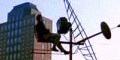

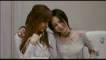

 Give it some time. I think it will come back to you. Two, three, four viewings, the film keeps spilling out more riches. How can anyone not be impressed by Bava's use of space, especially in the beginning when Elke gets lost in Spanish alleys? When Elke first meets Alida's son in front of the mansion after that long ride in the car, pay close attention to his face as his eyes first lay on her - the beam, the glow because he sees the lost love in Elke. Very easy to miss and uneffective upon first viewing. But once you've seen the film, familiar with the story, the tragedy of the dead woman, that look the guy gives will touch you. A long bitter breath of melancholy follows, very Vertigo like.
  ), though it might mean a lot to me also because it is tied in with personal experiences. It was the first Godard film I saw at 15 - perhaps inadvisedly I watched it on television the night before going on a trip with my school to France to do a tour of the Normandy landing beaches and the Caen Peace Museum! I remember being a little concerned at the possibility of random violence, enormous traffic jams and militant cannibals roaming the countryside - so much so I remember being very shy about talking to any actual French people!