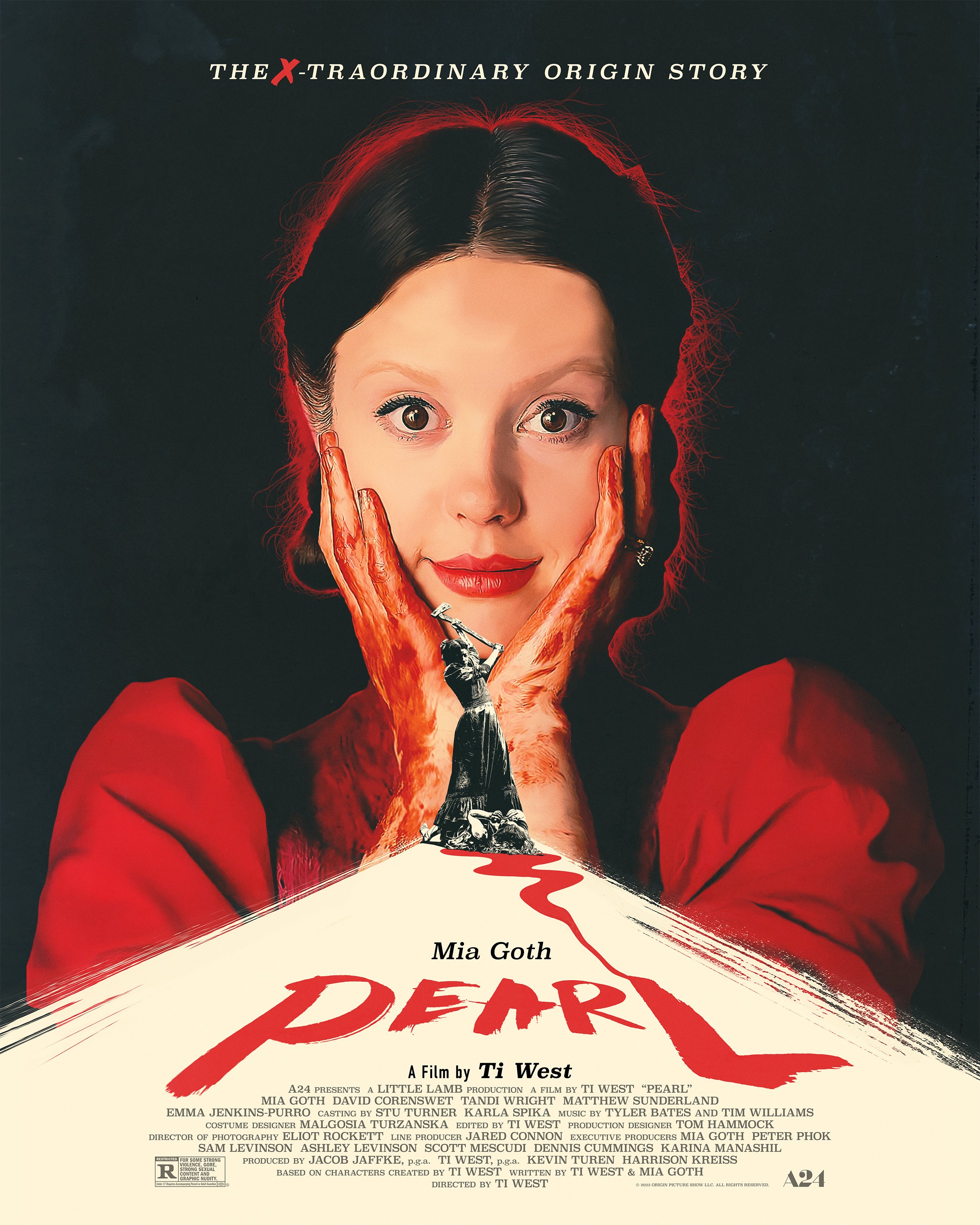
“The kid says we’re gonna lose the light.”
One of the things I found interesting about this is how it’s smartly set at the crossroads of sex and violence but the filmmaking itself isn’t excited. It’s not purposeful enough to be a horny or angry outburst; it’s a sad ache chockablock with loaded elements it picks up and puts down haphazardly. As DI says, it’s toying, and there are a lot of instances where it feels like it’s wasting its smarts on cleverness instead of depth. It has a sterling first hour and offers a lot that’s fun to think about. But it feels a missed opportunity to plant a stake at such prime cinematic real estate – the rural environs of Leatherface in the birth-state and year of the Moral Majority, the year after Michael Meyers and Debbie started doing things, the year before Jason Voorhees and Ronald Reagan scored their biggest roles – to do so without much of a philosophy and to come away without too much of point.
But then frustration as both topic and method is a toy in its chest, one sometimes gleefully deployed, so perhaps a wholly satisfying film would be thematically inappropriate.
I was surprised by its conservative attitudes toward sex, its self-defeating approach toward aging, and how casually it tossed away opportunities to say something about sex, violence, and filmmaking.
[spoiler]The attitudes re: sex are at least interestingly complicated, and as twbb notes a welcome change from the hedonist/puritan dichotomy. There’s merely a disparity in access and motivation. The younger people who are having sex aren’t as free-thinking and sex-positive as they seem; their sex has been commodified, corrupted. Bobby-Lynne brags about faking her orgasms; Maxine needs to get high to perform and there are hints of abuse in her background; both are matter-of-fact about the sex being a means to an end. Jackson’s a bit of a question mark, but despite declaring he was born for this, there’s as much unspoken racism in his industry role as there is between him and Howard. Wayne gets as excited over potential profit as anything else and is given to predatory pronouncements like, “Better to beg for forgiveness than ask for permission.” RJ is the only one who ever openly objects to any of the sex, thinks himself above the enterprise all along, and of course is the first to die.
The only one of the crew who wants to fuck for fuck’s sake is the Church Mouse, and West first telegraphs this by framing a scene so we ignore the people having sex and watch her watching. Watching’s the most sexual thing one can do in a movie. (RJ is just working.) Instead of being punished for sex, the standard model American slasher m.o., Church Mouse is instead killed at the moment she blames the sex for everything that’s gone wrong.
Pearl, of course, wants to fuck and wants to fuck
a lot. (There’s still a fresh body in the basement.) And Howard, bless his failing heart, is more than willing to accept her bisexuality and have an open relationship. He may be more willing to kidnap and imprison people than order a vibrator, but then everybody’s got their something. They have an honest understanding and a tender, loving relationship which unfortunately leads to deeply criminal acts. And when they do have sex together, we’re made to understand that it is comicly gross.
So, sex: Empty and corrupt, or heartfelt, criminal, and disgusting. At base moments, the characters themselves think this: Pearl calls both actresses whores, Maxine calls Pearl a “sex fiend.”
therewillbeblus wrote: Sun Mar 20, 2022 12:41 am
In its own twisted way, this is an existential horror glaring at the inevitability of aging, loss (of vitality, abilities, choice, opportunities, time), self-reflexively playing with the elusive nature of stardom, whether in the movies or reinforcing the egocentric nature of feeling special in youth, one's narrative paved ahead as the star of their own "movie" in life
I vibe with this read; I think it’s impossible to conceive such unlikely, impractical antagonists, to muster sympathy for them, and not think West’s not trying to say something about aging. Could even see distorting the first hour in the guest house as Pearl’s fantasized reminiscence, a diorama of could-have-beens. It
is mostly a sad film. It plays at time-displacement in the tiniest of ways, occasionally flash cross-cutting into the next scene. The script’s addicted to callback dialogue, usually traded between generations (“once a marine, always a marine;” “our little secret;” “divine intervention;” “I will not accept a life I do not deserve”). And I like the way the sex punishment has been replaced by the brand of retribution that stems from a resentment that longs to perpetuate any suffered injustice in the bastardized name of fairness. Why should you get to have it all. Someday all this will be taken from you like it was from me.
I do not know that true notions of the me/greatest generational divide ever land. Both because the movie works to forge a Maxine-Pearl connection and because making the Pearl-Harold relationship sexually open upends expectations that severs ties with the upcoming political wave. There’s an element of sacrifice – Howard’s two wars away, Pearl’s career – but that’s not cut and dry either as Jackson’s also served and the younger party’s backgrounds aren’t painted as posh. The horror simply relies on young people naturally finding old people as terrifying as a lot of old people naturally find young people terrifying.
And I feel the central stunt is distracting to the point of being insulting (almost the same way
The Night House diluted its central character’s desperation with elaborate camera tricks). There are simpler ways to connect Maxine and Pearl without gooping on the latex. Betrays that notion of inevitability when you’ve had a “Creature Fabrication” team exaggerating the potential disgustingness of Pearl’s body when her actions are enough to make her some kind of monster.
Though on the plus side, Goth does get to make a grab at the sort of infamy Divine enjoyed when he raped himself in
Female Trouble.
DarkImbecile wrote: Fri Mar 18, 2022 5:13 pmthere's also a very cleverly done opening shot here — nothing overly flashy but reflective of the above-average talent West has for compositions — that put me in a good mood for the rest of the film.
Same by half; it’s an instant infusion of goodwill. That shot is so simple and ingenious I wondered if lifted it from somewhere. The shot in front of the car headlights is repurposed from
Texas Chainsaw Massacre, but it’s swell. And that’s the third unexpected dance number I’ve seen in a new movie this year – there’s a sort of one in
House of the Devil as well – but those are never unwelcome.
That first kill scene is dandy. Ti West, whose documentary filmmaker character IIRC was the first dinner guest to die in
You’re Next, knows the value in offing a director. It’s Pearl wresting control of the movie away. There’s to be no more cute intercutting with “Farmer’s Daughters,” there’s no reason for those people to be there except to be killed or be hers. It’s the only real glimpse of her libido in the film, and it can be indiscriminate, splashy, emphatic, triumphant.
It’s also… the last good kill scene? There’s so much energy put into passing details (Bobby-Lynne’s death is teased by the painting on the side of the Bayou Burlesque, there’s a photo of the basement hippie on a milk carton) and so little into the big steps. Wayne’s death is the dumbest thing I’ve watched in a while. The most notable death in the second half of the film was that of the second half of the film.
Is the final Pearl/Maxine confrontation supposed to be… an argument? Does someone win it? Is the revelation about Maxine’s father supposed to land with such a limp shrug? (Even she doesn’t react when she sees him on TV in the gas station.) The movie knows religion belongs in there somewhere, doesn’t know where to put it, so it just hangs around.[/spoiler]