Page 4 of 6
Posted: Sun Jan 07, 2007 9:11 pm
by Greathinker
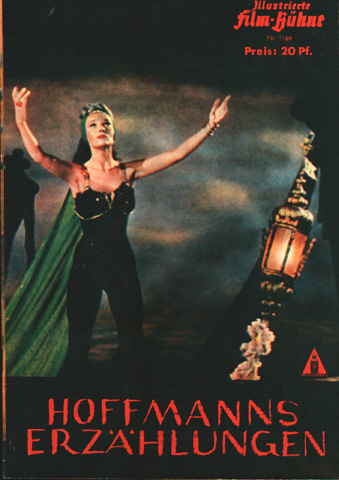
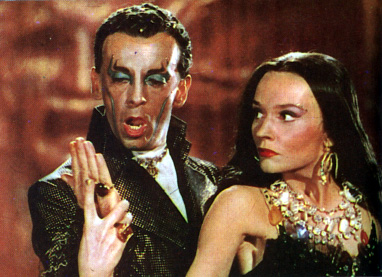
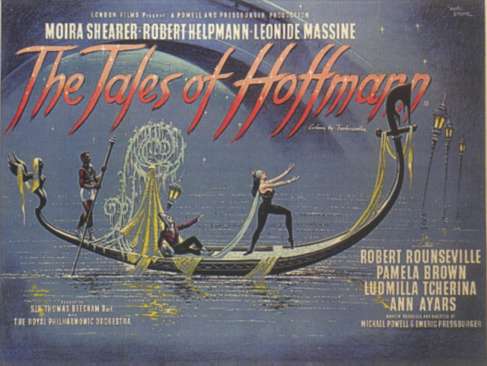
These things don't tell us much but I thought I'd post anyway. The images on
this site favor the green color. Particularly
this german poster and
this image, which I presume isn't taken from the DVD but don't know for certain. And
this UK poster.
Note also the dark red lipstick instead of the orange-red seen on the LD. A confusing issue for sure, I can't say which one is right.
Posted: Tue Feb 05, 2008 7:36 am
by Ivy Mike
Anyone have the Optimum. Criterion seems pretty good, but has anyone seen the UK boxset version or the Optimum and can mention how it compares to the Criterion?
Posted: Wed Feb 06, 2008 11:25 pm
by Person
Ivy Mike wrote:Anyone have the Optimum? Criterion seems pretty good, but has anyone seen the UK boxset version or the Optimum and can mention how it compares to the Criterion?
It has yet to recieve an online review logged at
DVD Basen. I have it on my rental list, but it ain't appeared so far.
Re: 44 The Red Shoes
Posted: Thu May 21, 2009 7:59 am
by ellipsis7
Yikes, David!... Catastrophic...
Laserdisc

Criterion/Studio Canal

Re: 44 The Red Shoes
Posted: Thu May 21, 2009 11:55 am
by Tommaso
Yeah, I see the difference, too, and the Laserdisc obviously looks better. But let me say that I only know "Hoffmann" from the CC disc, and without those comparison caps, I wouldn't actually think it to be too wrong; at least while watching it I didn't feel uncomfortable at all about the colours. Quite a difference to my reaction to the Sony AMOLAD, which I only barely managed to watch to the end and then had to put on the Carlton again for some key scenes to re-assure myself that the film itself still retains its old magic for me.
Re: 317 The Tales of Hoffmann
Posted: Tue Feb 02, 2010 5:05 pm
by dad1153
Re: 317 The Tales of Hoffmann
Posted: Tue Feb 02, 2010 9:22 pm
by DanV
Can anyone post some screens from the Optimum dvd, please?
Re:
Posted: Sat Feb 06, 2010 3:14 am
by HistoryProf
Narshty wrote:Nothing about that screencap looks especially "off" to me. He's clearly meant to look pasty with his grey hair and white ruffles.
actually watching this right now and just after reading this post one of the lines in this segment is "you're looking rather pale sir!"...so, well, I don't know...take it fwiw...as for the green tint, I paid particular attention to this and noticed some of the candles are a vibrant blue, so i really don't see how the DVD can be considered wrong...regardless, nothing seemed remotely 'off' - skin tones aren't necessarily natural, but nothing is natural in 3 strip technicolor - that's the beauty of films that use it!
I remembered this 'controversy' and finally picked this up because of the OOP announcement. I absolutely LOVE P&P - Matter of Life and Death is my favorite film, and 49th Parallel may be my favorite Criterion film - but I also have zero interest in opera...not that I loathe it, I just don't care about it and get rather bored rather quickly when forced to endure it. So i was always intrigued but simultaneously leery of this particular release...it's just not something I would ordinarily enjoy.
That said, it's really quite fantastic. The visuals are absolutely stunning and the sets are very impressive. I can say if anyone was hesitant to get this one based on it being a filmed opera, don't be....while it would never make a 'favorites' list for me, it's still eminently enjoyable and an absolutely beautiful example of the wonders of 3 strip technicolor. You've really never seen anything like it, and you never will. It's a must have for P&P fans especially.
Now if we could just get the blu ray of Red Shoes and a remaster of Black Narcissus we'd be on our way to all set! Well, those and One of Our Aircraft is Missing, The Wild Heart, and Gone to Earth

Re: 44 The Red Shoes
Posted: Sat Feb 06, 2010 3:41 am
by HistoryProf
Tommaso wrote:Yeah, I see the difference, too, and the Laserdisc obviously looks better. But let me say that I only know "Hoffmann" from the CC disc, and without those comparison caps, I wouldn't actually think it to be too wrong; at least while watching it I didn't feel uncomfortable at all about the colours. Quite a difference to my reaction to the Sony AMOLAD, which I only barely managed to watch to the end and then had to put on the Carlton again for some key scenes to re-assure myself that the film itself still retains its old magic for me.
Huh? I saw this on the big screen at a film festival (chosen by Jeff Garlin of all people to screen as part of a 'classic gems' series) before the DVD came out and never noticed anything 'off' about the Sony release - certainly nothing that would prevent me from enjoying the wondrous marvel that it is.
ETA: I found the
thread on this and I have to say I don't get the hyperbolic hair pulling over the disc. the Sony DVD is just fine imo...and certainly better than the older utterly garish VHS that I had - and I never once noticed anything that seemed off compared to the theatrical print I had seen the previous summer - which was a revelation compared to the crappy versions i'd always seen before. I don't know...all of this color complaining seems incredibly personal to me, just as with Hoffmann...I can understand slight disappointment, but there's nothing in either to get all that upset about - they both look fantastic!
Re: 317 The Tales of Hoffmann
Posted: Sat Feb 06, 2010 10:36 am
by DanV
Hey, there are perfect BD releases of both The Red Shoes and Black Narcissus, published by ITV! You should get a BDP Free region!
Re: 44 The Red Shoes
Posted: Sat Feb 06, 2010 12:54 pm
by Tommaso
HistoryProf wrote:
ETA: I found the
thread on this and I have to say I don't get the hyperbolic hair pulling over the disc. the Sony DVD is just fine imo...and certainly better than the older utterly garish VHS that I had - and I never once noticed anything that seemed off compared to the theatrical print I had seen the previous summer - which was a revelation compared to the crappy versions i'd always seen before. I don't know...all of this color complaining seems incredibly personal to me, just as with Hoffmann...I can understand slight disappointment, but there's nothing in either to get all that upset about - they both look fantastic!
Wrong thread, but anyway.
The question here is: when was that theatrical print made? If it came from the new restoration that is on the Sony disc, it's no wonder that there's little or no difference to what you see on the Sony disc. But that doesn't prove that the colours are right. Colour timing of technicolor films has several times been a cause for controversy here in the last few years (best example is "The Searchers"), and yes, it certainly comes down to personal taste to a degree. But whatever version you prefer, the difference in the case of AMOLAD is dramatic (much, much more than with "Hoffmann"), and pointing it out certainly isn't 'hair pulling'.
Re: 317 The Tales of Hoffmann
Posted: Sat Feb 06, 2010 9:09 pm
by HistoryProf
I didn't want to hijack either, but I think the AMOLAD thread is instructive - the hub-bub turned out to be the result of terrible screen grabs by Gary, not the actual disc itself - which is absolutely fine and looks nothing like what beaver shows. It was just as vibrant and wonderful on my HDTV as it was in the theater, with nothing remotely close to the blue hues Gary shows, and certainly nothing "dramatic" - as we all know, he's far from perfect in his representations, try as he might, and in this case he completely misrepresented the Sony release.
The issue is 100% pertinent here because I think it illustrates the power of perception and how subjective this stuff can be - and I'd hate for anyone to forego buying this awesome dvd because of one person's problems with the color pallet vis a vis his memories of it. I paid very close attention to those scenes and as I said, noticed some very vibrant blues in the background and the greens seemed very purposeful - just as yellow was in the first act. This is the only place i've seen the concern voiced, so I think an alternate vote of confidence is entirely warranted. I merely wanted to suggest to those who were on the fence with this one to not let one man's personal reflections keep them from buying it now that it's gone OOP.
Re: 317 The Tales of Hoffmann
Posted: Mon Feb 08, 2010 7:40 am
by Svevan
HistoryProf wrote:I didn't want to hijack either, but I think the AMOLAD thread is instructive - the hub-bub turned out to be the result of terrible screen grabs by Gary, not the actual disc itself - which is absolutely fine and looks nothing like what beaver shows. It was just as vibrant and wonderful on my HDTV as it was in the theater, with nothing remotely close to the blue hues Gary shows, and certainly nothing "dramatic" - as we all know, he's far from perfect in his representations, try as he might, and in this case he completely misrepresented the Sony release.
I don't agree with your assessment. I thought Gary managed to clip one too many shots that had the more blue and gray tones of the transfer as opposed to the red/orange/green tones that exist in the rest of the film, but despite that error of omission I still found the transfer to be overly blue and gray. Granted I've never seen the film in theatres, but compared to the lush tones on Red Shoes, Colonel Blimp, even the poor-quality Criterion Black Narcissus, A Matter of Life and Death feels tinny and dull, sometimes by a little, sometimes by a lot. So I would hesitate to call his caps misrepresentative, as if he completely failed to represent what the disc is like.
Furthermore, I think you're reading that thread very selectively; perhaps only a few people raised concerns, but that "one man" who was "pulling" his "hair" was (I think) David Hare, one of the most trustworthy film-buffs on the Internet (a defense of his off-forum commentary is unnecessary and probably a bit stalker-y, so suffice it to say that Gary of DVDBeaver often defers to his judgment, most recently on The Red Shoes, which is also pertinent here). I'd trust that man's memory against a thousand newly struck prints. Claims of subjectivity in interpretation would only work if you had seen the film (on FILM) at the same time as Mr. Hare, and I highly doubt that.
edit: Of course, now that I've given a full-throated defense of Mr. Hare, I decided to re-read the thread. Hare concedes that the transfer seems "fine" based on the new caps, but he never got back to the issue after watching the disc. Like a few others in that thread, I posted how I felt that 1) Gary's caps were not inaccurate, and 2) the transfer is not terrible, but not great. I would like to know if the Aussie agrees.
Re: 317 The Tales of Hoffmann
Posted: Mon Feb 08, 2010 9:12 am
by Svevan
We were talking about AMOLAD; never saw a final assessment from you on that one. I'm in the "meh" category while Prof is defending it.
Re: 317 The Tales of Hoffmann
Posted: Mon Feb 08, 2010 3:14 pm
by perkizitore
Doesn't anyone own
this? After buying it, i could only justify buying Red Shoes and Black Narcissus on blu and The Small Back Room. I think the transfers on this set is far closer to the Criterions than the old Carlton discs.
Re: 317 The Tales of Hoffmann
Posted: Mon Feb 08, 2010 8:12 pm
by Svevan
david hare wrote:It's far cleaner than the Carlton, and I agree Gary's caps tend to show more of the cooler temp shots than the warmer shots. I looked at the Carlton again after this came out and honestly I think the Carlton stinks. Yes it tries to reflect warm tone setc, but that color temp bias throws everything else out of whack.
I think the Sony is an excellent DVD for a Single layer and it's obvious to me they've done substantial job on the restoration from the YCMs etc. The monochrome looks particualrly good, and that footage was amongst the most problematic to restore apparently. This is something that would probably only yield its real quality in BluRay I suspect. Dont you?
I'll agree on the B&W sequences for sure, where the blacks are deep enough without feeling too high-contrasty, and the grain is substantial. And sure, when compared to the Carlton, the Sony in color and in B&W looks great. On its own without a comparison (not owning the Carlton I can only compare caps posted on Beav anyways) I find weird purple/gray flesh and lip tones throughout that transcend the color-breathing inherent in older Technicolor flicks, something not present in Criterion's P+P transfers that have just as much if not MORE color-breathing. I'm sure nothing by P+P in 3-strip will look REALLY good until they get a full resto + Blu, sure, but in the meantime the Sony disc was underwhelming. Not the travesty we thought it was based on Gary's caps, but not a slam-dunk SD either.
Attempting to get back on topic, my whole purpose in dragging you into this was to argue that things like the color on the Hoffman disc and the flesh tones on AMOLAD are not subjective and that the AMOLAD thread is not the thread to argue for subjectivity in reaction to color temperature, et al. In the AMOLAD situation we had Beaver caps that were accurate but not comprehensive, while the transfer itself was tinny but certainly watchable for most of us (Tommaso excepted). Prof's characterization of the AMOLAD thread as "hair-pulling" and reactionary, and then using that as a basis to defend the Hoffman disc, seemed really contrived to me.
Re: 317 The Tales of Hoffmann
Posted: Mon Feb 08, 2010 11:10 pm
by tojoed
perkizitore wrote:Doesn't anyone own
this? After buying it, i could only justify buying Red Shoes and Black Narcissus on blu and The Small Back Room. I think the transfers on this set is far closer to the Criterions than the old Carlton discs.
Yes, I have it, and I have also bought the two Blus and "Small Back Room". I did get the Criterion "Canterbury Tale" as well, as it's a better transfer and has English subs, which, for some reason, the ITV does not. Oh, and "Age of Consent", of course.
Re: 317 The Tales of Hoffmann
Posted: Wed Feb 10, 2010 3:20 am
by HistoryProf
Svevan wrote:
Attempting to get back on topic, my whole purpose in dragging you into this was to argue that things like the color on the Hoffman disc and the flesh tones on AMOLAD are not subjective and that the AMOLAD thread is not the thread to argue for subjectivity in reaction to color temperature, et al. In the AMOLAD situation we had Beaver caps that were accurate but not comprehensive, while the transfer itself was tinny but certainly watchable for most of us (Tommaso excepted). Prof's characterization of the AMOLAD thread as "hair-pulling" and reactionary, and then using that as a basis to defend the Hoffman disc, seemed really contrived to me.
I guess the other screen grabs showed clearly to me that Gary's were anything but accurate, regardless of whether they were 'selective' - as my viewing corresponded to the other caps and not Gary's at all. But despite that issue, tommaso was still claiming it ruined the movie for him...that he could never enjoy it, etc - which I think is pretty reactionary. Same goes with the green/blue argument here. The green looks right to me, as the entire scene has a lot of greens throughout, and as I said, there are vibrant blues in the background that would seem to counter the suggestion that the timing was off to turn all blues green. Perhaps he did see it with a slightly different hue, but I just don't see why that should result in such an outcry over an otherwise fantastic release.
The point I was trying to make - and ultimately have probably failed to properly convey - is that too often I see discussions here obsess on incredibly specific and - in my opinion - minor details and allow them to ruin their enjoyment of a film. I think that's sad. In the case of AMOLAD, even if I did feel it was too "cold" it's something I could rectify in about 12 seconds by adjusting the picture on my tv - something anyone can do. If you REALLY need it to be more red, then go ahead and make it so! In other words, it's not like an issue of misframing, missing segments, scratches, etc....because there's no reason you can't adjust it to your liking at home anyway.
And finally, let me repeat I merely wanted to lend a vote of confidence to those who were possibly scared away from buying this because of the color discussion - especially given that it's gone out of print. I don't for a second want to second guess David or in any way suggest he is wrong - I have enjoyed his extremely learned opinion for many years. Rather, I merely wanted to suggest that HIS issues with the transfer needn't be everyone's.
Re: 317 The Tales of Hoffmann
Posted: Wed Feb 10, 2010 4:58 am
by Svevan
HistoryProf wrote:And finally, let me repeat I merely wanted to lend a vote of confidence to those who were possibly scared away from buying this because of the color discussion - especially given that it's gone out of print. I don't for a second want to second guess David or in any way suggest he is wrong - I have enjoyed his extremely learned opinion for many years. Rather, I merely wanted to suggest that HIS issues with the transfer needn't be everyone's.
Fair enough, friend; on these points we depart, and happily. Nit-picking is what the dot org does best, and I don't find the color on Hoffman or AMOLAD to be anywhere near the least important issue we've had an aneurysm about (even excluding cover art). Anyways, I piggybacked onto this conversation without having any real opinion on the Tales of Hoffman transfer at all, so I'm due to bow out.
Last point: without having the expertise to address your comment on TV color adjustments, let me just say that I think your solution is far too simplistic: 1) for being to my knowledge technically impossible, as if color-timing and my tube TV's red/green balance are the same thing; and 2) for excusing faults in a transfer that might be (but should not have to be) rectified by the user (see also: Tokyo Story). Again you've assumed that color in digital film transfers is subjective, an idea I've already railed against. Leaving that aside, the issue of user-adjustment I leave to more knowledgeable people.
Re: 317 The Tales of Hoffmann
Posted: Wed Feb 10, 2010 10:58 am
by Tommaso
HistoryProf wrote:
I guess the other screen grabs showed clearly to me that Gary's were anything but accurate, regardless of whether they were 'selective' - as my viewing corresponded to the other caps and not Gary's at all. But despite that issue, tommaso was still claiming it ruined the movie for him...that he could never enjoy it, etc - which I think is pretty reactionary.
Now this is strong stuff. I might have been called 'conservative' occasionally in my life, but 'reactionary' is a first. Must be my age.
So then, here's what I wrote in the AMOLAD thread, most important things highlighted:
Tommaso wrote: Watching the Sony, I was stunned how sharp and free of damage the image was, even if the grain seemed faux again. Not mentioned yet, I believe, is the dramatic improvement in the audio department. While I sometimes wished the Carlton had some optional subs for understanding the dialogue better, the Sony is crystal-clear with every single word understandable without problems, far less hiss and better frequency range. I actually found the Sony quite convincing in all respects...before I put on some key scenes again from the Carlton disc. I hate to say it: it's not a matter of life and death perhaps, but a difference of day and night as far as colours are concerned. You only hear Conductor 71 talking about being starved for Technicolor in the Sony, but in the Carlton you can experience it. What wonderful deep and technicoloresque blue in the night skies, what beautiful reds on the petals in the Carlton! Or Dr. Reeves' first motorbike ride: it's an explosion of warm, sunny colours on the Carlton, perfectly expressing the joys of living on earth as opposed to being in bureaucratic heaven (the whole point of the film of course). On the Sony, it's nothing more than a good outing, really. Many other examples can be found, of course.
I don't know; I've seen each and every one of Powell's colour films available on disc somewhere, and all these films have strong, vivid colours and a generally joyful 'look' at all things from nature. The "Age of Consent" transfer is a good example for that. The difference in skin and lips tones is not even important, but I just don't see these sunny colours, so important for the Powell magic, in the new Sony AMOLAD. It may be an entirely subjective thing, but despite its obvious deficiencies, the Carlton simply feels right, in the same way that the Network "Black Narcissus" and the CC "Red Shoes" or the MoC "Kwaidan" feels right to me.
Man, what a shame. I guess, the only way at the moment is to have both editions. You need the Sony for the Christie commentary and of course "Age of Consent", but you also need the Carlton to really get the deep emotional experience that AMOLAD can offer when it looks right.
So very obviously, I didn't trash the Sony in its entirety. Where I trashed it, I even then pointed out that it's an entirely subjective thing, and I have repeated this a few days ago in our discussion about this. I was talking about the emotional effect a colour scheme can have and certainly has in the case of Powell films, much of whose magic depends on the magnificence and intensity of the colours. The usual effect a Powell film in colour has on me is that of being stunned, and it works with all his films, even "Age of Consent"; and needless to say it also works with AMOLAD on the in all other respects widely inferior, I repeat: widely inferior Carlton disc. It just didn't work with the Sony disc, and that - nothing else - was what I pointed out. To see that others enjoy the film on the Sony disc is fine with me. But if I prefer to watch an inferior disc like the Carlton because I find the whole experience more satisfying - and this is the only case I can think of where I do so -, why does that make me 'pretty reactionary'? Actually, I'm not even really sure what you mean by that.
Three more points:
1) My viewing experience with the Sony more or less corresponded to Gary's caps. And I'm not exactly known as a blind believer in Gary's caps.
2) I have to completely agree with Svevan: fiddling with the TV settings won't help at all. It's not even really effective with brightness or contrast boosting, much less with colour issues.
3) I still have no problems with the colours on the CC "Hoffmann" when watching it.
Re: 317 The Tales of Hoffmann
Posted: Sat Feb 13, 2010 12:20 pm
by Tommaso
David, as I've never seen "Hoffmann" in any other form than on the CC disc, I have to believe you. Probably I'm in the same position as our History Prof is with AMOLAD here: it looks right, but only because I have no comparison and don't have any idea how the film's impact might change with a different colour scheme. Would you say that the CC "Hoffmann" colours are as wrong as, say, the latest "Searchers" version? I mean, there's always a bit of room for different 'tastes' (as e.g. the discussion on the CC "Ran" evidences"), but not if the differences are as dramatic as with the Ford film.
Re: 317 The Tales of Hoffmann
Posted: Sun Feb 28, 2010 10:54 pm
by tojoed
Post deleted.
Re: 317 The Tales of Hoffmann
Posted: Sun May 18, 2014 5:47 am
by movielocke
I think this is the first time I feel let down by the Archers. I've been let down by Powell before, but this was a first for the collaboration. I knew going in it was a dance film/opera fantasia film, I like watching dance, but I prefer either shorter pieces or modern dance, I've never been much of a fan of long form ballet. opera I've always been indifferent too, and I think it's the opera or the central male actor that's interfering with my ability to enjoy the dance, the technical execution and the color. The film just never clicks, and when it's not clicking, it feels like all I'm seeing are the seams, I try not to focus on the idea that it is just a filmed play, but with the film never engaging me, that assessment keeps recurring over and again in my mind. Just a disappointing experience, ultimately, and yikes, it's such a tremendously flat piece of acting with Hoffmann.
Re: 317 The Tales of Hoffmann
Posted: Fri Mar 20, 2015 3:35 pm
by teddyleevin
Not to everyone's tastes surely, but this has always been one of my all-time favorite films since I first saw it, and it is certainly (with the Bergman Flute) the pinnacle of opera on film at large. As an opera conductor and having worked intimately on Les Contes d'Hoffmann, I certainly have an easy in. Seeing the film on this DVD was originally my only experience, and I explored the film with quiet reverence.
However, I just saw it for the first time in a theater with an audience; there's a new restoration at Film Forum. There are problems with the image and sound on the Criterion DVD (most notably, tremendous damage as the Giulietta act Sextet starts). All of these have been cleaned-up. The colors are fuller and richer, only let down by the problems with watching a DCP from the second row.
Crowd reaction was very positive, at times even electric. I never realized how camp the film was (truly, this happens to me without fail when I see almost anything at Film Forum; I recall seeing Cherbourg there and being confused why everyone thought it was so funny. I guess I don't see camp very easily). I found some of the audience's laughter simply awkward shock, but truly, some moments are accidentally hilarious (the designs of the glasses offered to Hoffmann in the Olympia act being chief among them). Fortunately, in moments of true poignancy, the audience seemed entranced, even when Robert Helpmann seemed committed to making them laugh at his stagey, expressive acting.
The true joy of this restoration, however, has barely been mentioned by anyone. Martin Scorsese (unsurprisingly) provides a filmed intro to the restoration, explaining that some footage had been found and it has been reinserted. The one pacing, structural problem I had with the film was always the absence of the aria for Frantz in the Antonia act. The deaf servant of Crespel has a comic song in the beginning of the act where he explains that he can't sing; not because his voice is poor, but because he lacks the technique; a fun experiment in diegetic singing in opera as when Frantz is "singing" ("La, la, la...") he continually cracks on the high A, but when his singing is non-diegetic immediately thereafter ("Non, c'est la méthode"), he sings the same note beautifully.
This aria provides very obvious, but helpful comic relief. The opera's history is one of the most complex in all of opera (with the composer's death before completion, there have been countless variant versions, some with interpolated music from other Offenbach operas or things like the famous Sextet, written by another hand decades later based on the theme of the Barcarolle, which itself is from Die Rheinnixen, another Offenbach opera altogether). However, the Antonia act, generally considered the best, is also usually the most indisputably complete and unchanged. (The exception to this is the aria for Nicklausse, discovered decades later, but I'll discuss this later). The standard performing version of the "Antonia" act as it would have been in the 1950s is basically what you see in the P&P film adaptation (there are a few minor tucks to the full Offenbach version, which were all very common variants at the time in world opera houses: cut repeats in Antonia's aria and the Hoffmann/Crespel/Miracle trio; the climactic trio is conflated with the somber final scene [by having Hoffmann burst in and sing "Antonia!" as she dies instead of after another 2 minutes], and argues so well for this choice that I almost went for it when I produced the work).
However, there is one unusual cut that never sat right with me: Frantz's aria. Crespel shouts at Frantz asking him not to let in visitors, there is an awkward edit, and then Hoffmann and Nicklausse enter looking for Antonia. I almost groaned with disappointment when I first saw the DVD. After the heavy Giulietta act (which followed the thrilling and hysterical Olympia act), the audience craves one more moment of balletic levity before the story takes a pessimistic course towards its depressing finish. Given the expense of the film, I never gave it a second thought: the chance they would shoot a whole scene they weren't planning on using seemed bizarre. It is superfluous to the plot, but in this film it at least would have given Frantz (Léonide Massine) something more to do. He showed great versatility in his other two roles in the film, but he needed a dance showpiece like Helpmann and Shearer receive.
William Germano's 2013 BFI Film Classics book states, "The comic role of the servant Franz [Frantz in the opera] is pared back for the film (omitted is the little aria in which he practises singing) and while Massine is given some small stage business here, he remains underemployed in this sequence." That's all the reference Germano makes to this character. His resources about the film seem very thorough (though he makes a few small errors in his histories about the original opera), and there's no reason to believe he knew anything but what I thought: they never shot this scene. Germano also makes reference to Korda cutting some of the beginning of this act to keep the downward trajectory intact. He doesn't explicitly state what this scene was, but he doesn't make the connection, either.
At all events, when I went to the Film Forum screening, I felt prepared for that same jarring edit and pacing mishap. Imagine my delight and surprise when the recit slides into the opening bars of the aria and Massine starts to dance and sing ("Day and night..."). Only one verse is included, but it is enough to make an impression. He receives the dance solo that I always felt he was missing, and it smooths out Hoffmann and Nicklausse's arrival on the island (there is an additional shot of them arriving on shore and hearing the aria coming from inside). A tremendously substantial cut that no one ever made reference to. Nowhere (to my recollection) on the DVD does anyone mention this entire song that was cut from the film. At all events, I'm thrilled it was included. I wonder if it ever screened with this scene or if it was cut before the premiere. It didn't appear damaged in the slightest, and presumably came from the same source material as the rest of the film, so it wasn't like inserting lost footage from a less-than-stellar print.
As for the two other additions I noticed (there may have been more small changes that I didn't catch): there is a brief intermission title card between the Giulietta and Antonia acts. It caught me a little off guard. I don't feel the film is that long. Fortunately, the copy included it just for show, and it faded out after a few brief seconds.
The final addition, was a charming scene which features both the singers and actors/dancers of each role appearing from two curtains and bowing to each other and to the audience. It's due credit to the film's great singing (from many greats of the (mostly British) opera world of this era), and it gave me special joy to see them in the flesh. Considerable (and cheap) laughter was had at the expense of the grandma-esque Margherita Grandi bowing besides sexpot Tchérina; the moment said in a few brief seconds the sad truth of the opera world, especially today: your voice isn't everything, you must also look the part; if the part (here, Giulietta) must be beautiful and entrancing, so shall you. The proliferation of opera performances screened live in HD, has led to pretty-person casting practices. The out P&P had is that they wanted a dancer in the role, but one still laments the fact that gorgeous singing won't always get someone the role. All-in-all, this curtain call is touching and I'm thrilled to see its inclusion (the applause and cheers sounded pasted onto the soundtrack, but I can't confirm... it just sounded a whole layer above the quality of the orchestral medley under it, which was very obviously recorded in the early 50s).
I have never seen/heard mention of any of these notable missing moments. Germano's 2013 book doesn't seem to know about them either. I suppose there was no surviving script or record of these scenes (again, the potentially never screened), but the aria and the curtain call are, to put it simply, essential, and now that they have been found, demand to be included on a superlative release.
Germano does know about something I didn't, however, which leads me to my other complaint about the film (now my only complaint). He has a still of Pamela Brown (Nicklausse) behind Hoffmann, staring ahead and dead drunk, looking clearly female (with a nearly exposed breast), and painted entirely in gold. The hypothesis is that here she is playing the Muse of Poetry, the original intent of the opera. In the film, Nicklausse seems curiously underwritten, he just sort of seems... there. It's not distracting, but they simply give the role nothing to do.
In the opera, however, this role is clearly and definitively the second leading role. The mezzo starts the opera as the Muse of Poetry, generally played as a female figure, who dons the guise of Nicklausse, Hoffmann's friend and confidant, to guide him on his journey. Along the way, he figures more heavily, generally trying to warn him away from his loves. More importantly, they become the couple the audience wants to see together (the homoerotic tension is generally washed away for more conservative audiences because we've seen the mezzo as a woman at the start). Nicklausse's role was more pared down in the 50s than it is today, which also probably led to some of this issue. Sir Thomas Beecham didn't seem to regard the opera as very high art, but it's things such as Nicklausse's through-line that elevate the work to a different level. Also, as an older conductor, he might not have been comfortable with the many discoveries of lost music that expanded Nicklausse's role; P&P didn't seem to be staunch opera dramaturgs and Korda was happy to shorten the film. I lament the loss of Nicklausse's violin aria in the Antonia act, but this masterpiece (invariably included today) wasn't even known to exist at the time of the P&P film.
There are also several endings to the opera, some of which only fully discovered and explored in the latter half of the 20th century, but at the time of the P&P film, there were two general variants. The old Schirmer edition (which presents an early 20th century performing version; compared to the Oeser edition from the 1970s which presents all newly-found authentic material and eliminates all music by later hands) includes these two variants. The 1st we see in the film; the only difference is that Stella has dialogue with Nicklausse: "Hoffmann asleep?"... "Dead drunk." Nicklausse almost protecting Hoffmann from another woman, but also leading her right into the arms of the villain Lindorf. In the film, this scene is played, very effectively, in silence as Moira Shearer sees Hoffmann's sorry state, and leaves on Lindorf's arm.
The edition of this era also includes an extended ending, which includes Nicklausse, reassuming the original guise of the Muse of Poetry, presents herself as his only true friend and declares her love for him, a love which he returns with drunken abandon and artistry. He finds his one true love in the end, the love which prevents him from ever maintaining a real connection.
It is clear from the still presented in Germano's book, that they intended on shooting or did shoot this ending. I can't imagine it totally working in the film without dramatically restructuring the import of Nicklausse's presence for the entire running time (in addition to including the extended prologue for the Muse). If it was shot, I would love to see it on its own; the costume design is striking and I almost salivate at the thought of what P&P, Heckroth, & Co. would have done with this fantastical material in full three-strip technicolor. For now, I'll enjoy the victory of having Frantz's aria with the added bonus of the new curtain calls, and hope that more footage might have been found but not included that we might eventually see on an upcoming release.
---
Which leads me to my question: Who has the rights to release this on Blu-ray in the US?
Re: 317 The Tales of Hoffmann
Posted: Fri Mar 20, 2015 6:09 pm
by krnash
teddyleevin wrote:Which leads me to my question? Who has the rights to release this on Blu-ray in the US?
Great writeup teddy. I attended a screening of this in LA last weekend which was followed by a Skype Q&A with Thelma Schoonmaker. She spoke about working closely with Criterion for this new restoration multiple times. It didn't occur to me until I read your post that this went out of print with the other Studio Canal films way back when.
So according to Thelma, this will indeed be released by Criterion on blu, which is fabulous news on its own, but could be support for even bigger news- the recent Studio Canal rights battle going in Criterion's favor.