Page 6 of 8
Posted: Thu Apr 19, 2007 7:53 am
by Scharphedin2
zedz wrote:sevenarts wrote:As for other Mann, viewing those two was enough to make me immediately order The Tin Star, Winchester '73, The Last Frontier, and Bend of the River, and I've already got the non-Western Men In War in my to-view pile. I'm sure I'll be tracking down at least a few more Manns too, once I've seen those.
I didn't even realise that
Men in War was out on DVD. And hey! It's $3.80 at DVD Pacific. I assume this is a pretty nasty edition, but who can argue with that price?
I think there have been two releases in R1. First by Image (now OOP) and then by a company specialising in Anime (Geneon?) At the time of release, I remember Beaver giving it the short end of the stick, so I did not pick it up. Subsequently I have wondered, whether the quality of the disc really is as bad as all that. However, in the end I picked the film up from the French label Wild Side, which once more has released really nice editions of both Mann's
Men in War and
God's Little Acre.
Posted: Sat Apr 21, 2007 2:07 am
by sevenarts
Tonight I did watch Mann's Men In War. Quite a good, simply told war movie -- it avoids imposing any overbearing messages and simply tells its story with a grim and purposeful drive. There is a lot of waiting and not a whole lot of action, a lot of tense but atmospheric scenes where nothing much happens, and the film is infused with an oppressive fear and uncertainty that perfectly reflects life in the war zone. The opening and the finale are particularly powerful, the former for its creation of a tranquil but unsteady peace, and the latter for the poignant and memorable impression it leaves. I won't spoil it for those who haven't seen, but that final scene will certainly be enduring in my mind for a long time as an iconic anti-war image. I watched this on the Geneon DVD, which is as expected a public-domain analog-sourced disc, but with that caveat, it actually doesn't look bad -- one of the better PD discs I've seen. It's interlaced, and some of the long shots are a bit blurry, but then the close-ups often look surprisingly good and clear. It was certainly more than watchable, more than enough to convey the precise beauty of the cinematography, and I don't feel like I wasted my $6 at all. I'm sure the Wild Side is better (and way more expensive) of course, and I'd appreciate any comments on that disc in case I feel like upgrading at some point.
I also recently watched High Noon, which was fantastic. Speaking of waiting in the Mann flick, this is a film that's practically all about waiting. An hour passes practically in real time, and I could feel my nerves getting wrecked right along with Gary Cooper. The editing, the camera angles and movement, the pacing, everything comes together just perfectly. The final shootout is inevitably almost an anticlimax after all that buildup, but really that's the only way it could be. An hour of waiting, twenty minutes of taut and quick violent action, and then it's all over. Great stuff.
Everybody says Night of the Demon is so scary and a horror classic, but I don't see it. Maybe I'm just jaded by the intervening 50 years of horror films, but this was so not scary. It's technically nicely done, and I still enjoyed it, but it's hard to get too deeply into a horror film that doesn't really lay on the scares.
Posted: Wed Apr 25, 2007 3:02 am
by sevenarts
Watched a pair of Westerns tonight, both from Fox's "Classic Western Collection." Not a bad set based on the two I've watched so far -- it's got three 50s Westerns and a random pick from 1972. The fact that they felt the need to make these all flippers with the cropped 1.33:1 versions on side A is a bit baffling, but I'm just glad the proper widescreen versions are there as well.
And that widescreen is crucially important to Sam Fuller's Forty Guns. In this acerbic, low-key western, Fuller's camera moves fluidly and languidly, reflecting the uneasy stasis that develops in this frontier town. The opening panorama, with Barbara Stanwyck and her forty gunmen streaming across the trail, is breathtaking, and the funeral scene towards the end is one of the most beautifully composed tracking shots I can think of. Actually, there's tons to love here. There's Fuller's typically hard dialogue -- "That's the first time I ever kissed a gunsmith." "Any recoil?" And the subversion of the tough-guy milieu with those wonderfully silly bathtub scenes. And of course, that stunning showdown at the climax, just brutal stuff. The studio-mandated ending is almost too much to bear, though, probably the worst hatchet job ever. It barely lasts 10 seconds but manages to ruin practically everything that came before. Still, if I can manage to forget about those 10 seconds, this is an incredibly powerful film that works beautifully as a western classic even as it subverts the genre and presents an image of the western hero on his way out.
Edward Dmytryk's Broken Lance is another film about the end of the western era, a film that pits the frontier hero against the forces of legality and economics and business and legitimization. Not as technically accomplished as Fuller's work, this is a film whose aesthetic pleasures reside mainly in mise-en-scene rather than camera movements. In addition to the obvious beauty of the open landscapes ubiquitous in these types of films, Dmytryk arranges some striking interior compositions, most notably a ruined ranch house which looks like it came from some weird Technicolor horror flick. The film's King Lear re-telling is mainly presented through an extended flashback that takes up the bulk of the film -- to the point that the framing story in the "present" is nearly forgotten. It's a tough film, and its best feat is to make its most stereotypically "western" character -- the patriarch played by Spencer Tracy -- a complex and rather hard to like character. And it's very difficult not to see some justice in the claims of Tracy's otherwise intensely unlikeable trio of sons. It's a generation gap story as much as anything else, about the disappearance of the frontier and the effect that had on men like Tracy, who could really only thrive in the absence of hard rules. And its conclusion is striking in its utter rejection of the circular code of violence and revenge presented by most westerns. This isn't a masterpiece or anything, but it's a very good and intelligent western that I haven't seen mentioned much (at all?). Certainly worth a look for any 50s western fans.
The other 50s western in this pack is Robert Webb's The Proud Ones. Anybody seen that one yet?
Posted: Mon Apr 30, 2007 1:51 am
by sevenarts
Anybody else still going?
Antonioni's Story of a Love Affair was very interesting -- quite different from the later style he came to be known for, but not without some hints towards the future. And on its own merits, quite a good example of melodramatic noir. It's interesting from an Antonioni standpoint primarily for the characterization, since there's not much of his later visual aesthetics recognizable in the stark, simple style of this film, with its use of shadow-strewn noir nightscapes and none of the later Antonioni's long shots and sweeping camera moves. The later director is recognizable in the film's juxtaposition of psychological depth with seemingly unfathomable surfaces. It's an excellent film, especially considering it's a feature debut.
I also watched a trio of westerns today. Of these, the best was clearly Anthony Mann's Bend of the River, a very powerful and exciting film with so many twists and double crosses and large scale gun battles that you wouldn't think there was even time for Mann to explore his characters as thoroughly as he does. As usual for Mann, the surface adventure tale carries along a great deal of intelligence and depth with it. It's fascinating to see a western with such a genuine interest in domesticity and the taming of the frontier through it rather than the usual violence and greed. Budd Boetticher's Seven Men From Now was pretty solid as well. Its ending rang a slight bit sour for me, and it didn't play with its central triad of bravery, cowardice, and bullying quite as much as it could have, but it was still interesting and well made. Not a list contender, but a solid western I'm glad I saw. Can't quite say the same for Andre De Toth's Thunder Over the Plains, which was very disappointing. The lame voiceover narration put a bad taste in my mouth from the beginning, and the rest was mostly pretty undistinguished too. There was a nice long suspenseful gun battle/chase towards the end, which was pretty well executed, but otherwise this didn't add up to much.
I Confess is another of those solid mid-level Hitchcock pictures that's not bad, but nothing amazing. This one also happens to be rather uncharacteristic, with its twists played more for drama than suspense. I also had a similar problem in this to the one I had with The Wrong Man, in that the situation really sets things up for the hero to resolve his dilemma, but he never takes action, just waiting for fate to intercede and clean things up. In this case, the priest's solemn lack of speech goes beyond just keeping his vows -- he even seems to keep silent on things when it would seem that his vows about the confessional were not restraining him. It's another case of Hitchcock twisting behavior and circumstances to serve the thriller plot. It doesn't happen very often in Hitch, but when it does it's rather frustrating.
I can't remember the last time I laughed through a movie as much as I did with Kazan's Baby Doll. The central performances from Eli Wallach and Carroll Baker are just pitch-perfect, dripping with sensuality, and practically every other line is subtly hilarious. The central seduction scene is possibly one of the sexiest scenes ever committed to celluloid, and all without a bit of flesh being shown or even anything said explicitly. But you can just feel the heat rising on the screen. Incredible stuff, this is stunning now, even more so for 1950 I'm sure.
Posted: Wed May 02, 2007 2:16 pm
by Michael
sevenarts, I enjoyed reading your thoughts of Baby Doll. Incredible movie indeed.
I picked up two more 1950s films:
Forbidden Games - Joining the pantheon of the most emotionally devastating films ever made. Films seen through the eyes of children tend to be syrupy (which is perfectly fine with me) but I was struck by the film's coarseness that killed every possibility of sentimentality. The children were so amazingly believable that it sparked my curiousity how Clement directed the children. The girl walking the countryside with a dead puppy in her arm brought my mind to the girl with the cat in Satantango. And who doesn't love the owl? Forbidden Games is quietly beautiful - very simple but deeply affecting. Not meaning to be picky but Forbidden Games would be greater if it was more lyrical (maybe editing-wise).
Gun Crazy - There are many classic noirs, such as Out of the Past and Double Indemnity but for some reason, they didn't do anything for me even though I recognized their greatness. I remain having no interest in revisiting them. But Gun Crazy - a fierce gun-sucking puppy! I feel the desire to see it every day! Its unexpectedly wierdly poetic quality left me in sheer awe and excitement. Peggy Cummins is the femme fatale to die for - with a baby-sweet face with an inescapable deadly, venomous twink in her eyes. And of all the noirs I've seen, Gun Crazy's cinematography is the greatest - fresh and innovative. With such a contagious energy that it remains amazingly new and watchable even by todays standard. 99.9% of movies playing at multiplexes today are terribly boring compared to this 57-year-old stunner. Shooting straight up to my top ten of all time. I haven't seen much said about Gun Crazy on this forum so what do you folks think of it?
Posted: Thu May 03, 2007 5:05 pm
by Scharphedin2
sevenarts wrote:Anybody else still going?
I am, although at a reduced pace...
Based on someone, somewhere, heartily recommending the collection of Alexandre Alexeiff's animations (released by the French label Cinedoc), I recently purchased this disc, and sat down last night to view the ‘50s shorts contained in the collection. However, I soon found myself drawn into Alexeiff's universe, and ended up viewing most of the material on the disc, which ranges from the 1930s to the ‘70s. The pinboard animations, which are his most famous works, had me completely dumbfounded – especially the adaptation of Gogol's “The Noseâ€
Posted: Thu May 03, 2007 5:30 pm
by Michael Kerpan
I have no problem with "24 Eyes" sentimentality, as such. I have problems with how the sentimentality is evoked and manipulated. Kinoshita takes rather cheap shortcuts to our emotionality -- rather than trying to actually _earn_ our tears.
Compared to his contemporaries, Kinoshita had a very simplistic visual imagination. His films are visually quite weak compared not just to Ozu. Naruse, Mizoguchi and Kurosawa-- but to Tadashi Imai (Japan's most popular director of the 50s) and Gosho (among others).
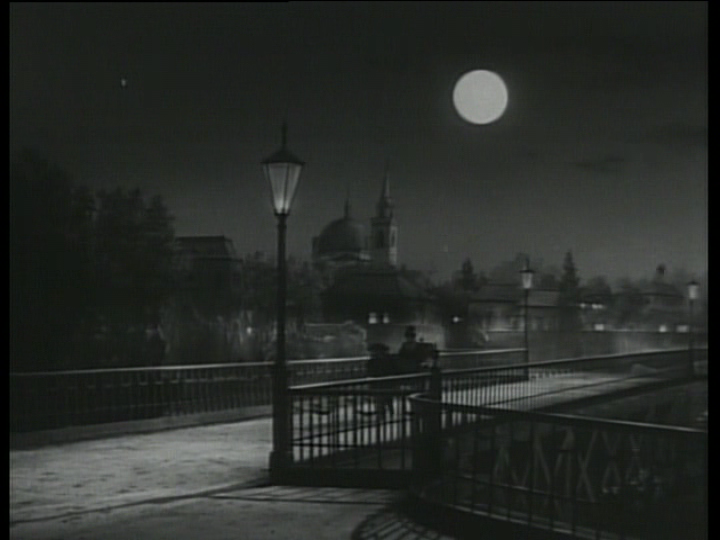
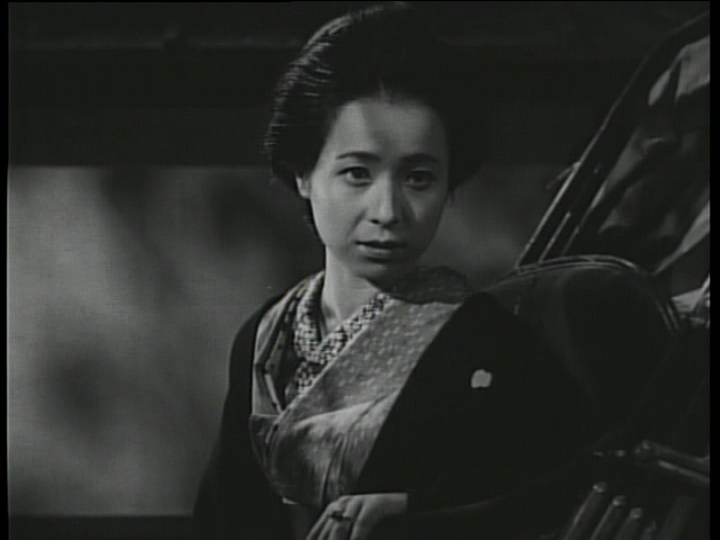
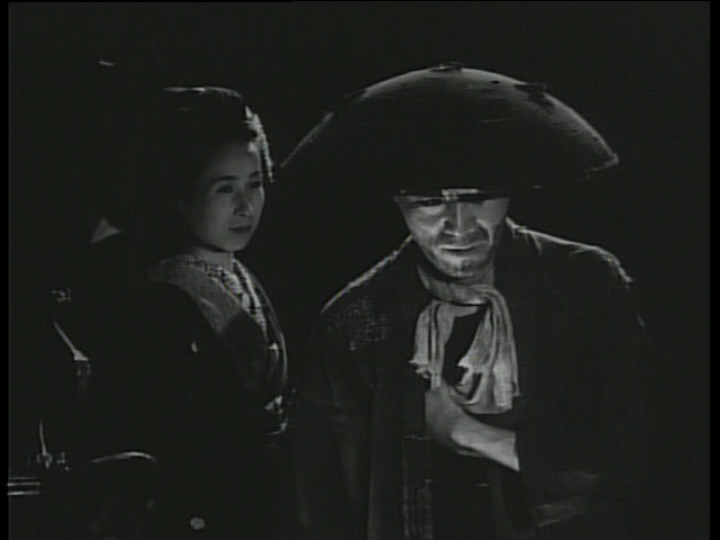
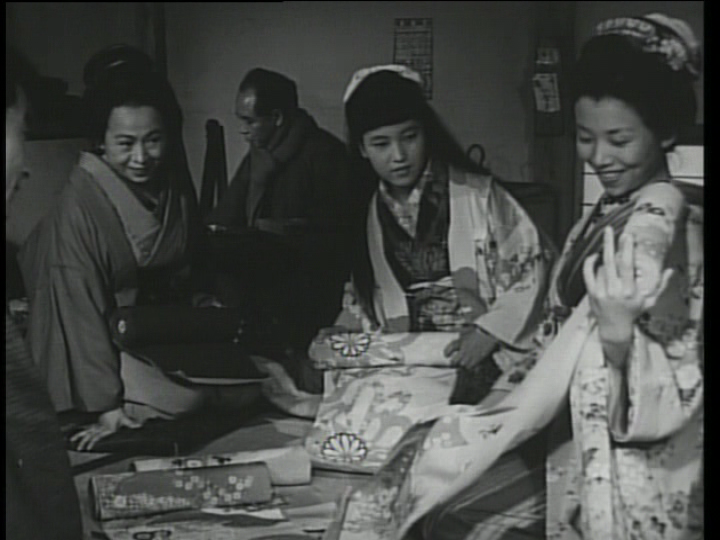
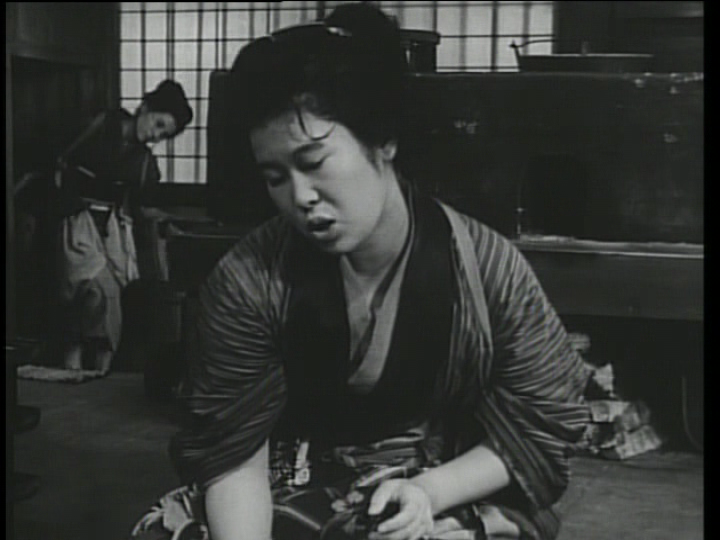
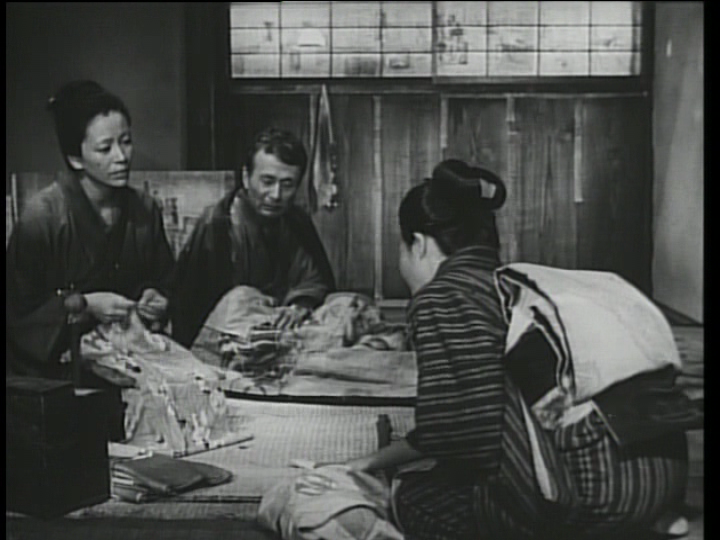
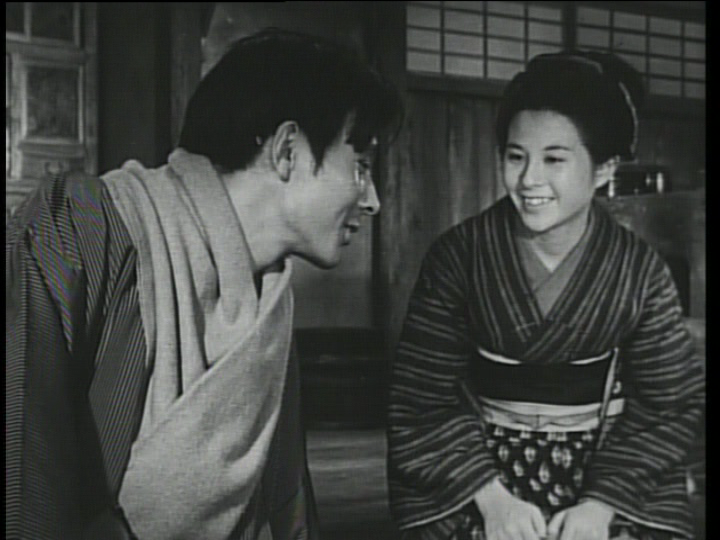
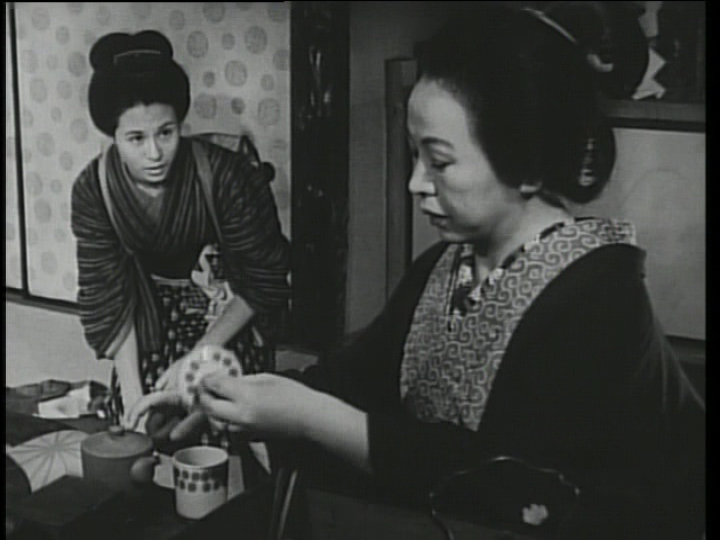
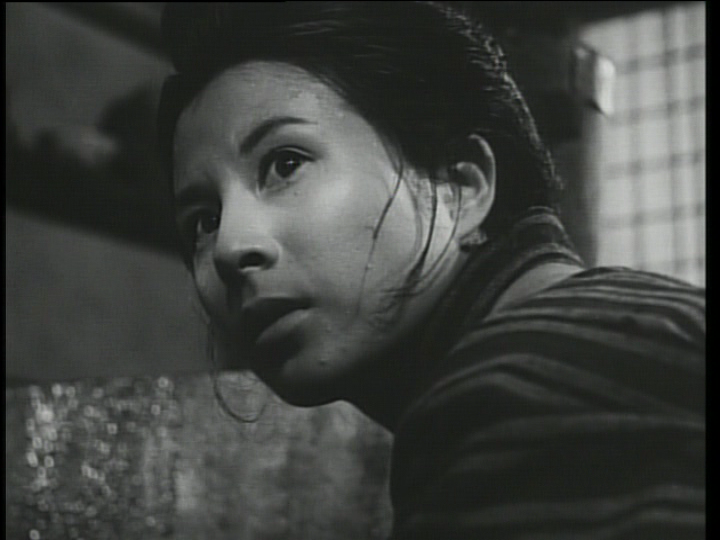
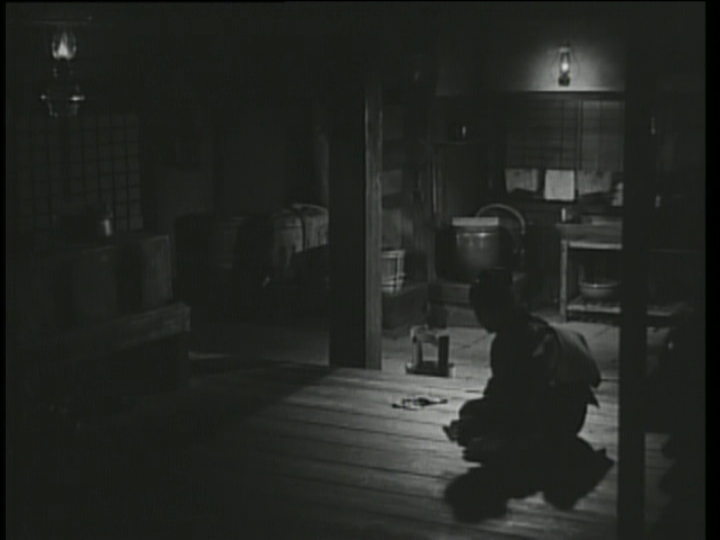
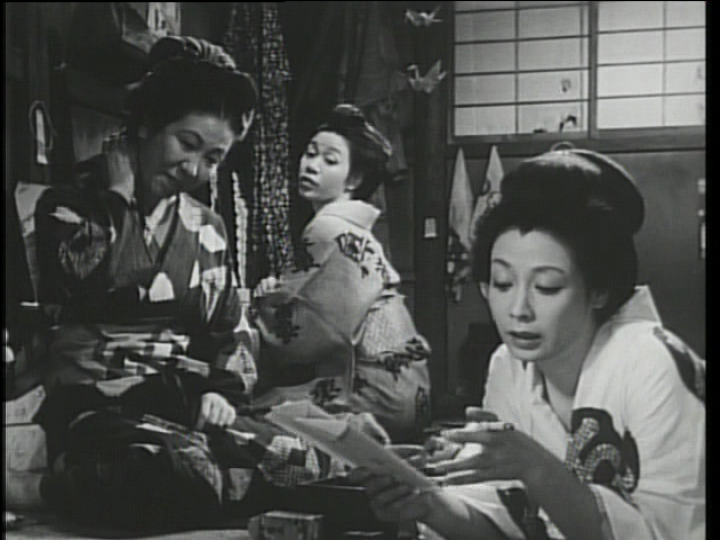
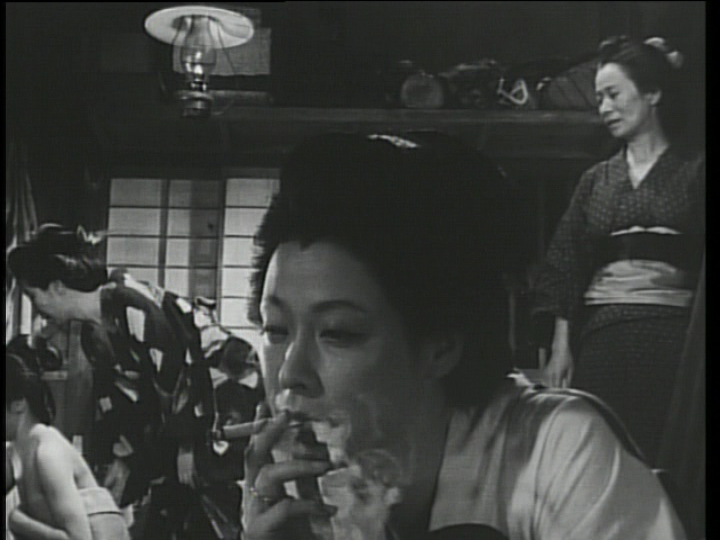
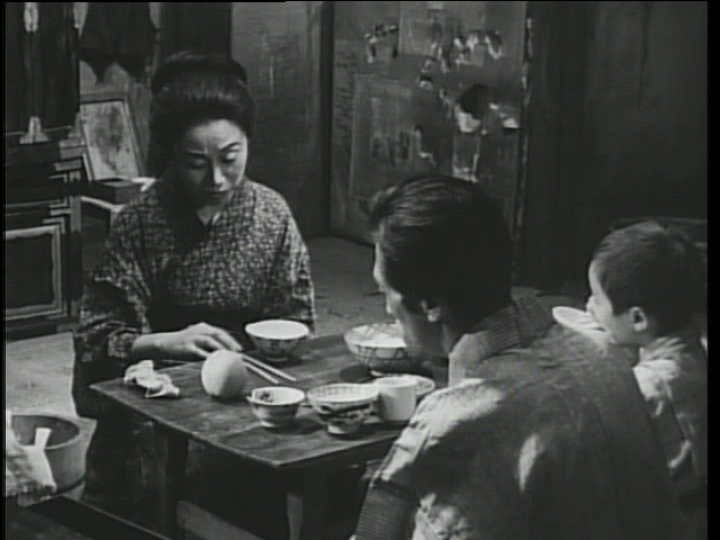
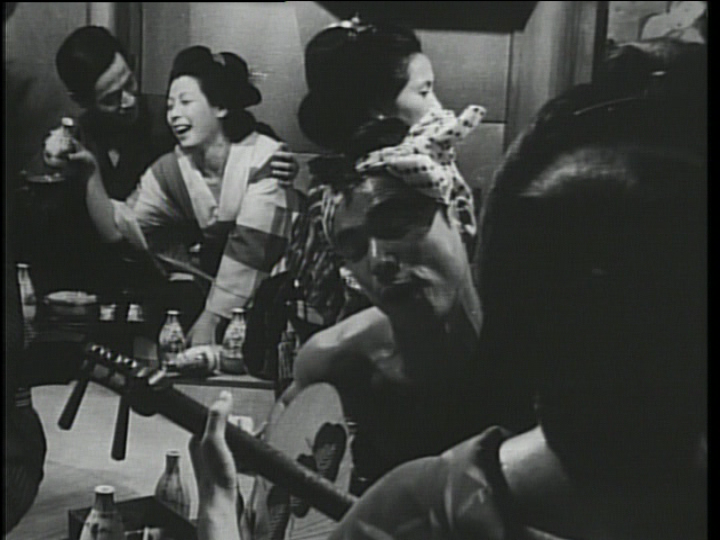
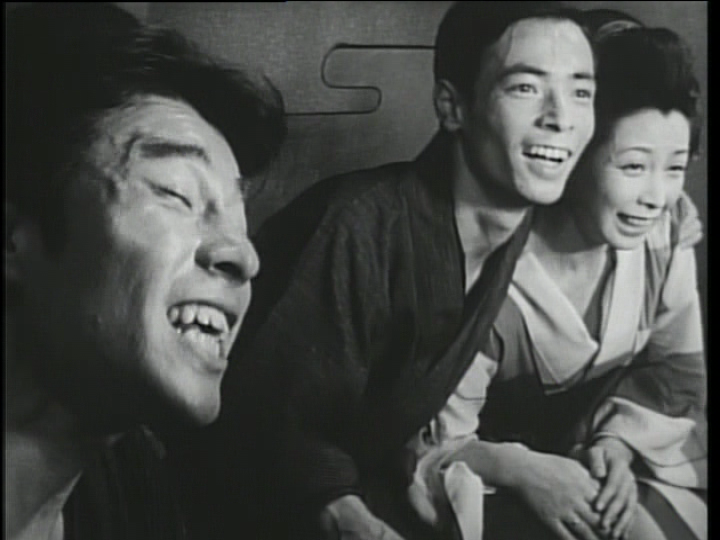
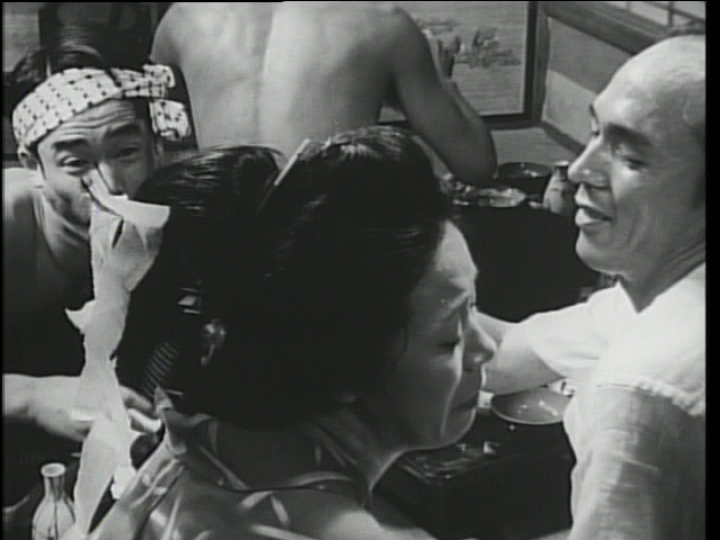
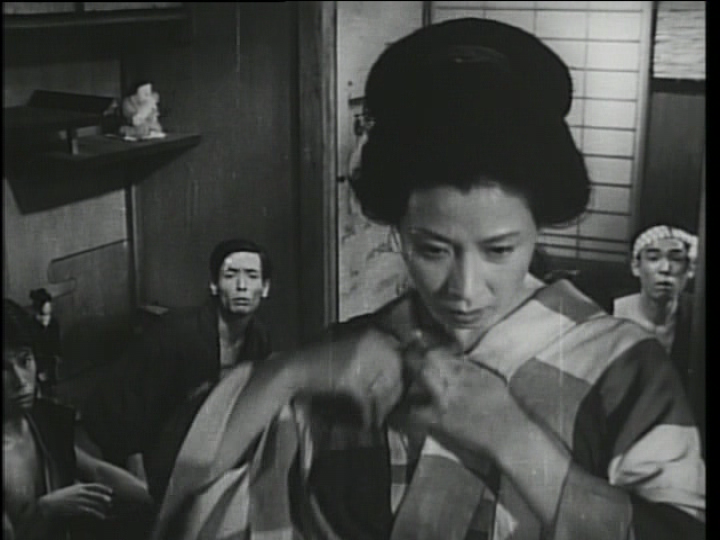
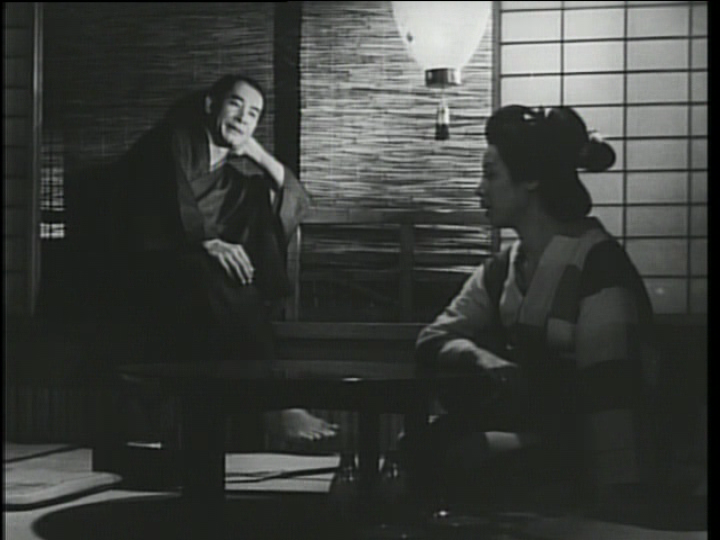
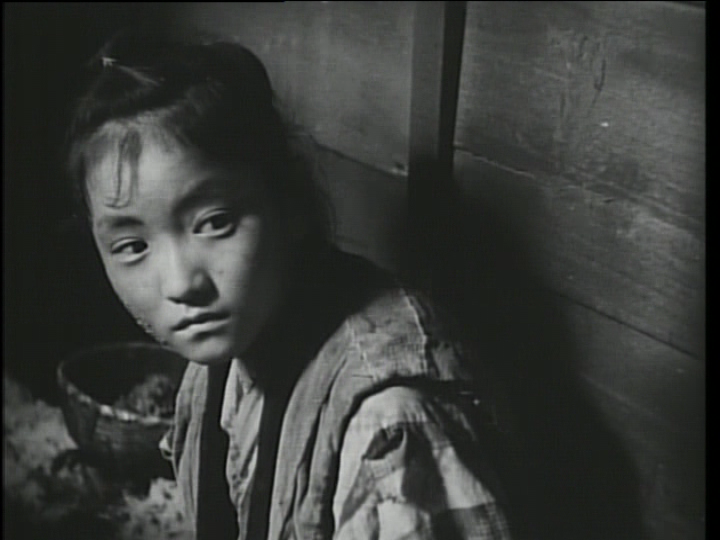
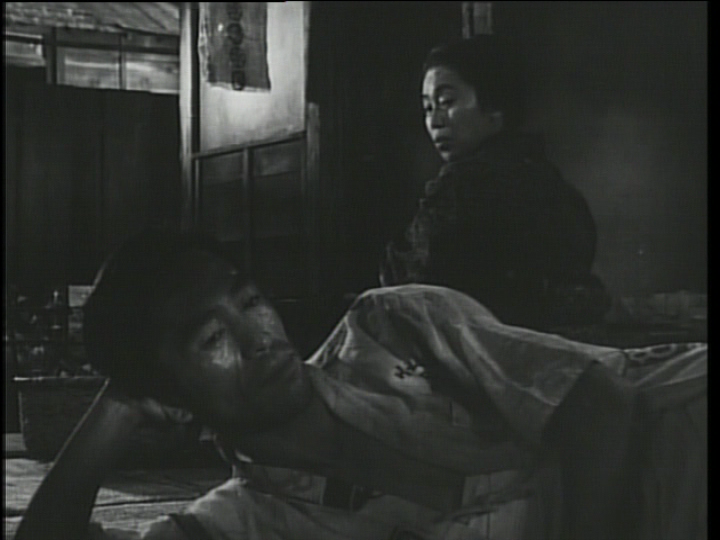
My comments (and links to screen shots) on the Japanese film of the year from 1953 ...
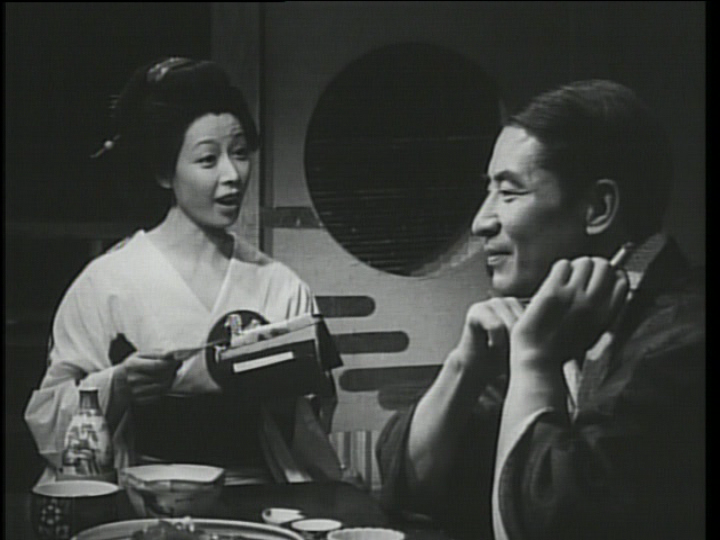
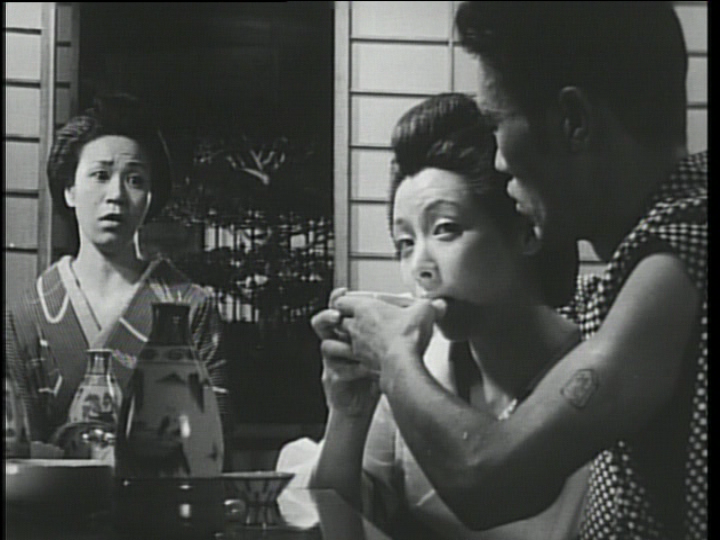
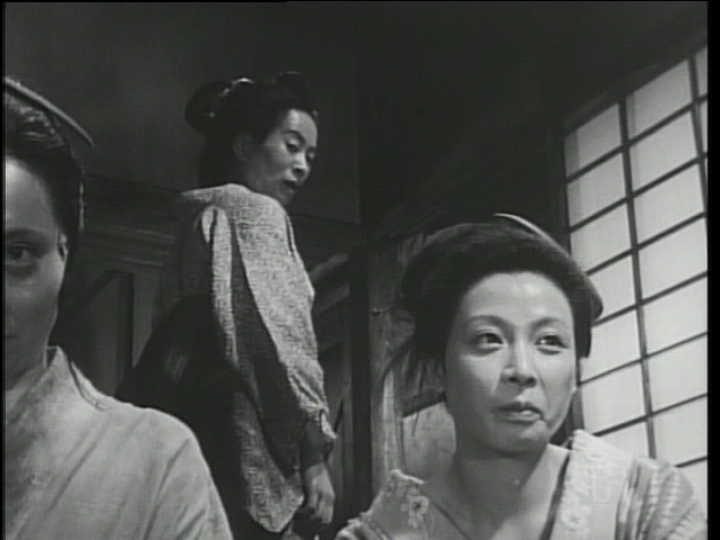
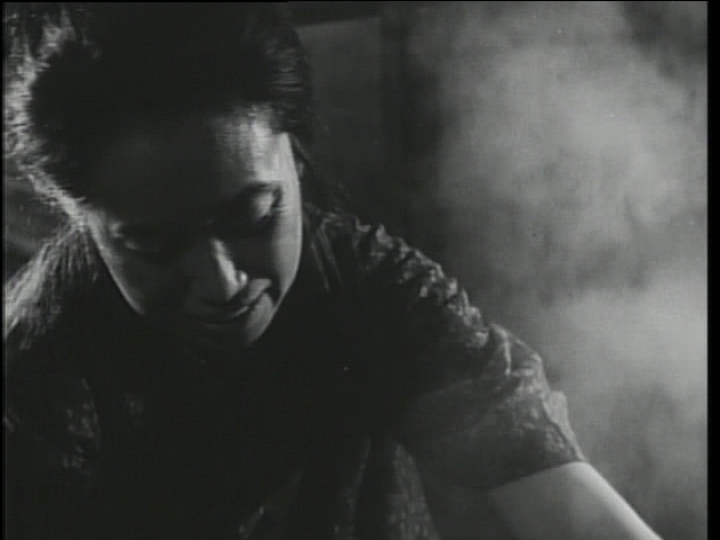
Nigorie / Muddy Water (Tadashi Imai, 1953)
A three part-film based on short stories about the difficult lot of women in the early Meiji era. This is the film that swept almost all the Japanese awards for the year of "Tokyo Story" and "Ugetsu" (among others great films) -- and lost to the fairly inconsequential "Gate of Hell" at the Cannes Festival. Imai and Kinoshita (and not Ozu, Naruse or Mizoguchi) were the most popular (and critically acclaimed) directors of the Japanese Golden Age of the 50s. While I find the contemporaneous adulation for Kinoshita beyond my understanding, I have found the few Imai films I've seen fairly impressive. And this is no exception.
This film has an interesting structure. Part 1 lasts around 20 minutes, part 2 around 40, and part 3 around 60. And part 1 is the most muted and slow moving -- while part 3 is the most noisy and (literally) in your face.
Part 1 tells of a young woman returning home for the first time after her arranged marriage. Parental pleasure at seeing her vanishes when it turns out she hates the marriage and wants to come home -- for good. Her mother responds with weepy lamentations and the father with sarcastic hostility. She decides to leave again -- and a rickshaw is called. As she rides (and then walks) with the rickshaw man, the two talk -- presumably exchanging the stories of their lives. They arrive at her destination -- and part. Unfortunately, this is unsubtitled -- and it will be a good while (if ever) before I figure out the details of the long concluding conversation.
http://i9.photobucket.com/albums/a59/mk ... orie01.png
http://i9.photobucket.com/albums/a59/mk ... orie02.png
http://i9.photobucket.com/albums/a59/mk ... orie03.png
Part 2 is a bit reminiscent of Cinderella (up to a point). Yoshiko Kuga is a servant in the house of a rich merchant family, consisting of an imperious mother, a mostly absent father, two very pretty (and even more spoiled) daughters, and a rather irresponsible (but handsome) college-going son. Not only is Kuga over-worked and poorly paid, but her employer is quite stingy -- with her. As it turns out, Kuga is supporting her own family with her meager earnings (her father can no longer work, due to grave illness). When her family's situation worsens, Kuga steals some money to give to her mother. I shan't say what happens next -- but will provide some screen shots:
http://i9.photobucket.com/albums/a59/mk ... orie04.png
http://i9.photobucket.com/albums/a59/mk ... orie05.png
http://i9.photobucket.com/albums/a59/mk ... orie06.png
http://i9.photobucket.com/albums/a59/mk ... orie07.png
http://i9.photobucket.com/albums/a59/mk ... orie08.png
http://i9.photobucket.com/albums/a59/mk ... orie09.png
http://i9.photobucket.com/albums/a59/mk ... orie10.png
http://i9.photobucket.com/albums/a59/mk ... orie11.png
http://i9.photobucket.com/albums/a59/mk ... orie12.png
Part 3 is centered around a Yoshiwara prostitute played by Chikage Awashima. She has a patron she is in love with (So Yamamura), but is also a big favorite with local gangsters. In addition, she has a creepy, stalker-ish ex-client -- now married and living in poverty with Haruko Sugimura and a young son. While the cinematography (by Shunichiro Nakao, Imai's regular cameraman -- who also shot Naruse's wonderful "Spring Awakens) is uniformly fine throughout this film -- it is most impressive in this last section. Examples:
http://i9.photobucket.com/albums/a59/mk ... orie13.png
http://i9.photobucket.com/albums/a59/mk ... orie14.png
http://i9.photobucket.com/albums/a59/mk ... orie15.png
http://i9.photobucket.com/albums/a59/mk ... orie16.png
http://i9.photobucket.com/albums/a59/mk ... orie17.png
http://i9.photobucket.com/albums/a59/mk ... orie18.png
http://i9.photobucket.com/albums/a59/mk ... orie19.png
http://i9.photobucket.com/albums/a59/mk ... orie20.png
http://i9.photobucket.com/albums/a59/mk ... orie21.png
http://i9.photobucket.com/albums/a59/mk ... orie22.png
http://i9.photobucket.com/albums/a59/mk ... orie23.png
http://i9.photobucket.com/albums/a59/mk ... orie24.png
http://i9.photobucket.com/albums/a59/mk ... orie25.png
http://i9.photobucket.com/albums/a59/mk ... orie26.png
http://i9.photobucket.com/albums/a59/mk ... orie27.png
http://i9.photobucket.com/albums/a59/mk ... orie28.png
http://i9.photobucket.com/albums/a59/mk ... orie29.png
http://i9.photobucket.com/albums/a59/mk ... orie30.png
Not quite as perfect as "Tokyo Story", perhaps -- but a more impressive film overall than "Ugetsu" (and at least as good as Mizoguchi's best 1953 film "Gion Festival Music" / "A Geisha").
Posted: Thu May 03, 2007 6:23 pm
by toiletduck!
A quick campaign for Wajda's Kanal -- I had bumped this one to the bottom of the 'unwatched' pile after being unimpressed by Ashes And Diamonds and A Generation, so I was in no way ready for the taut nightmare that awaited me. Wajda has tunneled (edit: Ha! Just noticed the pun...) through the human soul and reports back on the variety of ways that it can be crushed. "War is hell" no longer applies: this is hell, taking place underneath the war -- a relief in comparison.
-Toilet Dcuk
Posted: Thu May 03, 2007 6:43 pm
by colinr0380
toiletduck! wrote:A quick campaign for Wajda's Kanal -- I had bumped this one to the bottom of the 'unwatched' pile after being unimpressed by Ashes And Diamonds and A Generation, so I was in no way ready for the taut nightmare that awaited me. Wajda has tunneled through the human soul and reports back on the variety of ways that it can be crushed. "War is hell" no longer applies: this is hell, taking place underneath the war -- a relief in comparison.
I'd agree. It is my favourite of the trilogy too!
Posted: Fri May 04, 2007 2:56 am
by zedz
I third Kanal. Ashes and Diamonds always impresses me mightily when I see it, but it doesn't stay with me like Kanal does.
On Alexeyev and Parker, there's a fascinating documentary in the Norman McLaren box set of a pinscreen workshop conducted by Parker. It's only marginally related to McLaren (who's sitting in), but it's well worth tracking down for more insight into this most mysterious of animation techniques.
Not much 50s watching for me lately, or not much of great worth, anyway.
Duel at Silver Creek - OK western by Don Siegel starring Audie Murphy and Stephen McNally. McNally seems miscast in the lead role. After Winchester '73 it's really hard to believe him as a naive sheriff - he's oblivious to stuff we can see coming a mile off. Murphy's surprisingly effective in the more rewarding second lead. It's really only in the action sequences that Siegel comes alive.
Wreck of the Mary Deare - Still working my way through the Gary Cooper Signature Collection, which is starting to feel like some kind of penance. I love Cooper in some films, but find him appallingly wooden much of the time. In this film he tends to wait a second before delivering any line, and Charlton Heston is not the screen partner to bring out the best in him. The film is mildly interesting as a project Hitchcock wanted to film, but I can't imagine him making that much out of it. It's a maritime thriller that's way too prosaic and convoluted.
Posted: Fri May 04, 2007 3:29 pm
by tryavna
toiletduck! wrote:A quick campaign for Wajda's Kanal -- I had bumped this one to the bottom of the 'unwatched' pile after being unimpressed by Ashes And Diamonds and A Generation, so I was in no way ready for the taut nightmare that awaited me. Wajda has tunneled (edit: Ha! Just noticed the pun...) through the human soul and reports back on the variety of ways that it can be crushed. "War is hell" no longer applies: this is hell, taking place underneath the war -- a relief in comparison.
I can understand why many folks would prefer
Kanal over the other two. It's certainly more stylized and thus more cinematic, in a way. It's also totally unique.
I, however, actually prefer the simplicity and realism of
A Generation, despite the more predictable Communist propaganda. I've always liked Tadeusz Janczar, who plays Krone in that film (and Korab in
Kanal). It's probably blasphemy to suggest this, but I think that
Ashes and Diamonds would be a much better film if Janczar (who was Wajda's original choice), rather than Zbigniew Cybulski, had played Maciek in that film. Cybulski is charismatic, but his presence always takes me out of the film. Janczar's presence also would have given the "trilogy" more unity, in my opinion.
Posted: Fri May 04, 2007 6:59 pm
by Lemmy Caution
Jacques Cousteau's first feature film, The Silent World (1956) contains a world of impressive visuals and interesting encounters. But the main impression is what a bunch of assholes these guys are ... by today's standards.
Almost any sizable creature they come upon, they harass, torture, kill and occasionally eat. This includes dynamiting a lagoon in order to get an accurate count of what had been living there (prior to the explosion), running over and killing a baby whale, gaffing and then clubbing to death sharks ("to avenge the whale" -- although the Calypso crew killed the whale and the sharks are just making a meal out of the carcass), riding on giant sea turtles, sitting on land tortoises, etc.
It's a fascinating film to watch, both for what it shows about sea life and mankind. Especially interesting to see their state-of-the-art-for-the-time equipment, including essentially underwater jet-skis (with which they carelessly chew up the kelp). The camera work is impressively handled by a very young Louis Malle. Of course, this is all rather early in the development of the conservation and environmental movement. But the key point that I took away from the film is that man is never very aware of his shortcomings and always over-confident in his belief of how advanced his knowledge and ethics are.
Tokyo Story (Ozu). I watched this for the first time last week, and for me it didn't live up to its reputation. I only began watching Ozu films about 6 months back, and started with his early output. I was very impressed with There was A Father, along with What Did The Lady Forget? IMO, these were better films than TS, and had a greater impact. There's a good deal to admire about Tokyo Story, but the old couple seemed perhaps purposely under-developed, their children a little too broadly drawn, and the message too pointed (and driven home too blatantly in the final 20-30 minutes). More didactic than I prefer. And overlong.
Posted: Fri May 04, 2007 7:15 pm
by Michael Kerpan
With all due respect, Lemmy Caution...
You utterly misunderstood "Tokyo Story".
Posted: Sat May 05, 2007 5:16 pm
by Lemmy Caution
Michael Kerpan wrote:With all due respect, Lemmy Caution...
You utterly misunderstood "Tokyo Story".
Perhaps. Though it seems to me hard to misunderstand a film which made its points so clearly. Maybe "didactic" is too strong a word (though I still feel parts of the film were just that), but I thought the film made its points in a heavy-handed and blunt fashion thoughout.
For my taste, there was too sharp a contrast between the "bad" daughter and the "good" daughter-in-law. And yes, I think Ozu is indeed saying that familial piety and Confucian values are important. Then when the film shifts gears and emphasizes that things change and the past cannot be recaptured, we are twice told that the d-in-law is too dedicated and needs to move forward instead of living in the past. Too much piety and one risks missing out on her own life, and the new options available. Lesson: what appears "good" can be imprudent if overdone, and progress cannot be stopped.
Then towards the end the d-in-law addresses the "bad" behavior of the adult children. Their bad behavior is somewhat excusable and understandable given the changing times, the modernization, the increased pace of life, the focus on money, the devaluation of the countryside ways -- social factors that inevitably shape their world and are beyond their control. The problem I have with all this shading and tempering of "good and bad" behavior is how much we are
told these things. I especially didn't care for the d-in-law basically talking directly to the camera (via the naive foil of the youngest daughter who argues for greater respect to the family and tradition).
I think alot of my distance from the themes of cultural dislocation came from how talky and stagy these counter-moments were. I will admit that the extreme reserve, bowing and polite platitudes which the family engages in with their parents were frustrating for me personally and helped distance me from the proceedings. I don't think Ozu was trying to critique these old manners, but instead was trying to more-or-less accurately depict that era and its mores.
Even more however, my overall reaction stems from living in China for the past decade plus and witnessing an analogous period of change and development, the transition from traditional to modern values, from rural to city ways, the commercialization of the culture, a serious generation gap as older folks get left behind by the children they sacrificed so much for, etc. I can walk out of my door and see these things play out everyday. I'm aware of many similar stories, among my friends and acquaintances, more dramatic and poignant than
Tokyo Story.
Posted: Sat May 05, 2007 5:25 pm
by Michael Kerpan
Lemmy Caution wrote: I'm aware of many similar stories, among my friends and acquaintances, more dramatic and poignant than Tokyo Story.
Well, good for you.
It is your loss if you choose to dismiss the film as heavy-handed and didactic.
If you think the film's message was simplistic, I would submit that you simply weren't paying much attention. (Not saying you had to like or admire the film -- but your total blowing off of the film says a lot more about you than about the film).
Posted: Sat May 05, 2007 7:06 pm
by Lemmy Caution
Fwiw, I liked the visuals of the film, and thought the storytelling was simplistic, not the message. I've been watching quite a lot of Japanese films lately, and will have to think about how or whether that influenced my reaction. Will hopefully re-visit the film at some point -- probably after watching more Ozu -- and perhaps in a different frame of mind or with different expectations I might find more to admire in the film.
Posted: Sat May 05, 2007 7:51 pm
by Scharphedin2
Michael, thanks for the piece on Nigorie, and for providing all those wonderful stills. I know that if I ever have the opportunity to see this film, I will jump at the chance. It is clear from the stills that Imai composed his shots very beautifully, and the structure of the film sounds intriguing -- if I understand you correctly, there is no direct connection between the three stories or vignettes?
With respect to 24 Eyes, these discussions are difficult without going into a lot of specifics (that could also "ruin" the film for people, who have not yet seen it). It is also difficult for me to make any case for Kinoshita as a filmmaker, since this is the first and only film of his that I have been able to see. Based only on 24 Eyes, I would tend to argue that Kinoshita's style fits the story, he is telling. It is correct that the cinematic language is quite toned down; the beauty is in the landscapes that the characters move in, and indeed in the landscapes of the characters' faces. I think that a more flamboyant approach would have put Kinoshita in danger of appearing to manipulate his audience. I still think that a lot of care did go into the visuals (almost the way that I am sure Ozu put a lot of care into achieving the minimal cinematic language that helps to make his films so powerful). One scene that comes to mind is the one, where Takemine has taken her class to the city, and she comes across the girl that left the town earlier in the film, now working as a tea hostess in the city. Takemine is basically denied even a short conversation with the girl, and finally has to leave in order to bring her class of children to the ferry. As the ferry pulls out and begins its trek back to the town, we see the girl, filmed from behind as she comes down to the quay, and, clearly shaken walks along in the direction of the moving vessel, the camera is tracking along with her, until the ferry loses her and disappears out of the frame. It is not easy to bring across the impact of the shot, but to me, the whole life's story of that girl was captured in that one shot, and it was one of the most moving scenes for me in the film. (in fact, maybe you could clear up a question for me that I am often uncertain about in Japanese films -- where does the line go between hostess and prostitute in Japan? Would you say that it is inferred that the girl in this film is being offered for sale to the customers of the tea bar?)
As to the sentimentality and manipulation -- could the latter not be said of most films that deal with tragedies on the scale of this film? I did not feel that I was being manipulated; in fact, I think there were several moments that could easily have become manipulative, but Kinoshita played these scenes very down-to-earth (I thought). I am thinking here mainly of the tragedies that befall Takemine's family and her boy students in the latter third of the film.
As so often, the impact of a given film on any individual does not rest upon the merits of the film alone, but also on the life (and viewing) experience of the individual viewing it.
Posted: Sat May 05, 2007 10:13 pm
by GringoTex
Michael Kerpan wrote: (Not saying you had to like or admire the film -- but your total blowing off of the film says a lot more about you than about the film).
Ah, the classic "You don't like my favorite film so there must be something wrong with you" rebuttal. He didn't totally blow off the film. He gave a very reasoned account about his problems with the film, many of which I share. Ozu himself thought the film was too heavy handed.
Posted: Sat May 05, 2007 11:29 pm
by sevenarts
Michael Kerpan wrote:If you think the film's message was simplistic, I would submit that you simply weren't paying much attention. (Not saying you had to like or admire the film -- but your total blowing off of the film says a lot more about you than about the film).
I love
Tokyo Story, but this is kind of uncalled for. He didn't care for the film much, and though I don't agree with his assessments or the reasons he gave, he did present his reasons.
For my part, I'd rank quite a few 50s Ozus higher than
Tokyo Story --
Equinox Flower,
Early Summer, and
Good Morning, certainly.
Posted: Sat May 05, 2007 11:45 pm
by Michael Kerpan
The line between hostess and prostitute. This is answered, I think, in the voiceover introduction to Naruse's "Woman Ascending". ;~}
The job of hostess is NOT supposed to involve anything more than wheedling guys into spending more money than they should at their employer's bar. They are only "for sale" in that they are expected to put up with a considerable degree of drunken advances, without getting to distraught. The job, however, makes it easy to arrange for extracurricular activities -- especially if one is desperately in need of more money than the job of hostess supplies.
My dislike of Kinoshita was cumulative -- the more I saw, the less I was impressed. This has made me less tolerant of "24 Eyes" than I was initially. Even on first watching, however, the final tragedy for Takamine is what really began to undermine the film for me -- it seemed utterly gratuitous. (I disliked the same stunt when it was pulled in Vidor's "Crowd". In any event, I can still see that "24 Eyes" has a number of nice moments, but I just don't fully appreciate them anymore. ;~{
The same is true of "Carmen Comes Home" -- which I found amusing the first time through, but only fitully amusing on revisitation.
Naruse's and Ozu's and Mizoguchi's films also deal with tragedy and hardship -- but don't push the watchers around so blatantly. And Yoji Yamada, who is not averse to tugging heart strings, is a lot more sophisticated (outside the Tora-san series).
"Nigorie" is simply composed of three stories by the same writer about the hardships faced by women in the Meiji era. The same author wrote the book on which Gosho's "Growing Up" was based (which also has the same general subject -- I'll probably watch this next week). I really want to see more Imai -- which isn't going to be easy to do.
Posted: Sat May 05, 2007 11:50 pm
by Michael Kerpan
Lemmy Caution wrote:Fwiw, I liked the visuals of the film, and thought the storytelling was simplistic, not the message. I've been watching quite a lot of Japanese films lately, and will have to think about how or whether that influenced my reaction. Will hopefully re-visit the film at some point -- probably after watching more Ozu -- and perhaps in a different frame of mind or with different expectations I might find more to admire in the film.
All I can say is that while I
was quite moved when I first saw this -- I didn't have a clue just how rich and complex it would grow -- with more careful watching and greater familiarity.
And I have to confess that the first few Naruse films I saw didn't register properly (I liked them -- but only moderately). Now I know that I didn't see about 80 percent of what was actually going on -- underneath the surface.
And some film maker's work (no matter how good) doesn't (and probably never will) really move me -- just because of my disposition and idiosyncratic tastes (viz. Renoir). (For the record -- that's what I was referring to in saying that the film's lack of effect says more about you than the film -- and I hold the same to be true of myself when I prove unreceptive to films other people with good taste consider wonderful).
Posted: Sat May 05, 2007 11:58 pm
by Michael Kerpan
sevenarts wrote:I love Tokyo Story, but this is kind of uncalled for. He didn't care for the film much, and though I don't agree with his assessments or the reasons he gave, he did present his reasons.
For my part, I'd rank quite a few 50s Ozus higher than Tokyo Story -- Equinox Flower, Early Summer, and Good Morning, certainly.
The "meaning" of my remark is explained above.
As much as I love "Equinox Flower" and "Good Morning", I don't see them as being on the same level as "Tokyo Story". "Early Summer", on the other, hand, while less celebrated overall, does strike me as "just as good". FWIW -- "Equinox Flower" is the late Ozu film that rose the most in my affection -- after my first encounter. I like to blame the New Yorker video -- with its ugly color and equally ugly subtitles -- for my initial (comparative) indifference. I was stunned when I saw the Japanese DVD -- it didn't look like the same film.
Posted: Sun May 06, 2007 4:11 pm
by tryavna
Just out of curiosity, Michael, as we're talking about 1950s Japanese cinema, what are your thoughts on Hiroshi Inagaki?
I've only seen about five or six of his films, but I found myself deeply disappointed with his late Samurai Banners when I saw it recently -- only to realize that my disappointment springs largely from the fact that I quite like his 1950s films (the so-called Samurai Trilogy and his adaptation of "Cyrano"). And I found myself wondering afterwards what someone like yourself, who is more well-versed in classic Japanese cinema, thought of his career as a whole.
Posted: Sun May 06, 2007 5:13 pm
by Michael Kerpan
tryavna wrote:Just out of curiosity, Michael, as we're talking about 1950s Japanese cinema, what are your thoughts on Hiroshi Inagaki?.
Curiously enough -- I have yet to see anything by Inagaki. I am much more interested in "home dramas" than in samurai films (or war films or the like) -- so I generally only watch these kinds of films when I am particularly interested in the director already. While Inagaki made lots of home dramas, none of these are readily available. Even his famous "Rickshaw Man" only exists on DVD in Chinese-subbed form (assuming it is still in print). I will probably hold off on Inagaki until I finally get to see "Rickshaw Man" -- which I really want to see due to the highly praised performances of Mifune and Takamine in this.
Sorry to be of no use whatsoever. ;~{
Posted: Sun May 06, 2007 5:26 pm
by tryavna
I see. Thanks anyway, Michael.
I do, however, highly recommend Samurai Saga, his take on the Cyrano story. Although set in the past, it is most decidedly not a typical samurai film. You might like it, especially if you know the story already.