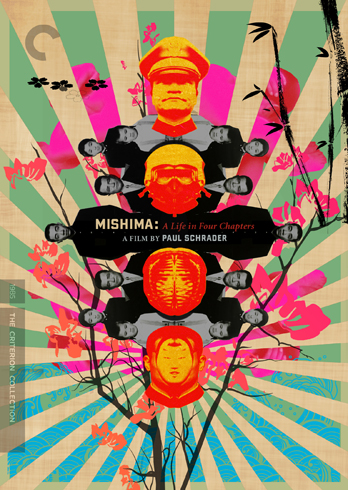
Mishima: A Life in Four Chapters
BUY AT:


See more details, packaging, or compare
Synopsis
Paul Schrader’s visually stunning, collagelike portrait of acclaimed Japanese author and playwright Yukio Mishima (played by Ken Ogata) investigates the inner turmoil and contradictions of a man who attempted an impossible harmony between self, art, and society. Taking place on Mishima’s last day, when he famously committed public seppuku, the film is punctuated by extended flashbacks to the writer’s life as well as by gloriously stylized evocations of his fictional works. With its rich cinematography by John Bailey, exquisite sets and costumes by Eiko Ishioka, and unforgettable, highly influential score by Philip Glass, Mishima: A Life in Four Chapters is a tribute to its subject and a bold, investigative work of art in its own right.
Picture 9/10
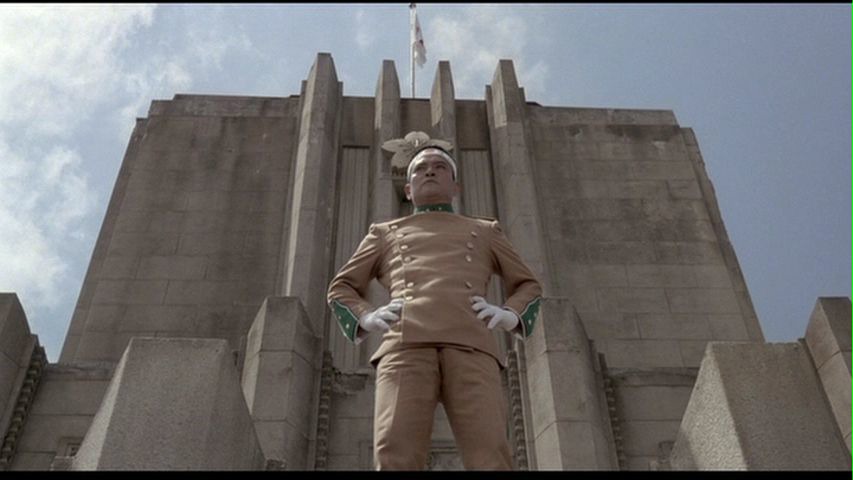
Criterion presents Paul Schrader’s Mishima: A Life in Four Chapters in the aspect ratio of 1.85:1 and enhanced for widescreen televisions on the first dual-layered disc of a two-disc set. Previously the film was released on DVD by Warner Bros. I have unfortunately not seen the film on that DVD so cannot compare directly to that release but the image presented on this release is very strong.
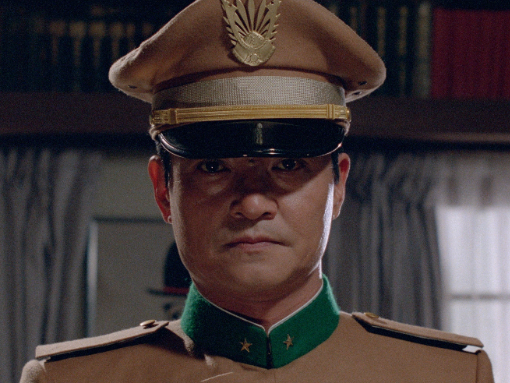
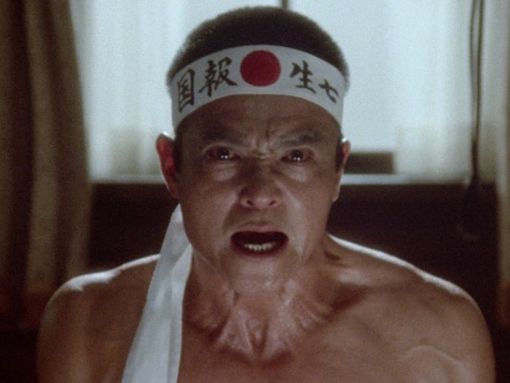
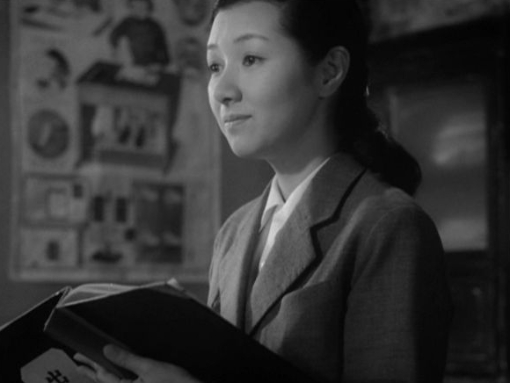
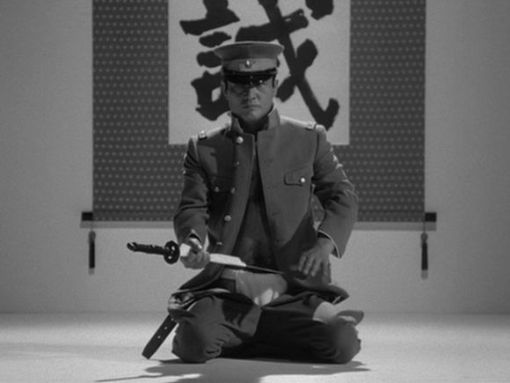
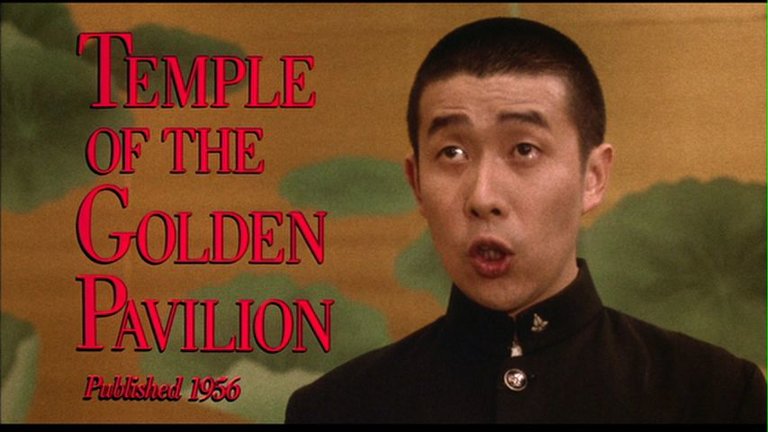
The print is in excellent shape. Print flaws are about non-existent, sharpness and detail is quite excellent, though some sequences look a bit softer because of style choices in the film. Colours also vary throughout the film because of the stylistic choices on the part of the filmmakers. The sequences recounting Mishima’s final day have a documentary look to them, presenting muted, almost drab colours. The sequences adapting Mishima’s work have much brighter colours, though a tad over-saturated (intended.) And the black and white sequences present strong gray and black levels with perfect contrast.
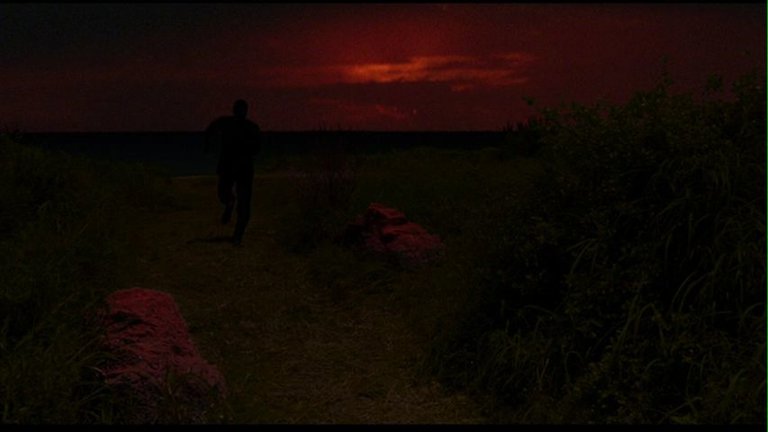
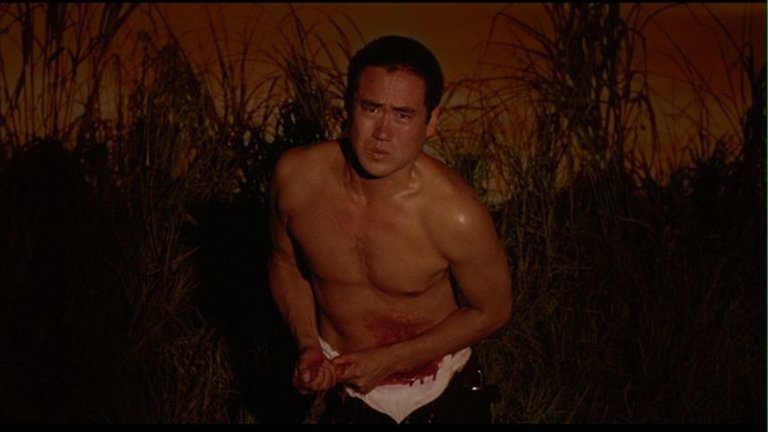
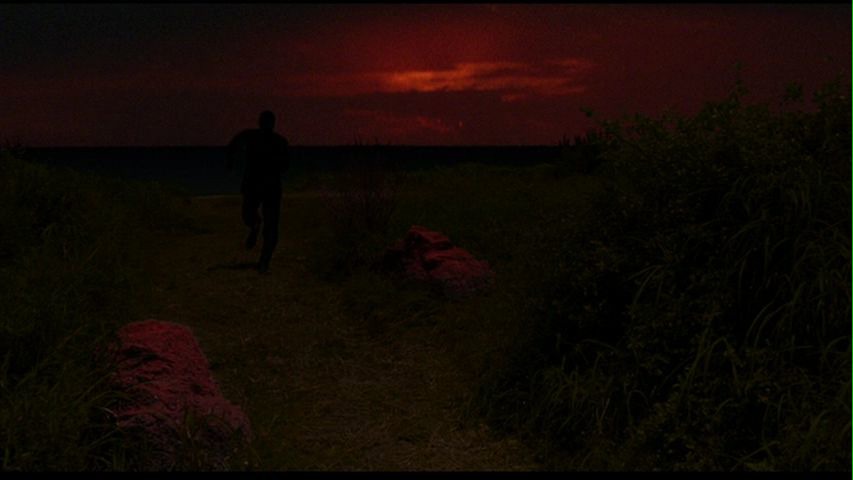
Criterion has also made some digital changes to a few sequences in the film. As pointed out in the commentary (though not mentioned elsewhere on the disc) Schrader was disappointed with the final portion of the “Runaway Horses” sequence in the film as well as one of the film’s final shots. Shooting day-for-night he was always annoyed with shots where the sky was fairly blue. For this release Criterion has altered the skies to be red instead of blue according to Schrader’s wishes. I don’t remember how the sequence originally looked as it has been a while since I’ve seen the film (and on VHS) and will admit I didn’t even notice this the first time around, but it was pointed out to me in our forum and then by the commentary track. The first two captures below show a couple of the changes. For the purists this may be disappointing, but it does work for the scene. I rate it somewhere around the dove sequence on the Final Cut of Blade Runner, a correction to an unavoidable mistake at the time that was probably just eating at the director. It looks good and doesn’t call attention to itself. This version of the film also includes a previously deleted sequence starring Ozu regular Chishu Ryu.
All in all, a solid transfer that I was more than happy with.
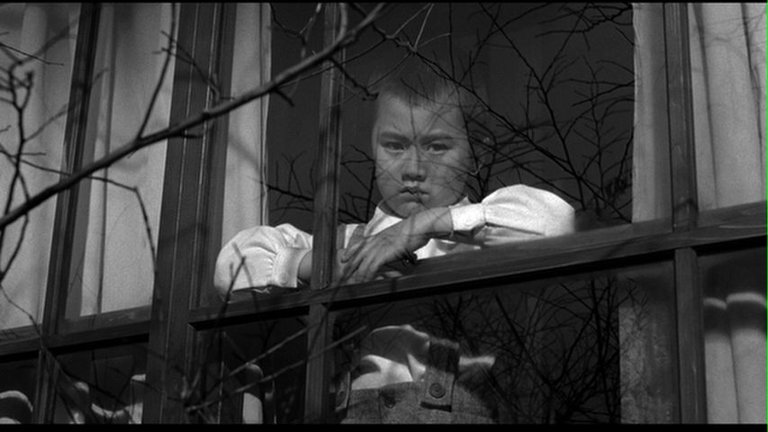
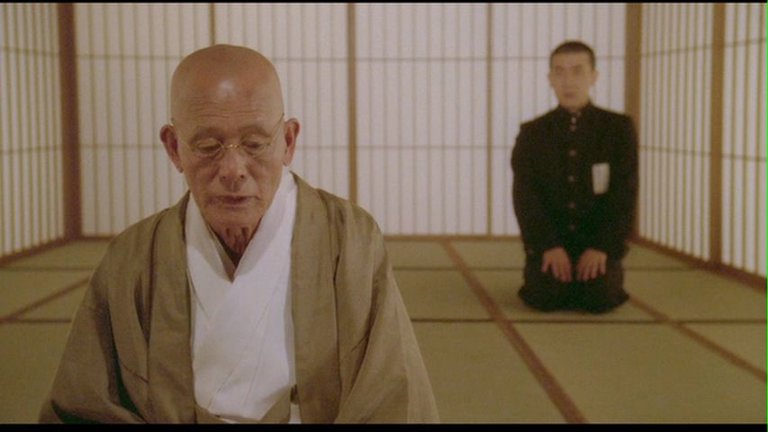
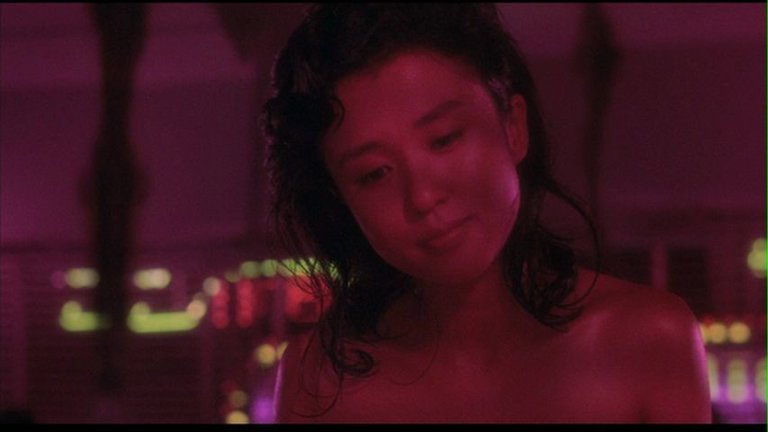
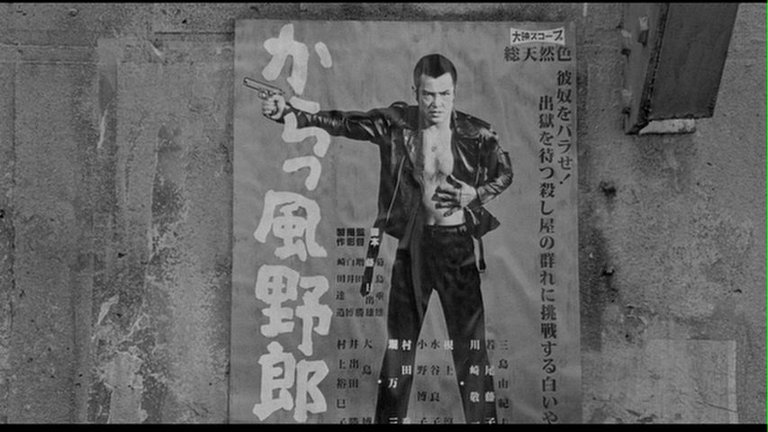
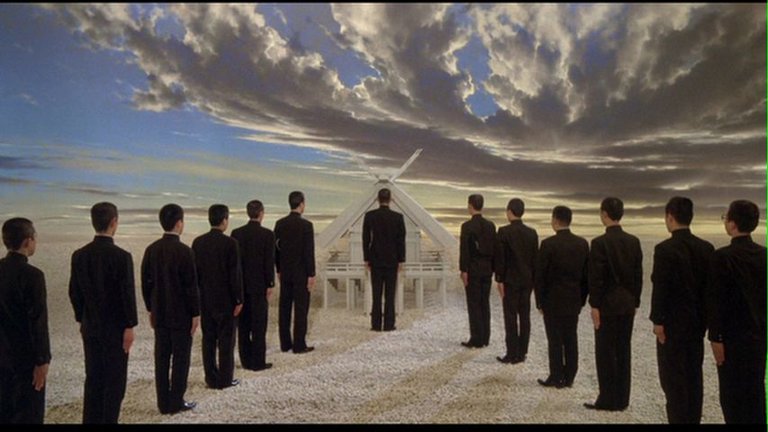
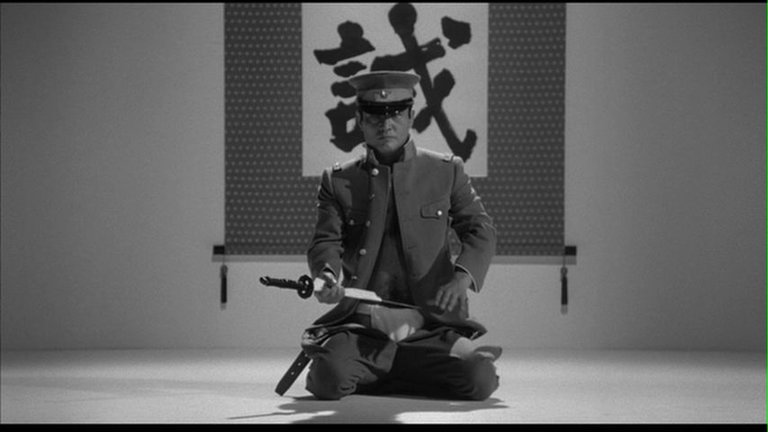
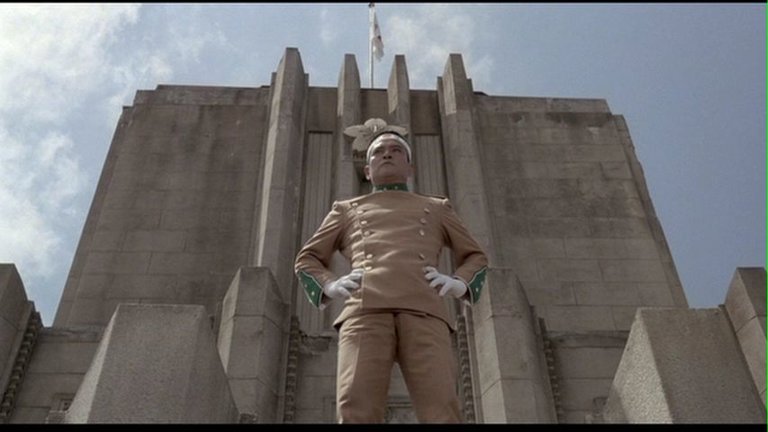
Mishima: A Life in Four Chapters - Screen Captures
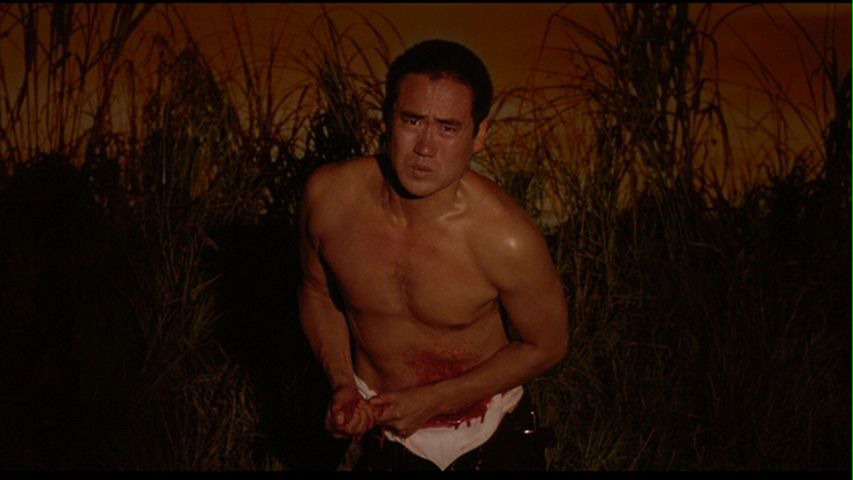
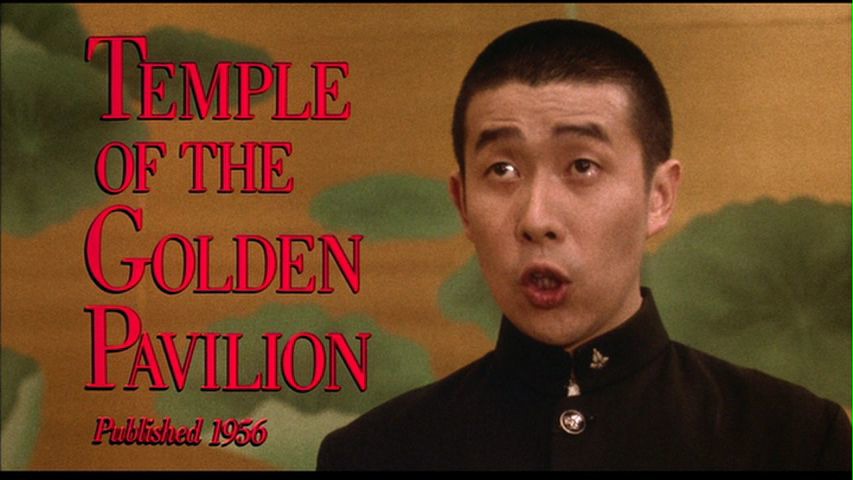
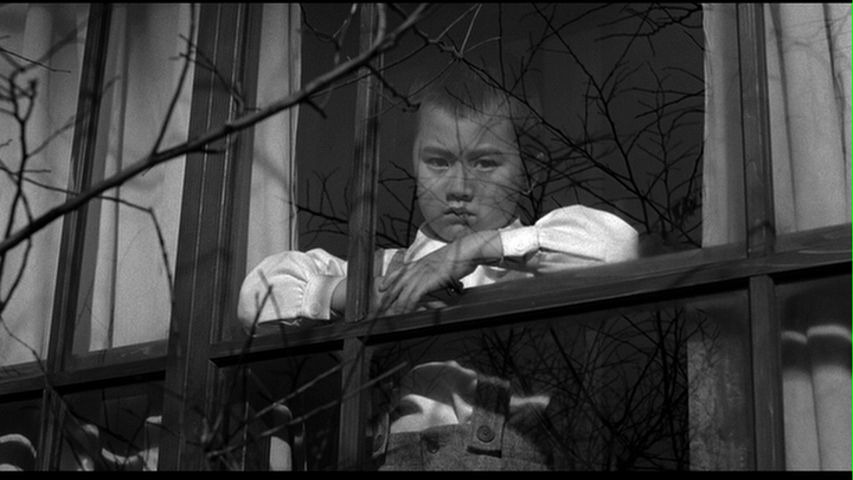
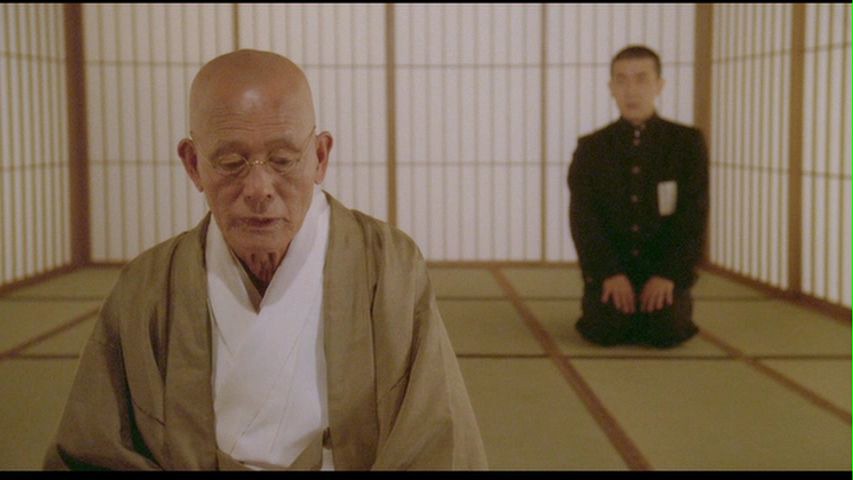
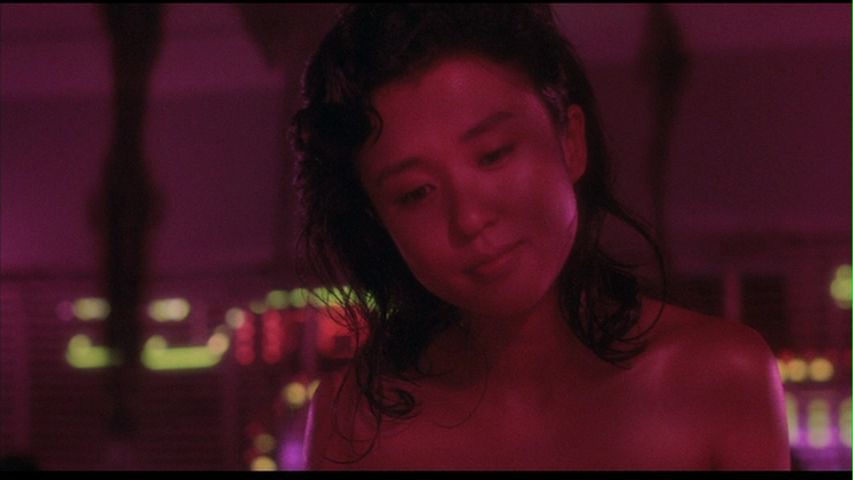
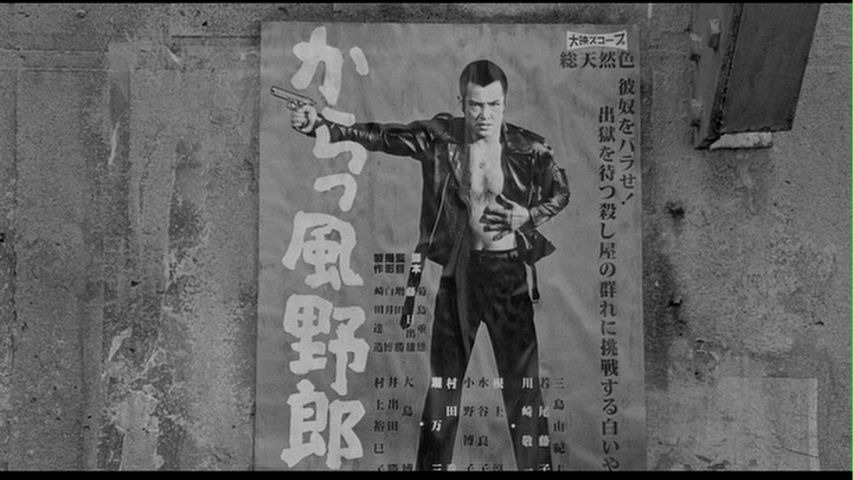
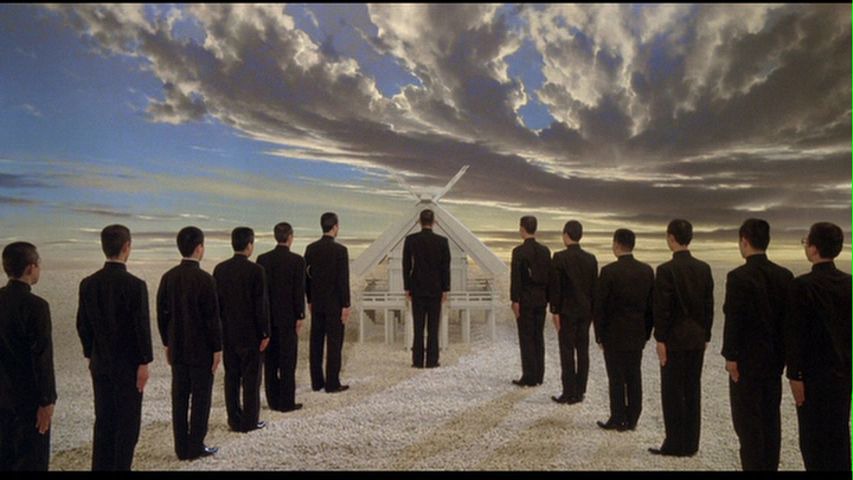
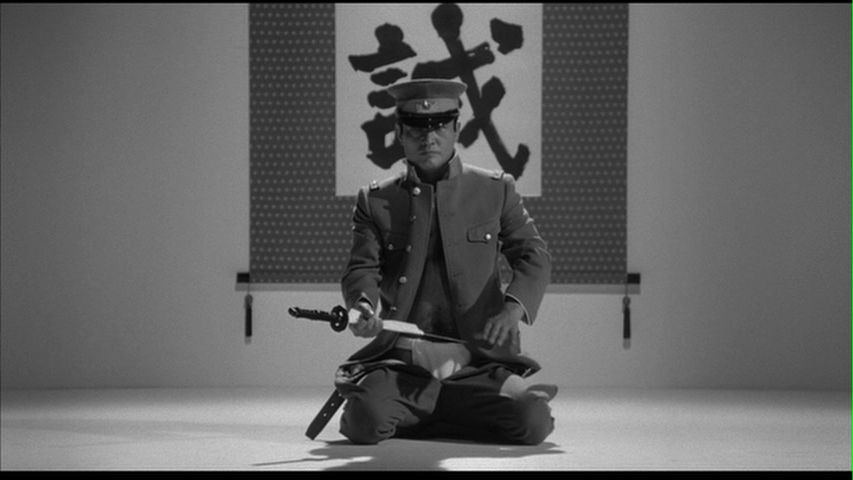
Audio 8/10
Not counting a “Test Track” Criterion has included two 2.0 Dolby Surround tracks (it has not been upgraded to 5.1 as previously rumoured.) Both versions present the main portion of the film in Japanese with subtitles, but one track presents the voice-over narration in Japanese, read by Ken Ogata, with subtitles, and the other is the original English voice-over narration track read by Roy Scheider without subtitles, the first time it has been presented on DVD (according to the menu description.) An interesting thing is that I could not switch between tracks using the audio button on my remote. Instead I had to go switch through the menu. I assume this has to do with the subtitles so that the correct ones show up, but was annoying for me when I was trying to compare the tracks and kept going back and forth, back and forth (though I guess most people won’t do this so it’s not a real issue.)
I’m a tad disappointed to report (specifically to the people who were looking forward to get the Scheider track back) that there is a bit of a difference. Both tracks do sound good, but the Japanese track sounds much better, the Scheider track not getting the same love during remastering. It’s most obvious in the score. Just comparing the opening titles alone showed very distinct differences. The score sounds good on the Scheider track, but the Japanese track is more crisp, has more detail, and the surrounds are a little louder. Bass is also deeper and there are some more subtle bass effects throughout. The dialogue in both is sharp and clear, though I think Scheider’s voice sounds louder than Ogata’s. The Scheider track also has some faint back ground noise. That’s not to say the Scheider track is bad, because it’s not, but the Japanese track is better and is actually one of the more impressive 2.0 Dolby Surround tracks I’ve heard.
(As a note: The previous Warner DVD did not contain the Scheider track, instead it contained an alternate English narration track as well as the Ogata track. Schrader does mention the Warner DVD briefly in the commentary but doesn’t touch on the alternate English narration on that disc, only talking about the Ogata track. By the sounds of it he wasn’t happy with the Warner DVD, saying it was a mess, and this is probably why we’re getting a Criterion disc.)
Extras 10/10
Criterion has gone all out with this release in the realm of supplements. This is probably one of the more interesting and informative group of supplements I’ve come across in a while.
As mentioned before in the video portion the version of the film on here contains an extra scene and a few small digital alterations to the sky in a couple of scenes (turning blue skies to red skies,) making this Schrader’s “director’s cut”. Again, while I’m sure purists might object these bits don’t call attention upon themselves and I feel they work for the film.
On the first disc there are a few supplements. First up is an audio commentary recorded by Paul Schrader and producer Alan Poul. According to the description the track was recorded in 2006. Another odd thing is that the description doesn’t include the words “recorded exclusively for The Criterion Collection” suggesting, possibly, the track could be used elsewhere, though Schrader throws Criterion’s name all around within the track (during one moment, when pointing out he more or less lifted a bit from Nicolas Roeg’s Performance he not-so-subtly suggesting that Criterion should release that film.) This is actually a very good track, though it threw me off at first. During the “Runaway Horses” sequence and the final few shots he mentions that he wants Criterion to fix the blue skies. I can only guess they’re watching the original version of the film (possibly the Warner DVD) because when he’s talking about the blue skies, the skies are in fact red in the version we’re watching, so these changes weren’t done yet at the time the commentary was recorded.
Other than that, the track is a pretty solid filmmaker commentary. It was recorded a couple weeks after Paul’s brother, Leonard, had died, and the reason this film was made had a big part to do with his brother, who had fled to Japan and became fascinated with Mishima. The two go over every aspect of the production, from the problems on getting the rights to issues they ran into with people who objected to a bunch of Americans making this movie. They get into the styles of the film, talked about the film (even mentioning that Philip Glass actually owns the score and still sells it for use in other films and promos, Truman Show being one of the films mentioned if I recall correctly.) Schrader also touches on his thoughts about the man, the themes in the film, and also talks about Mishima’s writings. Poul also throws in a lot, the track seeming to be spread evenly between the two. What I found interesting is Poul seems to remember things more clearly than Schrader. Schrader forgets some things (even the titles of the film’s chapters) but Poul is there to cover. Schrader also mentions why he originally had the English voice-over with Scheider: His fear was that there would be too many subtitles and was nervous about that. He then released the Japanese Ogata narration on the Warner DVD. He doesn’t really say why but I’m guessing he prefers that track but wasn’t sure originally if it would work. Maybe not as “insightful” on the film itself as I would have hoped but it’s a good track and Schrader seems especially excited that Criterion is working on the DVD. Over two years later and it’s finally here.
The first disc also contains an “Alternate English Track” or “Test Track.” According to the description this was a track recorded for editing purposes and then was used by Scheider as a guide for when he did his voice-over. I didn’t listen to the whole track as the voice was very drab, almost bored, and the dialogue sounded the same as Scheider’s in the places I compared. It’s an interesting extra, though not necessary. At first I assumed that maybe it could be the English track from the Warner DVD, but after checking a review on DVD Times for the Warner DVD, which compares that English track on that DVD with the original Scheider track on the VHS, this is obviously not the case.
Closing off this disc is the original Warner Bros. trailer for the film.
Now we move on to the next dual-layer disc loaded with a lot of information, almost 3-hours worth.
First up is a 44-minute documentary called “Making Mishima”. This is unfortunately a “talking head” doc with cinematographer John Bailey, composer Philip Glass, and production designer Eiko Ishioka. It’s presented in anamorphic widescreen and is indexed with 8 chapter stops. Despite it being a “talking head” documentary it’s still quite interesting and informative. Each participant goes over the role in the film, talking about the styles and how they presented them. We get still photographs thrown up every once in a while, as well as clips from the film, and even a short behind-the-scenes bit. It seems that the heart of the production was Eiko, whose designs and sets inspired both Bailey in how he shot and lit the film, and also inspired Glass with his score. Eiko, who actually didn’t particularly care for Mishima the man, talks about working with Schrader in getting a theatrical feel to the film, and designing the set pieces for the story sequences (the second sequence being one she designed in “bad taste” and was surprised people liked it so much.) Bailey discusses how he used different film stock and played with the lighting to get the various looks of the film (even considering the use of video for the story sequences,) also touching on how they really tried not to give the film a Japanese look that made it harder to work with the mostly Japanese crew. Glass goes over how he wrote the score to represent the character and how Paul was blown away by it. They also all touch on making the film in Japan which was met with some hostility (interestingly most exterior shots for the film were shot first as Schrader feared demonstrations objecting to the film, making it harder to shoot.) An interesting doc well worth a look.
Next up is the 26-minute supplement entitled “Producing Mishima”. This segment, also presented in anamorphic widescreen, has producers Tom Luddy and Mata Yamamoto discussing the film. The piece begins with some footage of Francis Ford Coppola discussing the film briefly at a press conference back in 1984 and then moves to the two producers. They both talk about how they got into the production and some of the hurdles they had to get over to get the film made, including Mishima’s widow, who is brought up many more times in the supplements on this release, including the Schrader/Poul commentary. They got help from using Coppola’s name as the Japanese respected the producer/director. They also talk about issues with funding and how they ended up pulling in George Lucas to help, who in turn went to Warner Bros. Also touched upon is the controversy that surrounded the film, bringing up death threats they received from the ultra-right wing groups, and then the distribution issues in Japan, where the film has still not been shown. Also another interesting doc on the film.
Following this is an audio interview with Leonard Schrader’s wife, Cheiko Schrader. This is presented over the menu with an index of 8 chapters. Running almost 26-minutes she discusses how the film came to be, mentioning that both Leonard and Paul were, by the sounds of it, on “not speaking” terms. Leonard apparently hoped this film would bring the two closer together. I was worried this would be a dry track but it quickly gets interesting as she goes over her role on the film, which included actually convincing Mishima’s widow, who had been holding out for years, even getting offers from other filmmakers including Akira Kurosawa, to give them the rights (and it’s a shame that conversation wasn’t recorded because it sounds like it would have been a hoot as there was apparently a lot of yelling.) Excellent interview.
The next few supplements deal more specifically with Yukio Mishima the man. First we get an interview, presented in widescreen, with John Nathan and Donald Richie, who were both friends of Mishima’s. They talk about their impressions of the man, Richie really pushing that Mishima seemed to think of his life as if it were a play or novel and that he was “casting” everyone around him. They discuss some of his influences, and how he wasn’t a fan of Hemmingway, but was absolutely fascinated about his suicide. There’s mention of his weight lifting craze and his work on the film Patriotism. They also seem to try to explain his suicide and their reaction to it. It is actually my least favourite feature in this set, but it’s still worth looking at.
”Mishima on Mishima” is a 6-minute interview, presented in 1.33:1, from a January 15, 1966 episode of a French program called “A la vitrine du libraire”. It looks to be a promotion for Mishima’s new novel (at the time) “After the Banquet”. In it, speaking both French and Japanese, Mishima discusses his literary style, his French influences, and also talks about the fascination of TV over literature. It’s not too deep a conversation, but I was happy just getting an interview with the man. Another fascinating feature.
And finally, closing off the disc supplements, we get what I consider the best supplement on here, a 1985 episode on Mishima from a BBC program called “Made in Japan”. This 55-minute episode (presented in 1.33:1) gives us a great examination of the man. Starting with the day that Mishima committed Seppuku (with actual footage of Mishima yelling down to the military book ending the piece, almost looking spot on to the sequence recreated in the film) the documentary seems to try to examine how this event came about by going through his life, almost painting a psychological picture of the man, moving from his childhood with his grandmother, going to the war and his fascination with Kamikaze pilots, and even looking at his obsession with weight lifting. It pretty much presents the same information provided by Schrader’s film, but obviously in a more straight-forward, less stylistic manner, even getting interviews from peers and friends. And the bonus: John Hurt reading Mishima’s writings throughout the program (one sequence has a recording of Mishima reading one of his pieces.) It covers his life pretty thoroughly and paints an interesting picture of the man. More than worth going through.
And then finally we get another one of Criterion’s thick booklets, 56-pages, containing an essay by Kevin Jackson, who writes about Yukio Mishima and Schrader’s film. You also get a section called “Banned in Japan” explaining why the film hasn’t played in Japan, and then it closes with photos of the film’s fantastic sets, with an intro from Eiko Ishioka. I was a tad disappointed with this because the photos are spread across the two pages, meaning the spine breaks the images. I would have preferred the images presented horizontally, smaller, on their own pages, but this is a minor quibble.
And that finishes the set.
Closing
It’s an absolutely gorgeous package (even the packaging is gorgeous.) The supplements present an excellent look at the making of the film and also present some informative pieces on the man himself. If there is one thing I’m disappointed with it’s that Criterion didn’t include anything else on their changes to the film. Still, group this along with Criterion release for Patriotism and you have the best release so far this year. A definite must for fans of the film.
BUY AT: