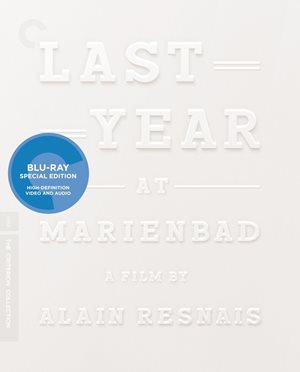
Last Year at Marienbad
BUY AT:


See more details, packaging, or compare
Synopsis
Not just a defining work of the French New Wave but one of the great, lasting mysteries of modern art, Alain Resnais’ epochal Last Year at Marienbad (L’année dernière à Marienbad) has been puzzling appreciative viewers for decades. Written by radical master of the New Novel Alain Robbe-Grillet, this surreal fever dream, or nightmare, gorgeously fuses the past with the present in telling its ambiguous tale of a man and a woman (Giorgio Albertazzi and Delphine Seyrig) who may or may not have met a year ago, perhaps at the very same cathedral-like, mirror-filled château they now find themselves wandering. Unforgettable in both its confounding details (gilded ceilings, diabolical parlor games, a loaded gun) and haunting scope, Resnais’ investigation into the nature of memory is disturbing, romantic, and maybe even a ghost story.
Picture 9/10
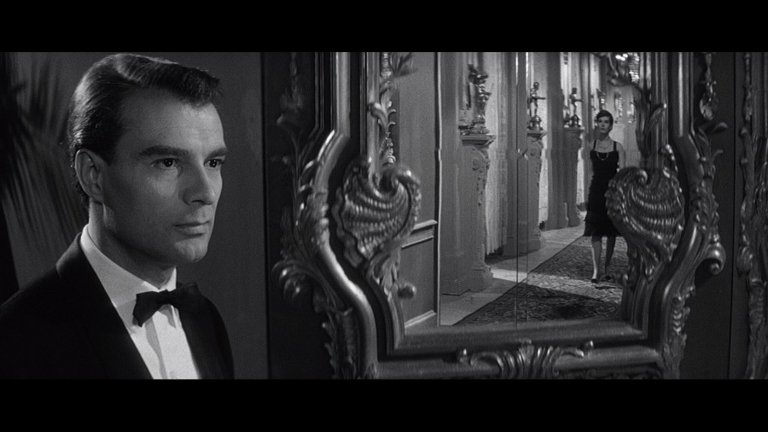
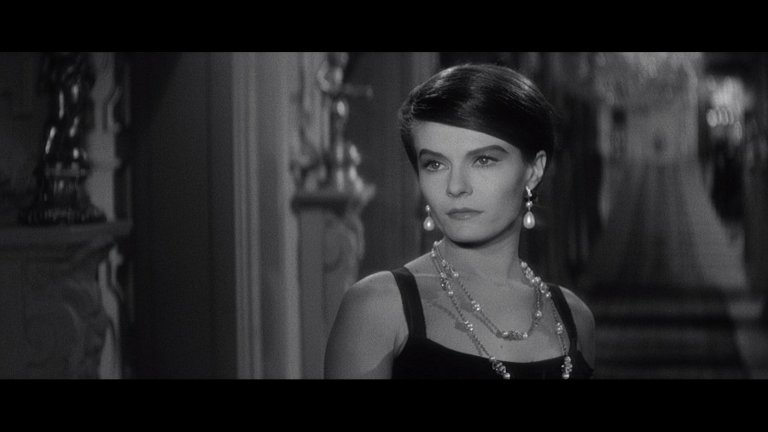
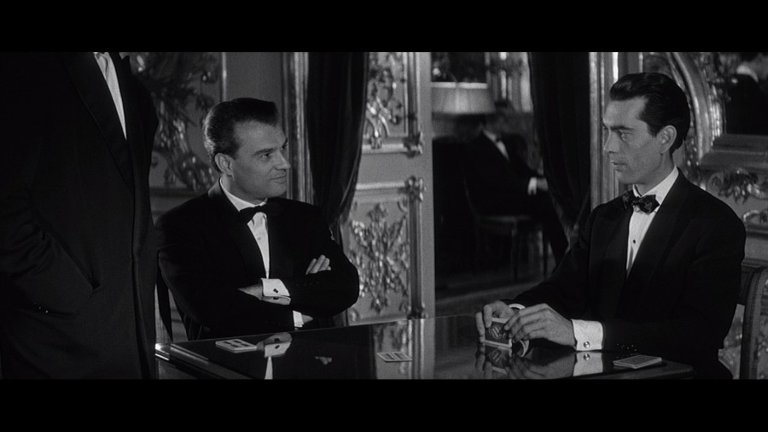
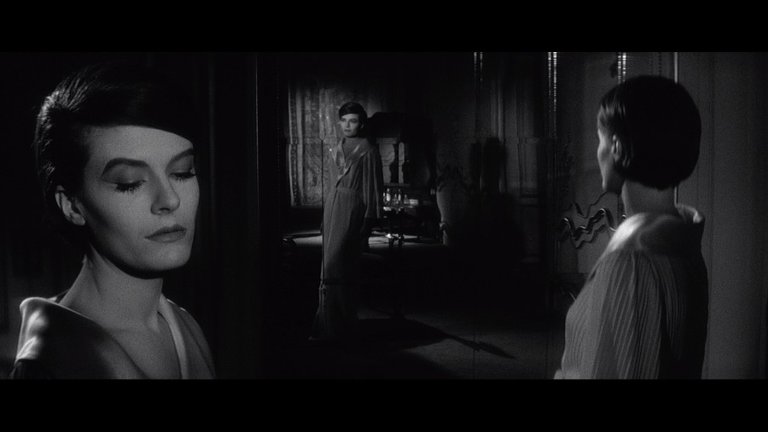
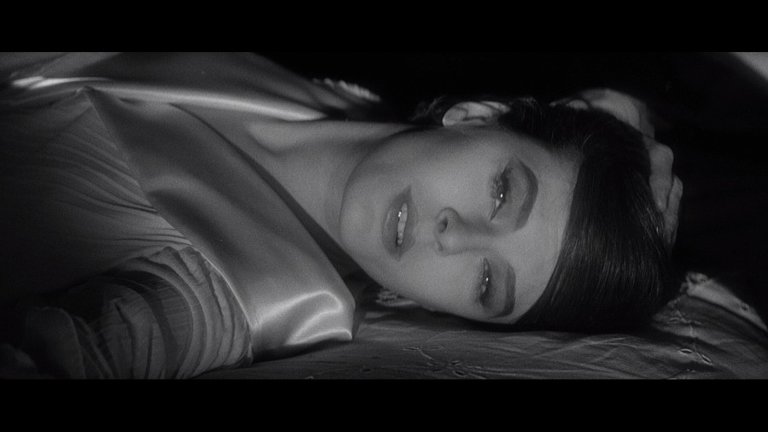
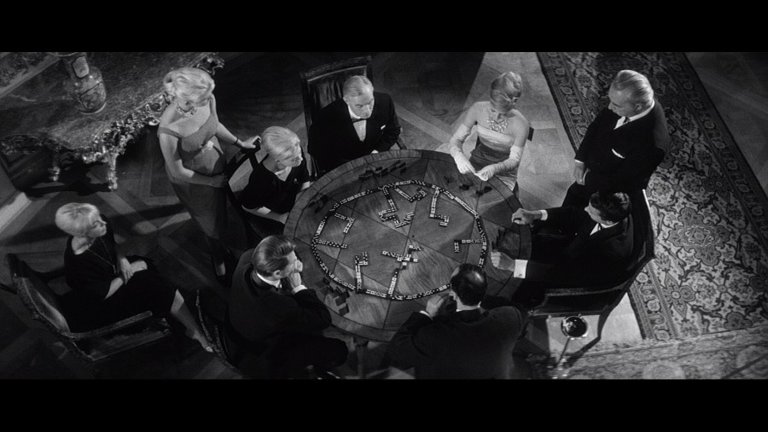
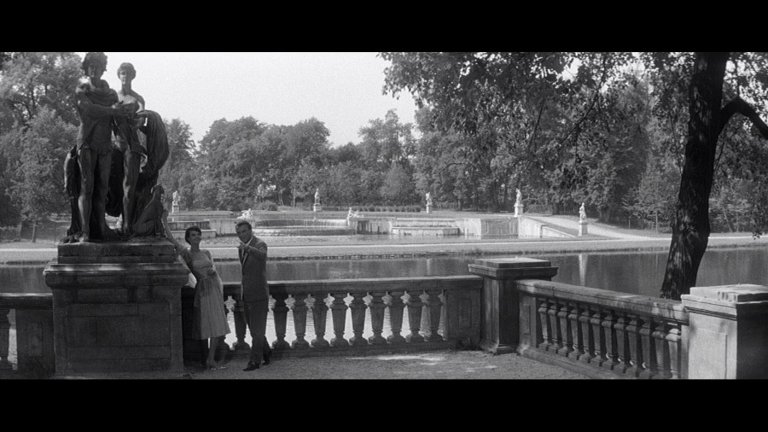
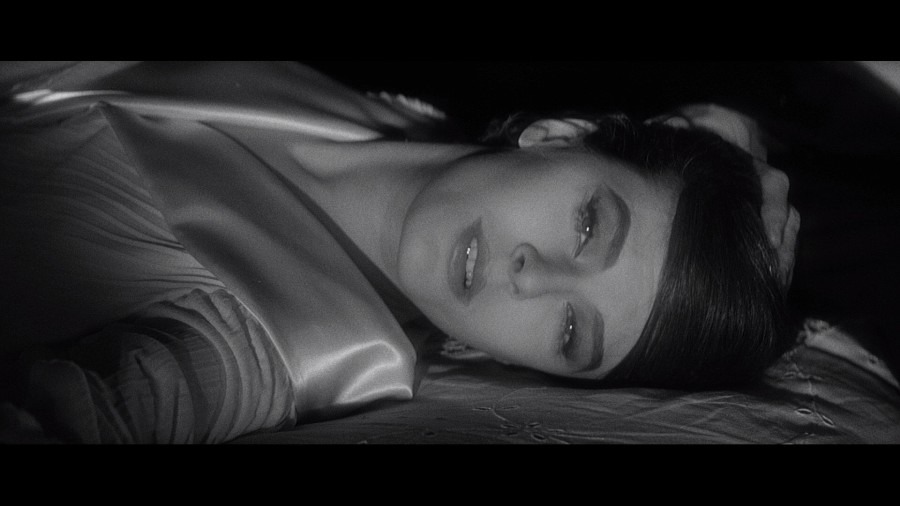
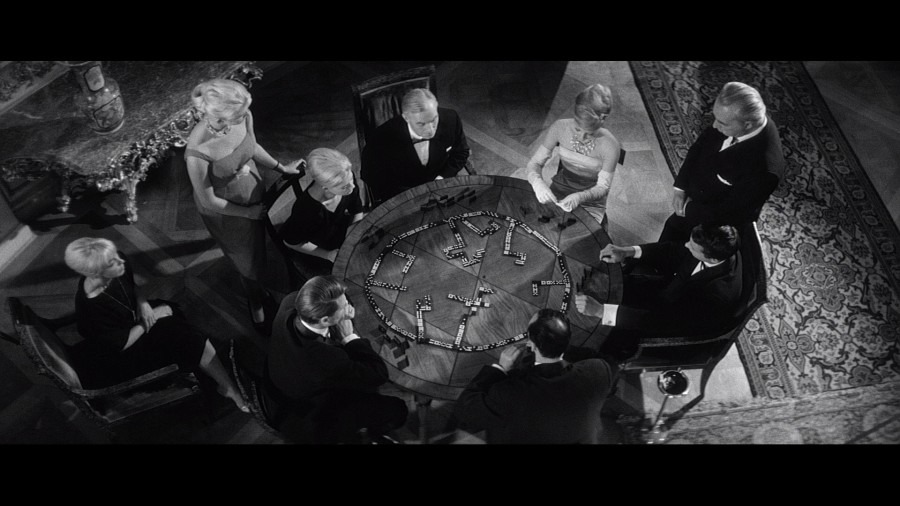
Criterion’s Blu-ray edition of Alain Resnais’ Last Year in Marienbad is presented in the aspect ratio of 2.35:1 on this dual-layer disc. The image is presented in 1080p.
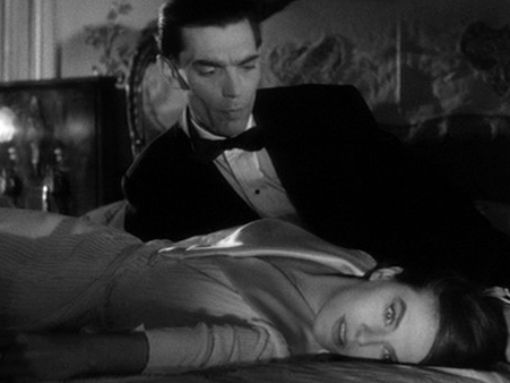
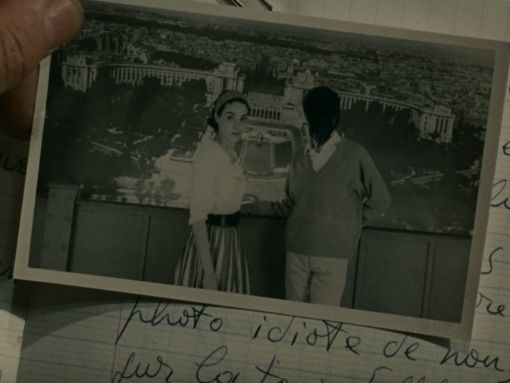
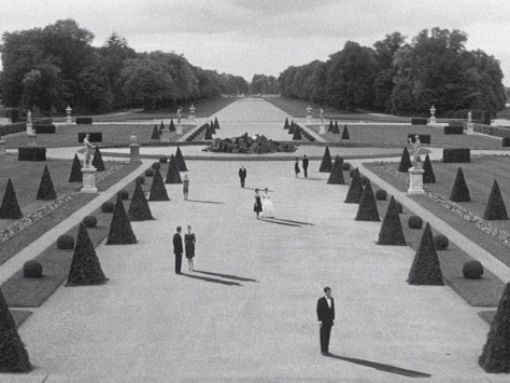
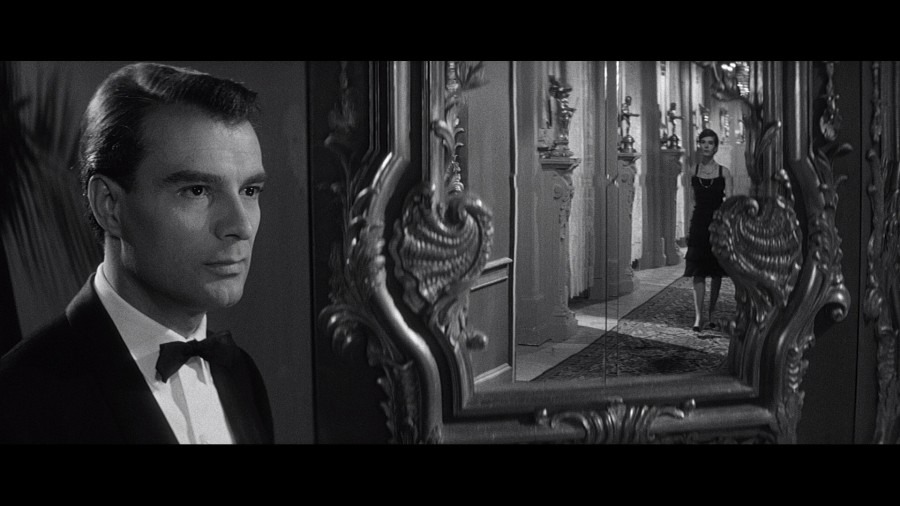
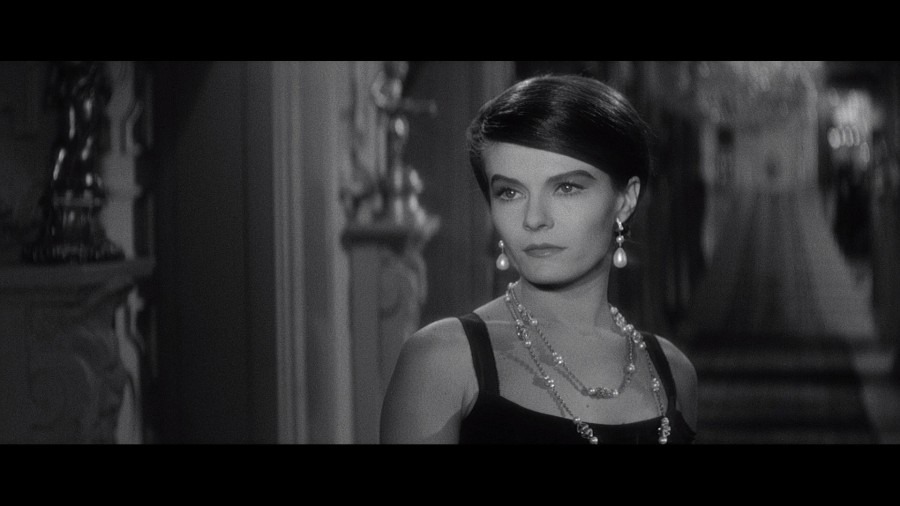
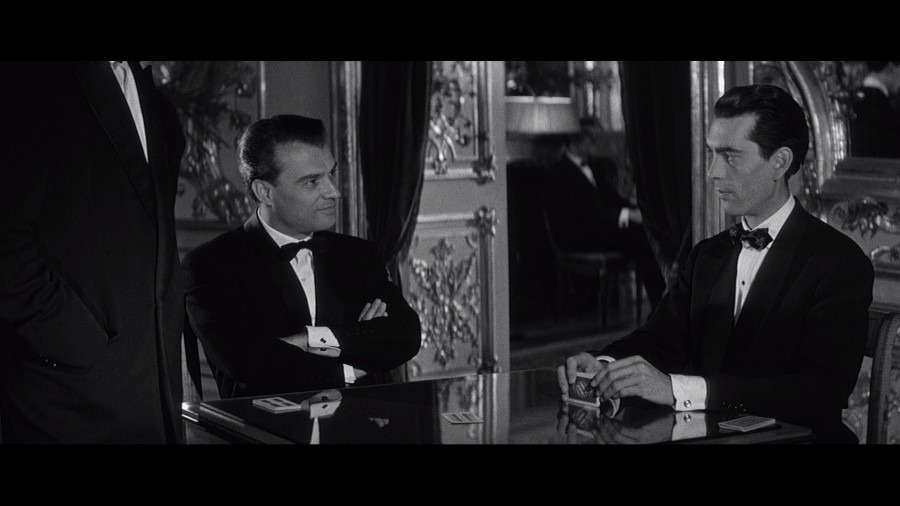
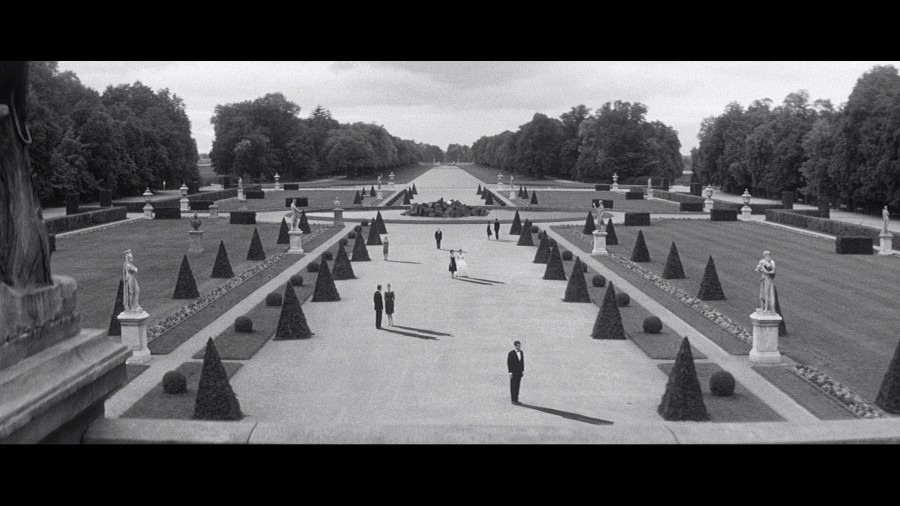
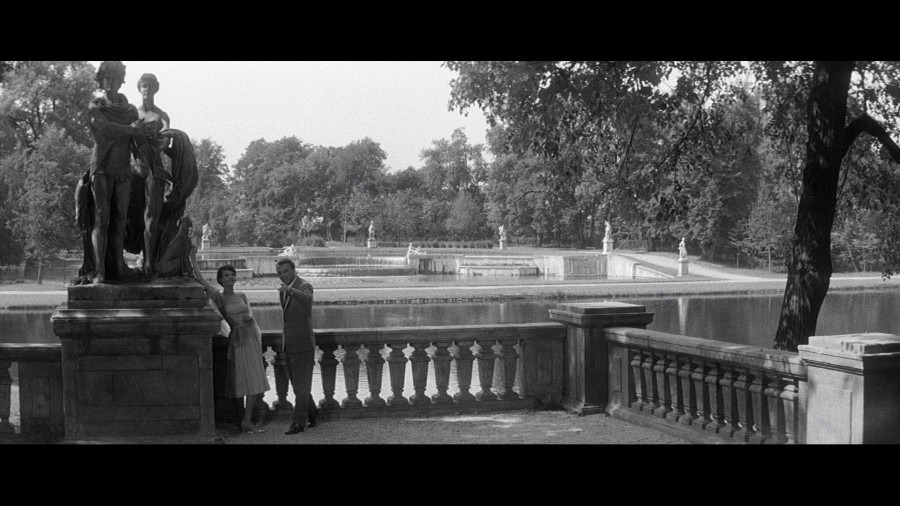
Criterion usually uses the same high-def transfer between their Blu-ray and DVD releases, though obviously it’s downgraded for the DVD. While the Blu-rays do present sharper, crisper images, at first glance the transfers don’t always look so different from one another. I was a little stunned by the transfer on this Blu-ray, which shows some obvious improvements over the DVD. The prints look to be the same presenting next to nothing in the way of damage. And as expected the image on here is certainly smoother and cleaner with fewer artifacts. What becomes immediately obvious is that sharpness and detail in the picture displayed here is a drastic improvement over the DVD’s presentation. Looking at some of the exterior shots along the stone walk ways and the surrounding statues presents more distinct detail in everything, and the picture is stunningly crisp. Gray levels are also better and blacks also look much better when compared to the DVD’s transfer.
Overall the Blu-ray is an improvement over the DVD, as expected, but it’s a rather noticeable and large improvement.
(Screen grabs below have been provided by DVD Beaver. Grabs have been downscaled somewhat but should provide an idea of the image quality.)
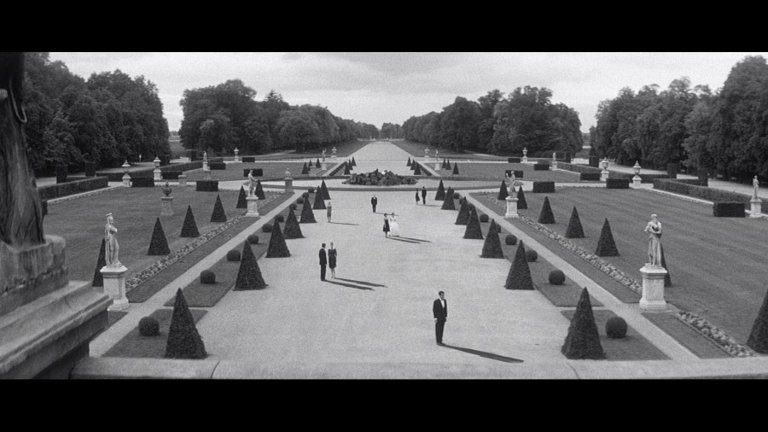
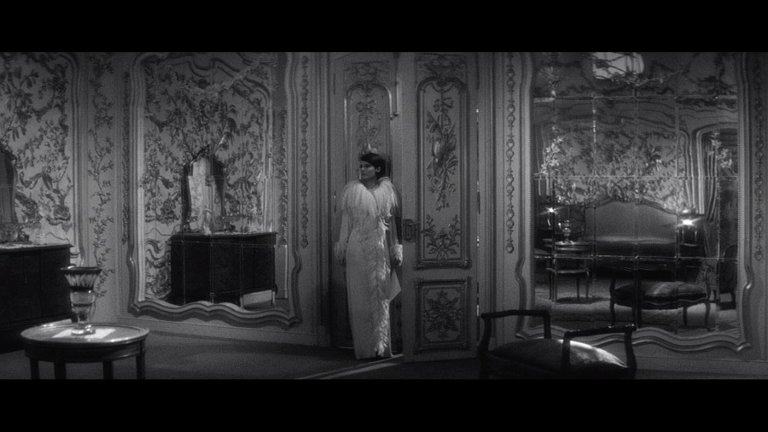
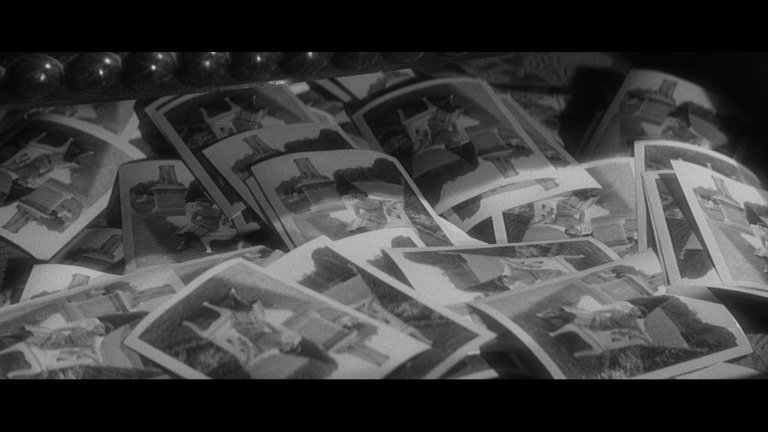
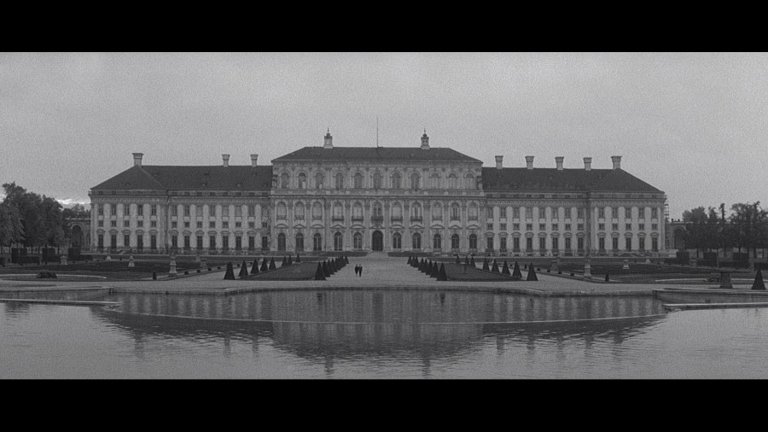
Last Year at Marienbad - Screen Captures
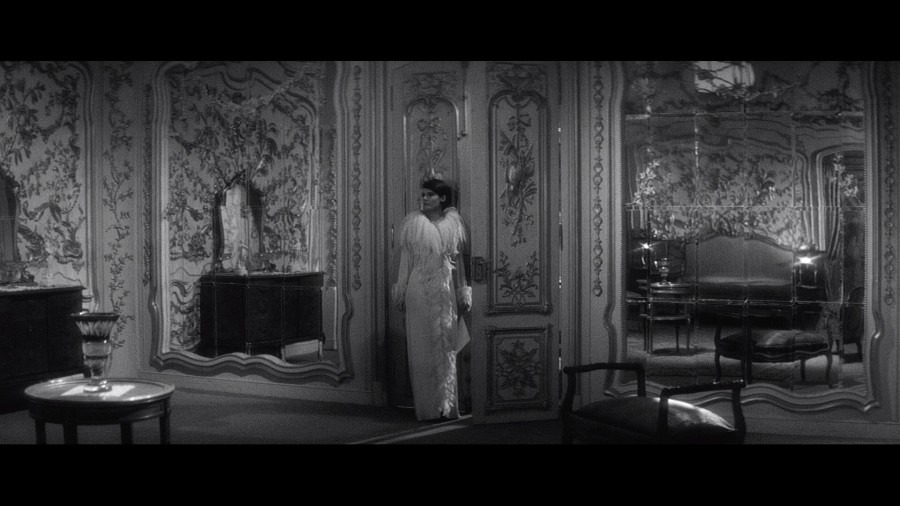
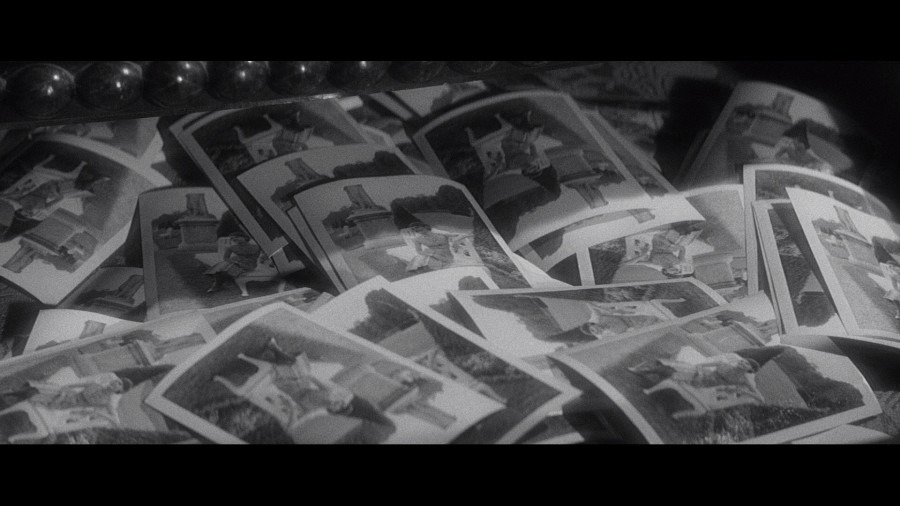
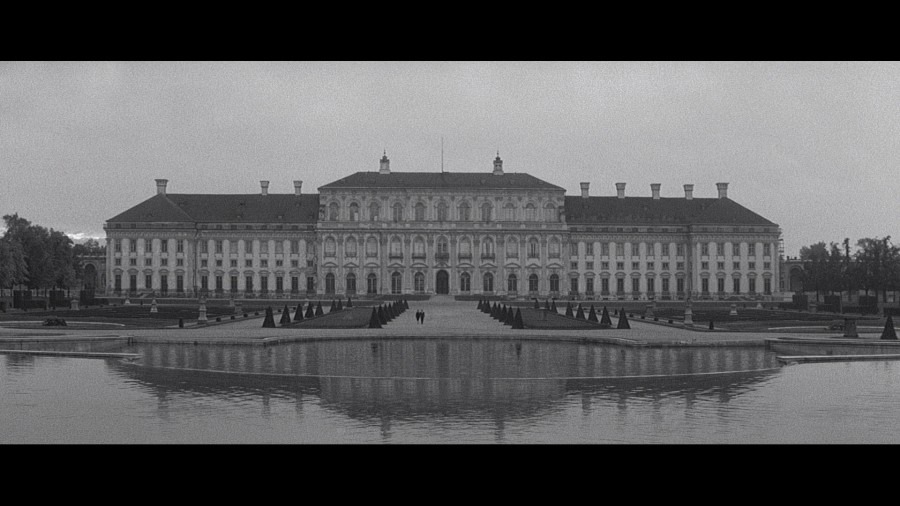
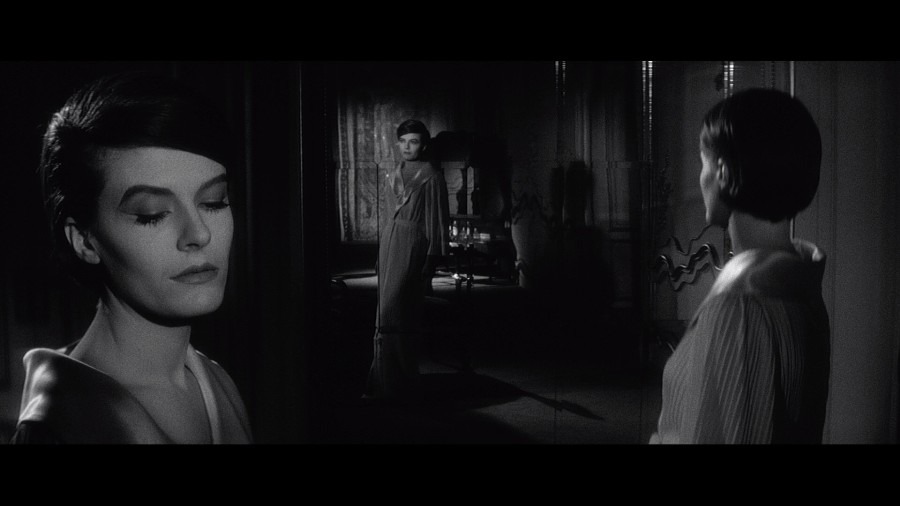
Audio 7/10
Like with their DVD Criterion’s Blu-ray of Last Year at Marienbad presents two French tracks, a restored track and the original “unrestored” track, which was included according to Resnais’ wishes. Both tracks are presented in uncompressed mono.
Comparing it to the DVD’s Dolby Digital track shows a noticeable improvement (in both cases) where this track sounds a bit sharper and a little cleaner. While I think the DVD’s restored track still sounds good it does sound a little edgier than the lossless track here. Dialogue sounds clean and clear, and the film’s organ score is pretty good, though gets harsher with higher notes.
Like with the DVD, though, I only determined some mild differences between the restored and unrestored tracks on here, the unrestored track presenting a little more noticeable damage. Otherwise it’s still rather sharp and in decent shape overall.
Extras 7/10
Supplements are the same between this Blu-ray edition and the 2-disc DVD, except they’re presented in high definition and all on the one disc. The supplements are found under the “Supplements” heading from the pop-up menu, except for the alternate unrestored audio track, which is found under the “Audio” heading.
First up is an audio interview with Alain Resnais that runs about 33-minutes. The audio is played over stills and a couple of clips. I liked it though I must admit a mild upset that Resnais chose to talk more about the film’s production rather than the film itself. He begins with how he had come to collaborate with Alain Robbe-Grillet on the film, the script process (which he let Robbe-Grillet pretty much do on his own, only suggesting a big change and then other changes to make it easier for him to film), inspirations from Lee Falk’s Mandrake the Magician comic and Hitchcock (they both loved Vertigo and the insertion of the Hitchcock cut out in the film was nothing deeper than a “wink” to the director.) He further gets into the details of the actual shoot and some gives some technical information on the camera work, settings and locations, and then gets into the film’s music (the only thing he and Robbe-Grillet apparently disagreed on.) Unfortunately he doesn’t really offer much in the way of analysis for his film other than talking about the structure and that he considers it a love story. I was hoping for more in this regard but I otherwise did enjoy the interview.
Unraveling the Enigma: The Making of The Last Year in Marienbad is a 33-minute making-of documentary. Like other “making-ofs” from Criterion it’s a talking-head piece, this one featuring assistant directors Jean Léon and Volker Schlöndorff, script girl Sylvette Baudrot, and production designer Jacques Saulnier. It’s an informative piece, though again is more on the technical side. There’s a lot of pre-production stuff such as casting and then a bit on location scouting, which was rather hard since they were looking for a certain look that French architecture wasn’t lending (Nymphenburg palace in Munich provided locations for most of the shoot.) There’s also a lot of information about the difficulty of the shoot since there were a lot of sequences that would literally cut from one place to another almost as if the characters were magically transported there. Baudrot was also having trouble keeping track of everything and had to make up a rather complex chart to keep track of the film’s “timeline” which she does display briefly here. There’s more details about the camera work and some of the complexities including avoiding the multitude of mirrors in a couple of scenes. The doc then continues on until the film’s premiere, and there’s even a few colour photographs from the set thrown in. It’s a decent documentary, expanding on some of the material Resnais covered.
The only real analytical aspect of this release would be the next feature, a 23-minute interview with film scholar Ginette Vincendeau. The text notes describe it as an analysis of the possible meanings of the film but unfortunately a good chunk of it repeats material covered in the other features, such as the collaboration between Resnais and Robbe-Grillet and its acceptance by critics. She does get into possible interpretations though disappointingly really only concentrates on one, which I won’t spoil. She unfortunately avoids some of the more “out-there” though fun interpretations I’ve come across like “everyone is dead”, “they’re in an alternate universe”, or “time is stuck in a loop”. The interpretation she focuses on does make sense, and it’s completely possible when compared to a comment Resnais made in his interview.
The final set of features are actually rather cool. They’re a couple of short documentaries by the director.
The first documentary is entitled Toute la mémoire du monde a 21-minute black and white documentary by Resnais about the Bibliothèque nationale de France, which is a wonderfully put together, lovely, and completely fascinating piece that covers the complex inner-workings of the library and its cataloguing system in a truly fantastic visual way. The second documentary is a 13-minute colour piece called Le chant du styrène, which is a rather bright, almost poetic documentary that starts with a simple plastic bowl and then works its way back to see all the work that went into bringing forth its existence (going all the way back to how the plastics that went into it are manufactured.) Both are rather wonderful pieces displaying Resnais’ early work.
Closing off the supplements are a couple of theatrical trailers, including the original trailer and the Rialto re-release trailer.
And like all of Criterion’s Blu-ray releases you will also find the Timeline on disc one. You can open it from the pop-up menu or by pressing the RED button on your remote. This is a timeline that shows your current position in the film. It lists the index chapters for the and you can also switch to the alternate unrestored audio track from here. You also have the ability to bookmark scenes by pressing the GREEN button and return to them by selecting them on the timeline. You can also delete bookmarks by pressing the BLUE button. This is pretty common on Blu-ray (also common on HD DVD) so it’s nothing new, but I’ve always liked Criterion’s presentation.
Closing off the set a 44-page booklet. It includes a decent essay on the film by Mark Polizzotti, and then a reprint of a piece by Alain Robbe-Grillet where the author talks about the collaboration with Resnais that in the end states that Robbe-Grillet found the experience to be an absolute joy, though a preface to the piece suggests a lot of it is probably fiction. Closing off the booklet is another essay, this one by François Thomas and it acts as a sort of rebuttal to the longer Robbe-Grillet piece, pointing out some contradictions to his statements and pulls quotes from other interviews with him that suggest he wasn’t all that happy with Resnais or at least didn’t share his view on what the film should be. There’s also a note from Resnais on why he included two French audio tracks on this release. In all it’s a great little booklet.
That unfortunately covers it. It’s a nice set but I guess I was hoping for more analysis on the film itself, maybe even at least in a commentary, which I’m shocked Criterion didn’t bother with. It’s such a wonderful, yet frustratingly bizarre film (and in my opinion all the more fun because of that) and has been written about so much I guess I expected more in this regard.
Closing
Supplements are the same between the DVD and Blu-ray and again I was disappointed that the supplements were more technical in nature rather than scholarly. But the Blu-ray presents a fairly drastic improvement over the DVD in the picture department: It’s sharp, nicely detailed, and near-perfect. An absolutely gorgeous release from Criterion and one I highly recommend.
BUY AT: